

Class: Primary Two
Term: Third Term
Subject: Basic Science and Technology
Curriculum Theme: Basic Science
previous Lesson:
Topic: The Human Body
Content/Learning Area: Identifying and naming the three main parts of the human body, Developing an appreciation for the human body and it’s functionality, pointing to and naming the three main parts of the human body on your own or a peer’s body
Time Allocation: 40 minutes
Performance Objectives
By the end of the lesson, pupils should be able to:
- Cognitive Domain:
1. Identify and name the three main parts of the human body.
2. Describe the functions of major body parts.
- Affective Domain:
1. Develop an appreciation for the human body and its functionality.
- Psychomotor Domain:
1.Point to and name the three main parts of the human body on their own or a peer’s body.
- Social Domain:
1. Work cooperatively with peers during activities.
Reference Materials
- 9 – Years Basic Education Curriculum
- Abuja Educational Resource center Scheme of Work
- NAPPS National Unified Scheme of Work
- relevant Textbooks
Instructional Materials
To deliver this lesson, the teacher will use the following materials:
- Whiteboard or chart paper
- Markers or crayons
- Pictures or diagrams of the human body
Rationale for the Lesson
Understanding the human body is essential to health and well-being. This lesson provides a basic foundation for future learning in science and health education.
Prerequisite/Previous Knowledge
The teacher will start by asking pupils what they know about their bodies. A brief discussion will follow, leading into the lesson’s topic. the teacher will then show pictures of the human body.
Lesson Content
what is the Human Body?
The human body is a complex system that lets us live, move, and interact with the world. It has many parts,each with a job to do.
Parts of the Human Body
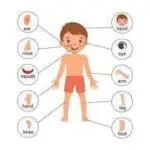
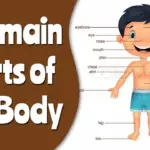
The main parts of the human body include the head, trunk, and limbs. They are:
- Head: The top part, containing the brain, eyes, ears, nose, and mouth.
- Neck: Connects the head to the body, allowing head movement.
- Torso/Trunk: The main body part, including the chest, abdomen, and back.
1. Chest: Contains the heart and lungs.
2. Abdomen: Contains the stomach, liver, and intestines.
3. Back: Supports the body and helps with bending and movement.
- Arms (limbs): Attached to the torso, used for reaching and grasping.
1. Shoulders, upper arms, elbows, forearms, wrists, hands (with palms, fingers, and thumbs).
- Legs (limbs): Attached to the torso, used for walking, running, and jumping.
1. Hips, thighs, knees, lower legs, ankles, feet (with heels, soles, and toes).
Teaching Methods
To deliver this lesson, the teacher will adopt the following methods: Discussion, Exhibition, Question and Answer.
Instructional Procedures
to deliver this lesson, the teacher will adopt the following steps:
Step 1: Introduction
Time: 5 minutes
Teaching Skill: Set Induction
Teacher’s Activity: Asks pupils what they know about their bodies. Introduces the topic: “The human Body.”
Pupils’ Activity: Respond to teacher’s questions and listen attentively.
Step 2: Description of Key Concepts
Time: 10 minutes
Teaching Skill: Explaining
Teacher’s Activity: Explains the three main parts of the human body (head, trunk, limbs) using visuals.
Pupils’ Activity: Listen attentively and ask questions.
Step 3: Demonstration/Guided Practice
Time: 10 minutes
Teaching Skill: Demonstrating
Teacher’s Activity: Points to the three main parts of the body on a diagram and then on a volunteer pupil.
Pupils’ Activity: Observe the demonstration and point to the parts on themselves.
Step 4: Autonomous Practice
Time: 5 minutes
Teaching Skill: Monitoring
Teacher’s Activity: Asks pupils to point to and name the three main parts on a partner.
Pupils’ Activity: Work in pairs, pointing and naming body parts.
Step 5: Note-Taking
Time: 5 minutes
Teaching Skill: Guiding
Teacher’s Activity: Guides pupils in writing down key terms and concepts.
Pupils’ activity: Write down notes.
Step 6: evaluation/Review
Time: 5 minutes
Teaching Skill: Questioning
Teacher’s Activity: Asks review questions to assess understanding.
pupils’ Activity: Answer review questions.
Objective-aligned checks:
- Identify and name the three main parts of the human body.
- Describe the functions of major body parts.
Step 7: Conclusion
Time: 5 minutes
Teaching Skill: Summarizing
Teacher’s activity: To conclude the lesson, the teacher will review the main points and ask pupils to draw a simple picture of the human body, labeling the three main parts.
Pupils’ Activity: Participate by drawing and labeling the human body parts.
Lesson Keywords
- Head – The upper part of the body containing the brain.
- Trunk – The main part of the body, excluding the head and limbs.
- Limbs – The arms and legs.
- Chest – The upper part of the trunk containing the heart and lungs.
- Abdomen – The part of the trunk containing the stomach and intestines.
Lesson Evaluation
To evaluate the learning, the teacher asks pupils to:
- Name the three main parts of the human body.
- What does the head contain?
- What are the limbs of the body?
- What crucial organs are in the chest?
- What critically important organs are in the abdomen?
assignment/Homework
- Draw a picture of the human body and label the three main parts.
- List three things your body helps you do every day.
- Ask a family member to help you find out one interesting fact about the human body.
Differentiation
- For slower learners: The teacher will provide one-on-one assistance and use simpler language.
- For advanced learners: The teacher will encourage them to research and present additional information about specific body parts.
- For visual/auditory/kinesthetic learners: use diagrams, verbal explanations, and hands-on activities to cater to diffrent learning styles.
Note for Teachers
Ensure to use visual aids and real-life examples to make the lesson engaging. Encourage pupils to ask questions and participate actively in discussions.


Community Join the conversation Open discussion +