

Class: Primary Two
Term: first term
Subject: Basic Science and Technology
Curriculum Theme: Basic Science
Previous Lesson: Sense of Taste, Tongue
Topic: Colors
content/Learning Area: What are colors?, Red and Blue
Time Allocation: 40 minutes
Performance Objectives
By the end of the lesson, pupils should be able to:
- Cognitive Domain:
– Identify diffrent colors.
– Name objects of different colors.
- Psychomotor Domain:
– Color objects accurately using crayons or pencils.
- Affective Domain:
– Show thankfulness for the beauty of colors in the environment.
- Social Domain:
– Participate actively in class discussions.
Reference Materials
- 9 – Years Basic Education Curriculum
- Abuja Educational Resource Center Scheme of Work
- NAPPS National Unified Scheme of work
- Relevant Textbooks
Instructional Materials
To deliver this lesson, the teacher will use the following materials:
- Colored charts
- Crayons or colored pencils
- Worksheets with pictures to color
- Real-life objects of different colors (e.g., fruits, toys)
Rationale for the Lesson
Understanding colors is fundamental to a child’s development. This lesson lays the foundation for future learning in art, science, and other subjects. It also helps children develop their observational skills and appreciate the beauty of the world around them.
Prerequisite/Previous Knowledge
The teacher will start by asking pupils what colors they see around them in the classroom. The teacher will then show colorful pictures and ask them to name the colors they see. this will create excitement and curiosity about the lesson.
Lesson Content
What are Colors?
Colors are everywhere and make the world beautiful! They help us see and understand things better. Some common colors are red, blue, green, and yellow.colors are crucial for many reasons.
red and Blue
Red is a shining, warm color like strawberries, apples, and fire trucks. It can make us feel happy and energetic. Blue is a calm, peaceful color like the sky and the ocean. It can make us feel relaxed and serene.
Recognising and Grouping Colours
Primary colours in painting are red, yellow and blue. They can be mixed to make secondary colours: red and yellow make orange, yellow and blue make green, and blue and red make purple. White can make a colour lighter, while black can make it darker.
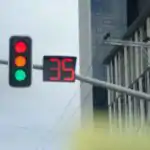
Colour can help us identify objects, read signs, create patterns and communicate warnings. Pupils should observe that an object may appear different under weak or coloured light, so colour is best compared in good natural or classroom light.
Teaching Methods
To deliver this lesson, the teacher will adopt the following methods: Discussion, Presentation, Practical Activity
Instructional Procedures
To deliver this lesson, the teacher will adopt the following steps:
Step 1: Introduction
Time: 5 minutes
Teaching Skill: Questioning, Engagement
Teacher’s Activity: Ask pupils what colors they see around them. Show colorful pictures and ask them to name the colors.
Pupils’ Activity: Identify and name colors.
Step 2: Description of Key concepts
Time: 10 minutes
Teaching Skill: Explanation, Definition
Teacher’s Activity: Explain what colors are and their importance. Show examples of red and blue objects.
Pupils’ Activity: Listen attentively and participate in discussions.
Step 3: Demonstration/Guided Practice
Time: 10 minutes
Teaching Skill: Demonstration, Modeling
teacher’s activity: Demonstrate how to color an apple red and the sky blue on a worksheet.
Pupils’ Activity: observe the teacher’s demonstration.
Step 4: Self-Reliant Practice
Time: 10 minutes
Teaching Skill: Monitoring, Feedback
Teacher’s Activity: Supervise pupils as they color the worksheet independently.
Pupils’ Activity: color the worksheet independently.
Step 5: Note-Taking
Time: 2 minutes
Teaching Skill: Summarizing, Note-taking
Teacher’s Activity: Briefly summarize the key concepts of the lesson.
Pupils’ Activity: Listen attentively.
Step 6: Evaluation/Review
Time: 3 minutes
Teaching Skill: Questioning, Assessment
Teacher’s Activity: Ask evaluation questions.
Pupils’ Activity: Answer the evaluation questions.
Step 7: Conclusion
Time: 5 minutes
Teaching Skill: Summarizing, Encouragement
Teacher’s Activity: Review the key concepts learned and praise pupils for their participation. Encourage them to continue observing and identifying colors in their surroundings.
Pupils’ Activity: Listen attentively and respond to encouragement.
Lesson Keywords
- Colors – Visual attribute of things that results from the light they emit or reflect.
- Red – A bright,warm color often associated with energy and excitement.
- Blue – A calm,cool color often associated with peace and serenity.
Lesson Evaluation
To evaluate the learning, the teacher asks pupils to:
- What color is the sky?
- Name something that is red.
- What color is the ocean?
- Name something that is blue.
Assignment/Homework
- Draw and color three different objects, each a different color.
- Find and list five things at home that are red or blue.
Differentiation
- For slower learners: Provide one-on-one assistance and use simpler language.
- For advanced learners: Encourage them to identify more colors and create their own color drawings.
- For visual/auditory/kinesthetic learners: Use colorful charts, verbal explanations, and hands-on coloring activities.
Note for Teachers
Ensure to have a variety of colored objects and visual aids available. Provide ample time for pupils to practice coloring and identifying colors.Encourage pupils to express their creativity and appreciation for colors in their environment.

Community Join the conversation Open discussion +