

Class: Senior Secondary School 2 (SS2 / SSS2)
Term: Third Term
Week: 11
Age: 16 years
Duration: 45 minutes
Subject: Agricultural Science
Curriculum Theme: Agricultural Practices and Farm Management
Previous Lesson: Farm Accounts: Profit and Loss Account Preparation.
Topic: Practicals
Subject Matter: Meaning of agricultural practicals (hands-on identification and farm skills), identification of pests, identification of soils, identification of rocks, identification of farm machines and their parts
Specific Objectives
By the end of the lesson, pupils should be able to:
Cognitive Domain:
- Define agricultural practicals.
- Identify different types of pests, soils, and rocks.
- Name common farm machines and their major parts.
Affective Domain:
- Appreciate the importance of practical skills in agriculture.
- Develop an interest in observing and identifying agricultural components.
Psychomotor Domain:
- Collect and label samples of pests, soils, and rocks.
- Visually identify common pests, soil types, rock types, and farm machines.
Social Domain:
- Work collaboratively in groups to identify and classify agricultural samples.
Reference Materials
The following resources were used in planning this lesson:
- Senior Secondary Schools Education Curriculum
- State Unified Scheme of Work
- Essential Agricultural Science for Senior Secondary Schools
Instructional Materials
The teacher will teach this lesson with the aid of:
- Sample containers
- Labels
- Hand lens
- Soil sample bags
- Pictures or models of farm machines
- Actual samples of pests, soil, and rocks (if available)
Rationale for the Lesson
This lesson helps pupils to understand the practical application of agricultural theories. It enables them to develop essential hands-on skills in identifying important components of farming, which is important for real-world agricultural practices.
Prerequisite/Previous Knowledge
Pupils have basic knowledge of agricultural concepts and have been introduced to various components of agricultural production in previous lessons.
Lesson Content/Board Summary
Agricultural Practicals
Meaning of Agricultural Practicals
Agricultural practicals refer to the hands-on activities and skills involved in identifying, classifying, and working with various components and processes in agriculture. They involve direct observation, experimentation, and application of theoretical knowledge to real-world farming situations.
Identification of Pests
Pests are organisms that cause damage to crops, livestock, or agricultural products. Identification involves observing their physical characteristics, the type of damage they cause, and their life cycle stages.
Common types of agricultural pests include:
- Insect Pests: Grasshoppers, aphids, termites, weevils.
- Weeds: Unwanted plants that compete with crops for resources, e.g., spear grass, pigweed, wild oats.
- Diseases: Caused by pathogens like fungi, bacteria, viruses, e.g., rust, smut, mosaic virus.
- Vertebrate Pests: Rats, birds, monkeys.
Identification of Soils
Soil is the loose surface material of the earth in which plants grow. Different soil types have varying properties that affect plant growth. Identification involves observing their texture, color, and how they feel when wet.
Common types of soil include:
- Sandy Soil: Feels gritty, drains quickly, low water retention.
- Clay Soil: Feels sticky and smooth when wet, holds water well, poor drainage.
- Loamy Soil: A mixture of sand, silt, and clay; ideal for agriculture, feels crumbly and smooth.
Identification of Rocks
Rocks are solid mineral materials forming part of the surface of the earth. They weather to form soil. Identification involves observing their texture, composition, and formation process.
Common types of rocks include:
- Igneous Rocks: Formed from cooled magma or lava, e.g., granite, basalt.
- Sedimentary Rocks: Formed from compacted sediments, e.g., sandstone, limestone.
- Metamorphic Rocks: Formed when existing rocks are changed by heat, pressure, or chemical alteration, e.g., marble, slate.
Identification of Farm Machines and their Parts
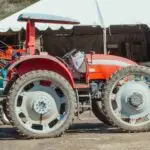
Farm machines are tools and equipment used in agriculture to perform various tasks more efficiently. Identification involves recognizing the machine and knowing the function of its main components.
Examples of farm machines and their common parts:
- Tractor: Engine, wheels, steering wheel, hydraulic system, PTO (Power Take-Off).
- Plough (Mouldboard Plough): Share, mouldboard, landside, frog, beam.
- Harrow (Disc Harrow): Discs, frame, gang bolt, scrapers.
- Planter/Seeder: Hopper, furrow opener, seed tube, covering device.
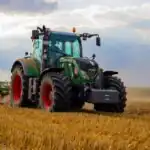
- Harvester (Combine Harvester): Header, thresher, separator, cleaner, grain tank.
Teaching Methods/Instructional Techniques
Discussion, Lecture, Demonstration, Question and Answer, Visual Aids, Practical session
Instructional Procedures
Step 1: Introduction
Time: 5 minutes
Teaching Skill: Set Induction
Teacher’s Activity: The teacher welcomes the pupils and reminds them of the importance of practical skills in agriculture. The teacher then introduces the topic of agricultural practicals.
Pupils’ Activity: Pupils respond to the teacher’s greeting and listen attentively to the introduction.
Learning Point: Pupils are prepared for the lesson and understand the relevance of practicals.
Step 2: Meaning of Agricultural Practicals
Time: 5 minutes
Teaching Skill: Explanation
Teacher’s Activity: The teacher explains the meaning of agricultural practicals as hands-on identification and farm skills, emphasizing their role in applying theoretical knowledge.
Pupils’ Activity: Pupils listen and contribute to the discussion by sharing their understanding of practical work.
Learning Point: Pupils define agricultural practicals.
Step 3: Identification of Pests
Time: 8 minutes
Teaching Skill: Demonstration/Observation
Teacher’s Activity: The teacher guides pupils to identify different types of pests using collected samples or pictures. The teacher points out distinguishing features and types of damage.
Pupils’ Activity: Pupils observe the samples/pictures, discuss their characteristics, and attempt to classify them.
Learning Point: Pupils identify common agricultural pests.
Step 4: Identification of Soils
Time: 8 minutes
Teaching Skill: Demonstration/Observation
Teacher’s Activity: The teacher presents various soil samples (sandy, clay, loamy) and guides pupils to identify them based on texture, color, and feel.
Pupils’ Activity: Pupils handle the soil samples, describe their characteristics, and identify the different soil types.
Learning Point: Pupils identify different types of soil.
Step 5: Identification of Rocks
Time: 5 minutes
Teaching Skill: Demonstration/Observation
Teacher’s Activity: The teacher shows different rock samples or pictures (igneous, sedimentary, metamorphic) and guides pupils in identifying their key features.
Pupils’ Activity: Pupils observe the rock samples/pictures and discuss their characteristics.
Learning Point: Pupils identify different types of rocks.
Step 6: Identification of Farm Machines and their Parts
Time: 6 minutes
Teaching Skill: Visual Aids/Discussion
Teacher’s Activity: The teacher uses pictures or models of farm machines to guide pupils in identifying the machines and their major parts, explaining the function of each part.
Pupils’ Activity: Pupils observe the pictures/models, identify the machines, and name their parts as guided by the teacher.
Learning Point: Pupils identify common farm machines and their parts.
Step 7: Evaluation/Review
Time: 5 minutes
Teaching Skill: Questioning/Assessment
Teacher’s Activity: The teacher evaluates the learning by asking the following questions:
- What are agricultural practicals?
- Mention two types of insect pests and one type of weed.
- How would you identify sandy soil from clay soil?
- Name two common farm machines and one major part of each.
Pupils’ Activity: Pupils answer orally and in writing.
Learning Point: Pupils demonstrate understanding of the lesson.
Step 8: Conclusion
Time: 3 minutes
Teaching Skill: Summarization
Teacher’s Activity: The teacher summarizes the key points of the lesson, reiterating the importance of practical identification skills in agriculture. The teacher assigns homework for pupils to collect and label more samples.
Pupils’ Activity: Pupils listen to the summary and copy the homework assignment.
Learning Point: Pupils consolidate their learning and receive further practical tasks.
Lesson Keywords
- Practicals – Hands-on activities and skills in agriculture.
- Pests – Organisms that harm crops or livestock.
- Soils – Earth’s surface material where plants grow.
- Rocks – Solid mineral materials forming the earth’s surface.
- Farm machines – Equipment used for agricultural tasks.
- Identification – The process of recognizing and naming something.
Differentiation
For pupils who are struggling, the teacher will provide more direct guidance, simplified examples, and one-on-one support during the identification tasks. Advanced pupils will be encouraged to research additional types of pests, soils, rocks, or farm machines beyond those discussed in class, and to explain their findings.
Note for teachers using this lesson plan
Teachers should endeavor to bring actual samples of pests, various soil types, and rocks to the class for a more engaging and effective practical session. If actual farm machines are not available, clear pictures, diagrams, or models should be used. Encourage group work to foster collaborative learning and ensure all pupils participate in the identification process.
Community Join the conversation Open discussion +