

Class: Primary Two
Term: Third Term
Subject: Basic Science and Technology
Curriculum Theme: Physical & Health Education
Previous Lesson: Benefits of Swimming
Topic: Safety Rules In Swimming
Content/Learning Area: what are Safety Rules in Swimming, Some of the safety rules in swimming
Time Allocation:
Performance Objectives
By the end of the lesson, pupils should be able to:
- cognitive Domain:
1.List at least two basic safety rules in swimming.
2. Explain the importance of following safety guidelines while swimming.
- Affective Domain:
1.Develop a positive attitude towards following safety guidelines while swimming.
- Psychomotor Domain:
1. Demonstrate the motions of basic safety signals used in swimming.
- Social Domain:
1. Work in groups to discuss the importance of safety rules in swimming.
Reference Materials
- 9 – years Basic Education Curriculum
- Abuja Educational Resource Center Scheme of Work
- NAPPS national Unified Scheme of work
- Relevant Textbooks
Instructional materials
To deliver this lesson, the teacher will employ the help of the following materials: Charts, Pictures, Whiteboard or Projector
Rationale for the Lesson
This lesson is crucial for teaching children about water safety, preventing accidents, and promoting responsible behaviour around water. Understanding these rules is essential for their well-being and future enjoyment of water activities.
Prerequisite/Previous knowledge
The teacher will start by asking pupils if they have ever been swimming. The teacher will than ask what they remember about swimming and if they know any rules for staying safe in the water. This will lead into a discussion about water safety.
Lesson content
Safety Rules In Swimming
Swimming is fun, but safety is important! We need rules to ensure everyone enjoys swimming safely.
What are Safety Rules in Swimming?
These are rules that keep us safe while swimming, preventing accidents and injuries.
Some of the safety rules in swimming include:
The following are some safety rules in swimming:
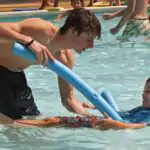
- Stay in Designated Areas: Swim only in designated areas with supervision (lifeguards or adults watching).
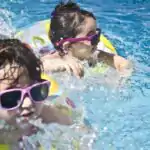
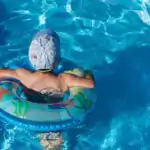
- Use Safety Gear: Use life jackets or flotation devices if you’re not a strong swimmer, especially children.
- Follow the Signs: Obey pool rules and warning signs for everyone’s safety.
- Never swim Alone: Always swim with a buddy or adult supervision for help if needed.
- Learn to Signal: Know hand signals to communicate for help or to show you’re okay.
- Check Water Depth: Always check the water depth before diving or jumping in to avoid injuries.
- Avoid Running: Do not run around the pool area to prevent slips and falls.
- Stay Hydrated: Drink plenty of water to avoid dehydration, especially on hot days.
Teaching Methods
To deliver this lesson, the teacher will adopt the following methods: Discussion, Presentation, Group work
Instructional procedures
to deliver this lesson, the teacher will adopt the following steps:
Step 1: Introduction
Time: 5 minutes
Teaching Skill: Questioning, Discussion
Teacher’s Activity: Ask pupils about their experiences with swimming and water safety.
Pupils’ Activity: Share their experiences and ideas.
Step 2: Clarification of Key Concepts
Time: 10 minutes
Teaching Skill: Explanation, Demonstration
teacher’s Activity: Explain the importance of swimming safety rules and demonstrate basic safety signals.
Pupils’ Activity: listen attentively and observe the demonstration.
Step 3: Demonstration/Guided Practice
Time: 10 minutes
Teaching Skill: Guided Practice
Teacher’s Activity: Guide pupils in practicing safety signals and discussing scenarios.
Pupils’ Activity: Practice safety signals and participate in discussions.
Step 4: Autonomous practice
Time: 5 minutes
Teaching Skill: Monitoring
Teacher’s Activity: Observe pupils as they work in groups to discuss safety rules.
Pupils’ Activity: Work in groups to discuss and list safety rules.
Step 5: Note-Taking
Time: 5 minutes
Teaching Skill: Note-Taking
Teacher’s activity: Guide pupils in taking notes on key safety rules.
Pupils’ Activity: Write down key safety rules.
Step 6: Evaluation/Review
Time: 5 minutes
Teaching Skill: Questioning
Teacher’s Activity: Ask review questions to assess understanding.
Pupils’ Activity: Answer review questions.
Objective-aligned checks:
- List at least two basic safety rules in swimming.
- Explain the importance of following safety guidelines while swimming.
- Demonstrate the motions of basic safety signals used in swimming.
Step 7: Conclusion
time: 5 minutes
Teaching Skill: Summarizing
Teacher’s Activity: Summarize the key safety rules and encourage pupils to practice them whenever they swim. Emphasize the importance of always being aware of their surroundings and following instructions from lifeguards or adults.
Pupils’ Activity: Listen to the summary and ask any remaining questions.
Lesson Keywords
- Safety Rules – Guidelines to prevent accidents and injuries.
- Designated Areas – Specific areas marked for safe swimming.
- Life Jackets – Safety gear to help swimmers float.
- Supervision – Having adults or lifeguards watching swimmers.
- Safety Signals – Hand signals to communicate in the water.
Lesson Evaluation
To evaluate the learning,the teacher asks pupils to:
- What is one reason to swim in designated areas?
- Name a safety gear used while swimming.
- Why is swimming alone unsafe?
- What are some hand signals used in the water?
- Why should we follow pool rules and signs?
Observation: Observe pupils’ participation in discussions, demonstrations, and group work. Note their understanding of safety rules and ability to demonstrate safety signals.
Assignment/Homework
- List five safety rules to follow when swimming.
- Draw and label three safety signals used in the water.
- Explain why it is important to have adult supervision when swimming.
Differentiation
- For slower learners: Provide one-on-one assistance and simplified explanations.
- for advanced learners: Encourage them to research additional safety tips and share their findings with the class.
- For visual/auditory/kinesthetic learners: Use visual aids, verbal explanations, and hands-on activities to cater to different learning styles.
note for Teachers
Ensure to emphasize the importance of practical application of these safety rules.Consider organizing a demonstration or role-playing activity to reinforce the concepts taught.

Community Join the conversation Open discussion +