Class: Primary Three
Term: First Term
Subject: Basic Science and Technology
Curriculum Theme: Physical & Health Education
Previous Lesson: Creative Rhythm and Movement
Topic: Basic Rhythms and Movement
Content/Learning Area: defining fundamental rhythms, Listing activities under fundamental rhythms, Performing fundamental rhythm movements
time Allocation: 40 minutes
Performance Objectives
By the end of the lesson, pupils should be able to:
- Cognitive Domain:
– Define fundamental rhythms.
– List different activities under fundamental rhythms.
- Affective Domain:
– Appreciate the importance of fundamental rhythms for physical health and coordination.
- Psychomotor Domain:
– Perform fundamental rhythm movements (walking, bending, marching, skipping, jumping).
- Social Domain:
– Participate actively in group activities involving fundamental rhythms.
Reference Materials
- 9 – years Basic Education Curriculum
- Abuja Educational Resource Center Scheme of Work
- NAPPS National Unified Scheme of work
- Relevant textbooks
Instructional Materials
To deliver this lesson, the teacher will use the following materials:
- Whiteboard or chart paper
- Markers or crayons
- Space for physical activities
Rationale for the Lesson
Understanding fundamental rhythms is crucial for developing gross motor skills, coordination, and overall physical fitness. This lesson lays the foundation for more complex movement activities and promotes a healthy, active lifestyle.
Prerequisite/Previous Knowledge
The teacher will start by asking pupils what they did during break time, prompting discussion about movements like running, jumping, and skipping. This will naturally lead into a discussion about different types of body movements, setting the stage for the lesson on fundamental rhythms.
Lesson Content
Fundamental Rhythms and Movement
Fundamental rhythms are basic, repeated movements our bodies make naturally. They are essential for physical health and coordination.
What are Fundamental Rhythms?
Fundamental rhythms are movements we do every day, like walking, bending, marching, skipping, and jumping. These movements help us stay healthy and active.
Activities Under Fundamental Rhythms
These include:
- Walking: Moving forward by placing one foot in front of the other.
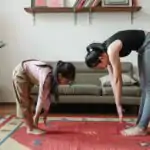
- Bending: Lowering your body by flexing your knees and hips.
- Marching: Walking with a more deliberate and rhythmic step, often with a specific arm movement.
- Skipping: A combination of hopping and stepping, with a light and bouncy movement.
- Jumping: Propelling yourself off the ground with both feet and landing on both feet.
- Hopping: Jumping on one foot and landing on the same foot.
- Galloping: Moving forward quickly, with one foot leading and the other following.
Teaching Methods
To deliver this lesson, the teacher will adopt the following methods: Discussion, Exhibition, Practical Activities
Instructional Procedures
To deliver this lesson, the teacher will adopt the following steps:
Step 1: introduction
Time: 5 minutes
Teaching Skill: Set Induction
teacher’s Activity: Briefly introduce the topic of fundamental rhythms and ask pupils what they think it means.
Pupils’ Activity: Share their ideas and participate in the discussion.
Step 2: Description of Key Concepts
Time: 10 minutes
Teaching Skill: Explanation
Teacher’s Activity: Define fundamental rhythms and explain their importance for physical health and coordination.
Pupils’ activity: Listen attentively and ask clarifying questions.
Step 3: Exhibition/Guided practice
Time: 15 minutes
Teaching Skill: Demonstration
Teacher’s Activity: Demonstrate each fundamental rhythm (walking, bending, marching, skipping, jumping) and guide pupils in performing them.
Pupils’ Activity: Imitate the teacher’s movements and practice each rhythm.
Step 4: Self-reliant Practice
Time: 5 minutes
teaching Skill: Observation
Teacher’s Activity: allow pupils to practice the fundamental rhythms independently or in small groups.
Pupils’ Activity: Practice the rhythms freely, applying what they have learned.
Step 5: Note-Taking
Time: 2 minutes
Teaching Skill: Note-Taking
Teacher’s Activity: Guide pupils in taking notes on the key concepts and activities.
Pupils’ Activity: write down key points and definitions.
Step 6: Evaluation/Review
Time: 3 minutes
Teaching Skill: Questioning
Teacher’s Activity: Ask review questions to assess understanding.
Pupils’ Activity: Answer the questions.
Step 7: Conclusion
Time: 2 minutes
Teaching Skill: Summarizing
Teacher’s Activity: Summarize the key concepts of fundamental rhythms and their importance.
Pupils’ Activity: Listen to the summary and ask any remaining questions.
Lesson Keywords
- Fundamental rhythms – Basic, repeated movements our bodies make naturally.
- Coordination – The ability to use different parts of the body together smoothly and efficiently.
- Physical Health – The overall condition of the body, including fitness and well-being.
- Walking – Moving forward by placing one foot in front of the other.
- Bending – Lowering your body by flexing your knees and hips.
- Marching – Walking with a deliberate and rhythmic step.
- Skipping – A combination of hopping and stepping.
- Jumping – Propelling yourself off the ground with both feet.
Lesson Evaluation
to evaluate the learning, the teacher asks pupils to:
- What are fundamental rhythms?
- List three activities that are fundamental rhythms.
- why are fundamental rhythms important for our bodies?
- Can you show me the difference between walking and marching?
- How does skipping help us stay active?
Assignment/Homework
- Practice the fundamental rhythms (walking, bending, marching, skipping, jumping) at home.
- write a short paragraph explaining why fundamental rhythms are important for physical health.
- List three additional activities that could be considered fundamental rhythms.
differentiation
- For slower learners: Provide one-on-one assistance and break down the movements into smaller, simpler steps.
- For advanced learners: Introduce variations or combinations of the fundamental rhythms.
- for visual/auditory/kinesthetic learners: Use visual aids, verbal instructions, and hands-on activities to cater to different learning styles.
Note for Teachers
Encourage pupils to participate actively and provide positive reinforcement. Ensure that the activities are conducted in a safe and supportive environment. Observe pupils’ participation in activities, accuracy of movements, and understanding of key concepts.