

Class: Primary Two
Term: Third Term
Subject: Basic Science and Technology
curriculum Theme: Physical & Health education
Previous Lesson: Entering And Exiting The Swimming Pool
Topic: Demonstrating Basic skills in Swimming
Content/Learning Area: Identifying different swimming strokes, Showing enthusiasm and confidence while practicing swimming strokes, Cooperating with peers during swimming practice and assisting each other in learning strokes
Time Allocation: 40 minutes
Performance Objectives
By the end of the lesson, pupils should be able to:
- Cognitive Domain:
- identify different swimming strokes such as backstroke and butterfly stroke.
- Affective Domain:
- Show enthusiasm and confidence while practicing swimming strokes.
- Social Domain:
- Cooperate with peers during swimming practice and assist each other in learning strokes.
- Psychomotor Domain:
- Demonstrate basic swimming strokes with proper form.
Reference Materials
- 9 – Years Basic Education Curriculum
- Abuja Educational Resource Center Scheme of Work
- NAPPS National Unified scheme of Work
- Relevant Textbooks
Instructional Materials
To deliver this lesson, the teacher will use the following materials:
- Whiteboard or chart
- Markers or pens
- Pictures or videos of swimming strokes
- Swimming pool or designated swimming area
Rationale for the Lesson
Understanding different swimming strokes is crucial for safety and enjoyment in the water. this lesson builds upon previous knowledge and provides a foundation for more advanced swimming techniques in future lessons.
Prerequisite/previous Knowledge
Pupils have prior knowledge of basic water safety rules and some experience with basic swimming skills.
lesson Content
Demonstrating the Basic Skills in Swimming
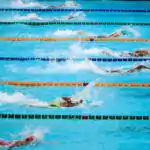
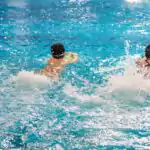
swimming is a great way to exercise and have fun in the water. There are many different swimming strokes, but we will focus on a few basic ones today.
What are Swimming Strokes?
swimming strokes are the different ways you can move your arms and legs to propel yourself through the water. Some common strokes include:
Breaststroke
This stroke involves gliding forward with straight arms and outward palms, then pulling back in a circular motion while performing a frog kick.
Butterfly Stroke
This stroke uses simultaneous arm movements over your head and into the water, pulling your body forward with a dolphin kick.
Backstroke
In this stroke, you float on your back, moving one arm at a time over your head and back into the water, while kicking your legs up and down.
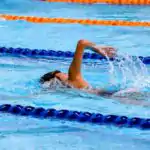
Freestyle (Front Crawl)
This stroke involves alternating arm movements over your head and into the water,with up and down leg kicks. You turn your head to breathe.
Dog Paddle
This stroke keeps your head above water. You use your hands to scoop water and move forward, kicking your legs gently.
Sidestroke
This stroke involves lying on your side and using scissor-like kicks while alternating arm movements to propel through the water.
Elementary Backstroke
This stroke involves floating on your back and using a simultaneous arm pull and frog kick to move through the water.
Teaching Methods
To deliver this lesson, the teacher will adopt the following methods: Exhibition, Description, Question and Answer, and Group Activity.
Instructional Procedures
To deliver this lesson, the teacher will adopt the following steps:
Step 1: Introduction (set Induction)
time: 5 minutes
Teaching Skill: Questioning
TeacherS Activity: Review previous lesson, introduce the topic of different swimming strokes.
Pupils’ Activity: Respond to questions, listen attentively.
Step 2: Explanation of Key Concepts
Time: 10 minutes
Teaching Skill: Explanation
Teacher’s Activity: Explain the different swimming strokes (breaststroke,butterfly,backstroke,freestyle,dog paddle,sidestroke,elementary backstroke).
Pupils’ Activity: listen attentively, ask clarifying questions.
Step 3: Demonstration/Guided Practice
Time: 15 minutes
Teaching Skill: Demonstration
Teacher’s Activity: Demonstrate each stroke, guide pupils in practicing each stroke.
Pupils’ Activity: Observe demonstrations, practice strokes with guidance.
Step 4: Autonomous Practice
Time: 5 minutes
Teaching Skill: Monitoring
Teacher’s Activity: Observe pupils practicing strokes, provide individual assistance.
Pupils’ Activity: Practice strokes independently.
Step 5: Note-Taking
Time: 2 minutes
Teaching Skill: Note-taking
Teacher’s Activity: Guide pupils in taking notes on the different strokes.
Pupils’ Activity: Take notes on the different strokes.
Step 6: Evaluation/Review
Time: 3 minutes
Teaching Skill: Questioning
Teacher’s Activity: ask review questions.
Pupils’ Activity: Answer review questions.
Objective-aligned checks:
- identify different swimming strokes such as backstroke and butterfly stroke.
- Show enthusiasm and confidence while practicing swimming strokes.
- Demonstrate basic swimming strokes with proper form.
Step 7: Conclusion
Time: 2 minutes
Teaching Skill: Summarizing
Teacher’s Activity: Summarize the key points learned and assign homework.
Pupils’ Activity: Listen attentively and note homework.
Lesson Keywords
- Breaststroke – A swimming stroke where the swimmer is face down and moves their arms in a circular motion while kicking their legs in a frog-like motion.
- Butterfly stroke – A swimming stroke where the swimmer moves both arms concurrently over the water and kicks their legs together in a dolphin-like motion.
- Backstroke – A swimming stroke where the swimmer is on their back and moves their arms in a circular motion while kicking their legs.
- Freestyle – A swimming stroke where the swimmer alternates arm movements and kicks their legs in a flutter motion.
- Dog Paddle – A basic swimming stroke where the swimmer uses their hands to scoop water and move forward,kicking their legs gently.
- Sidestroke – A swimming stroke where the swimmer lies on their side and uses scissor-like kicks while alternating arm movements.
- Elementary Backstroke – A swimming stroke where the swimmer floats on their back and uses a simultaneous arm pull and frog kick to move through the water.
Lesson Evaluation
To evaluate the learning, the teacher asks pupils to:
- Name two swimming strokes we learned today.
- Show me one of the strokes you learned.
- What is one vital safety rule to remember when swimming?
- Describe how to do the breaststroke.
- Explain the difference between freestyle and backstroke.
Assignment/Homework
- Draw your favorite swimming stroke.
- Write down three safety rules to follow when swimming.
- Practice one of the swimming strokes with adult supervision.
- Research another type of swimming stroke and write a short paragraph about it.
Differentiation
- For slower learners: Provide one-on-one assistance and break down the strokes into simpler steps.
- For advanced learners: Encourage them to explore additional swimming techniques and safety measures.
- For visual/auditory/kinesthetic learners: Use visual aids,verbal instructions,and hands-on practice to cater to different learning styles.
Note for Teachers
Ensure that pupils practice swimming strokes under close supervision and in a safe environment. Emphasize the importance of water safety rules and encourage pupils to ask questions and seek assistance when needed.
Community Join the conversation Open discussion +