

Class: Primary 6
Term: 2nd Term
Subject: Basic Science and Technology
Curriculum Theme: Basic Science
Previous Lesson: Male Reproductive Organs
Topic: Female Reproductive Organs
Content/Learning Area: Female Reproductive Organs
Time Allocation: 40 minutes
Performance Objectives
By the end of the lesson, pupils should be able to:
- Cognitive Domain: Identify and name the parts of the female reproductive organs.
- Affective Domain: Appreciate the role of female reproductive organs in human reproduction.
- Psychomotor Domain: Demonstrate the position of the female reproductive organs through drawing.
- Social Domain: Work cooperatively in groups to label diagrams of the female reproductive organs.
Reference materials
The following resources were used in planning this lesson:
- 9 – Years Basic Education Curriculum
- Abuja Educational Resource Center Scheme of Work
- NAPPS National Unified Scheme of Work
- online Information from: Wikipedia – Female reproductive system
- Relevant Textbooks
Instructional Materials
To deliver this lesson, the teacher will use the following materials:
- A chart of the female reproductive organs
- markers and whiteboard
- A diagram handout of the female reproductive system
Rationale for the Lesson
Understanding the female reproductive organs is essential for pupils as it promotes awareness of human biology and the importance of reproductive health. This knowledge helps in fostering respect for life and understanding changes during puberty, which is crucial for their personal growth and advancement.
Prerequisite/Previous Knowledge
Pupils have learned about the male reproductive organs, which provides a foundation for understanding the female reproductive organs and the differences between them.
Lesson Content
Female Reproductive Organs
Human reproduction occurs when a sperm fertilizes an egg. In females,the organs involved are located inside the body. Below is a brief overview of the key female reproductive organs:
The following are the key female reproductive organs:
- Ovaries: These are two small organs that produce eggs and hormones like estrogen.
- Fallopian Tubes: These tubes carry eggs from the ovaries to the uterus.
- Uterus: This is where a fertilized egg develops into a baby.
- Cervix: The lower part of the uterus, it connects the uterus to the vagina.
- Vagina: The passage that connects the outside of the body to the uterus.
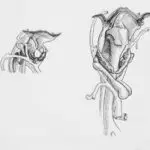
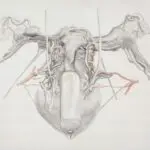
Female Reproductive Organs
The ovaries release egg cells and produce hormones. The oviducts carry an egg toward the uterus and are the usual site of fertilisation. The uterus can support a developing embryo and foetus; the cervix is its lower opening; and the vagina connects the cervix to the outside.
Diagrams are for scientific learning, not personal disclosure. Persistent pain or unusual symptoms should be discussed with a trusted adult and qualified health worker.
Teaching Methods
to deliver this lesson, the teacher will adopt the following methods: Lecture, Demonstration, Explanation, Visual Aids, Guided Practice, Question and Answer.
Instructional Procedures
to deliver this lesson, the teacher will adopt the following steps:
Step 1: Introduction
Time: 5 mins
Teaching Skill: Set Induction
Teacher’s Activity: Introduce the female reproductive organs with a chart.
Pupils’ Activity: Pupils observe and engage in discussion.
Step 2: Explanation of Ovaries
Time: 5 mins
teaching Skill: Explanation
Teacher’s Activity: Explain the function of ovaries and their role in hormone production.
Pupils’ Activity: Pupils listen and take notes.
Step 3: Explanation of Fallopian Tubes
Time: 5 mins
Teaching Skill: Demonstration
Teacher’s Activity: Explain the function and location of the fallopian tubes.
Pupils’ Activity: Pupils observe and answer questions.
Step 4: Explanation of Uterus
Time: 5 mins
Teaching Skill: Explanation
Teacher’s Activity: Describe the role of the uterus in the development of a baby.
Pupils’ Activity: Pupils take notes and ask questions.
Step 5: Explanation of Cervix
Time: 5 mins
Teaching Skill: Guided Practice
Teacher’s Activity: Explain the cervix’s role and location.
Pupils’ Activity: Pupils write down the key points about the cervix.
Step 6: Explanation of Vagina
Time: 5 mins
Teaching Skill: Explanation
Teacher’s Activity: Explain the function of the vagina and its role in childbirth.
Pupils’ Activity: Pupils listen and discuss the function of the vagina.
Step 7: Note-Taking
step 8: Evaluation/Review
Time: 5 mins
Teaching Skill: Question and Answer
Teacher’s Activity: Ask pupils to recall the parts and functions of the female reproductive organs.
Pupils’ activity: pupils answer questions and recall learned content.
Objective-aligned checks:
- Identify and name the parts of the female reproductive organs.
- Demonstrate the position of the female reproductive organs through drawing.
Step 9: Conclusion
Lesson Keywords
- Ovaries – Organs that produce eggs and hormones.
- Fallopian Tubes – Tubes that carry eggs from the ovaries to the uterus.
- Uterus – Organ where a fertilized egg develops into a baby.
- Cervix – Lower part of the uterus connecting to the vagina.
- Vagina – Passage connecting the outside of the body to the uterus.
Lesson Evaluation
To evaluate the learning, the teacher asks pupils to:
- Name the female reproductive organs and state their functions.
- Identify the organ where a fertilized egg develops.
- Explain the role of the fallopian tubes in reproduction.
- Draw and label the female reproductive system on the board.
- Share one important function of the vagina.
Assignment/Homework
- Draw a detailed diagram of the female reproductive system.
- Write a short paragraph explaining the function of each organ in the female reproductive system.
- Research and list three hormones produced by the ovaries and their functions.
Differentiation
- For slower learners: The teacher will use visual aids and hands-on activities for pupils who need additional support.
- For advanced learners: Pupils who grasp the concept quickly will be asked to assist their peers or present their findings.
- For visual/auditory/kinesthetic learners: Use diagrams, verbal explanations, and encourage drawing and labeling activities.
Note for Teachers
Make sure to create a supportive and open environment where pupils feel pleasant asking questions. Use the chart to clearly show the location and function of each organ. Engage the pupils with interactive questioning to assess their understanding. Happy teaching!

Community Join the conversation Open discussion +