

Class: Primary Six
Term: First Term
Subject: Basic Science and Technology
Curriculum Theme: Basic Science
Previous Lesson: The Earth And The Movement
Topic: earth Movement: The eclipse
Content/Learning Area: solar eclipse, Lunar eclipse, The sun: Effects of interaction between the sun and the earth
Time allocation: 40 minutes
Performance Objectives
By the end of the lesson, pupils should be able to:
- Cognitive Domain:
– Explain the earth’s rotation on its axis and its revolution around the sun, and describe solar and lunar eclipses.
- affective Domain:
– Appreciate the importance of understanding natural phenomena like eclipses in our daily lives.
- Psychomotor Domain:
– Illustrate the earth’s orbit and the positions of the earth, moon, and sun during an eclipse.
- Social Domain:
– Discuss with peers how solar and lunar eclipses affect cultural and religious beliefs in different societies.
Reference Materials
- 9 – Years Basic education Curriculum
- Abuja Educational Resource Center Scheme of work
- NAPPS National Unified Scheme of Work
- Online information from NASA Science (.gov) – Eclipses – NASA Science
- Relevant Textbooks
Instructional Materials
To deliver this lesson, the teacher will use the following materials:
- A globe or a model of the earth, moon, and sun
- Flashcards illustrating the different types of eclipses
- Diagrams showing the earth’s rotation and revolution
- A flashlight and a small ball to simulate eclipses
Rationale for the Lesson
Understanding eclipses and the earth’s movements is key to grasping fundamental scientific concepts.This lesson helps pupils appreciate natural phenomena and their impact on our world.
Prerequisite/Previous Knowledge
Pupils have prior knowledge of the solar system and the positions of the sun,earth,and moon.
Lesson Content
Earth Movement: The Eclipse
The earth spins on its axis (an imaginary line through the North and South Poles), causing day and night. It also travels around the sun, taking a year to complete one orbit.
Solar Eclipse
A solar eclipse occurs when the moon passes between the sun and the earth,blocking the sun’s light. this causes a shadow on Earth, making it temporarily dark, even during the day.

Lunar eclipse
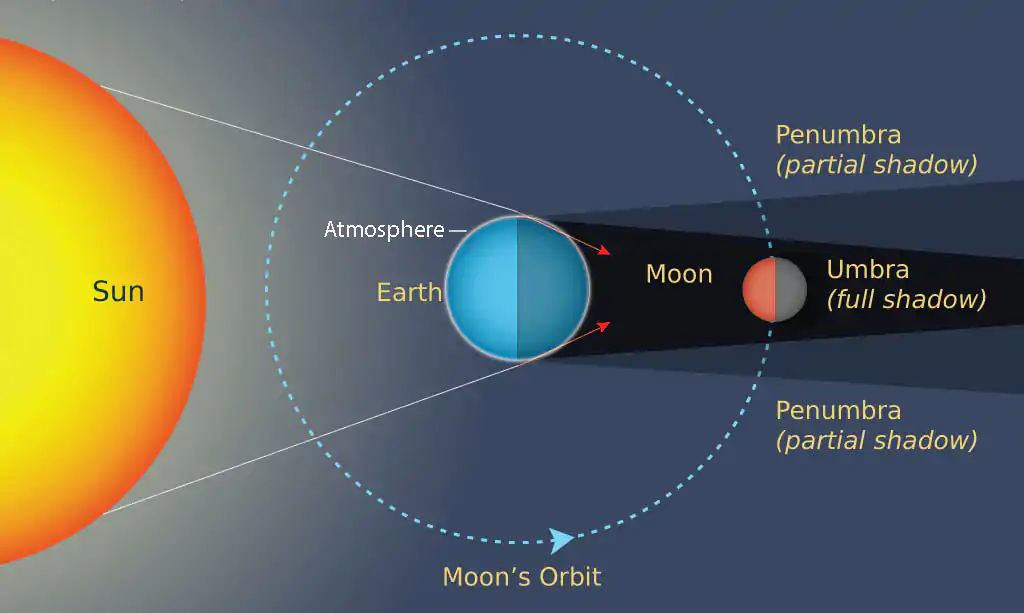
A lunar eclipse happens when the earth is between the sun and the moon, blocking sunlight from reaching the moon. This makes the moon appear dark or reddish (“blood moon”).
Effects of sun-Earth Interaction
The interaction between the sun and the earth has several effects. These include:
- Eclipses: Solar and lunar eclipses are direct results of the alignment of the sun, earth, and moon.
- Seasons: The tilt of the Earth’s axis and its orbit around the sun cause the seasons.
- Day and Night: the Earth’s rotation on its axis causes day and night.
- Tides: The gravitational pull of the sun and moon on the Earth causes tides in the oceans.
- Weather Patterns: the sun’s energy drives weather patterns on Earth, including wind, rain, and temperature variations.
- Climate Zones: The amount of sunlight received at different latitudes creates different climate zones, such as tropical, temperate, and polar regions.
Teaching Methods
To deliver this lesson, the teacher will adopt the following methods: Interactive Lecture, Demonstration, Group Work, Discussion.
Instructional Procedures
To deliver this lesson, the teacher will adopt the following steps:
Step 1: Introduction
Time: 5 mins
Teaching Skill: Set induction
Teacher’s Activity: ask pupils if they’ve seen an eclipse; demonstrate basic concepts using a globe and flashlight.
Pupils’ Activity: Respond to questions, observe the demonstration.
Step 2: Earth’s Rotation and Revolution
Time: 10 mins
Teaching Skill: Explanation using visual aids
Teacher’s Activity: Explain earth’s rotation and revolution using diagrams and models.Pupils’ Activity: Observe, ask questions, take notes.
Step 3: Explaining Solar and Lunar Eclipses
Time: 10 mins
Teaching Skill: Group work and visual simulation
teacher’s Activity: Show differences between solar and lunar eclipses using diagrams and models.
Pupils’ Activity: Participate in group work, observe models, discuss.
step 4: Effects of Sun-earth Interaction
Time: 5 mins
Teaching Skill: Interactive discussion
Teacher’s Activity: Discuss the effects of sun-earth interaction, focusing on eclipses.Pupils’ Activity: Engage in discussion, share ideas.
Step 5: Note-Taking
Time: 3 mins
Teaching Skill: Dictation
teacher’s Activity: Guide pupils to copy key notes.
Pupils’ Activity: Copy notes.
Step 6: Evaluation/Review
Time: 2 mins
Teaching Skill: Oral evaluation
Teacher’s Activity: Ask questions to evaluate understanding.
Pupils’ Activity: Answer questions orally.
Step 7: Conclusion
Time: 5 mins
Teaching Skill: Recap and emphasis
Teacher’s Activity: Summarize key points, emphasize the importance of understanding eclipses.
Pupils’ activity: Listen attentively, ask questions.
Lesson Keywords
- Eclipse – An event where one celestial body blocks the light from another.
- Solar Eclipse – When the moon blocks the sun’s light.
- Lunar eclipse – When the earth blocks the sun’s light from reaching the moon.
- Rotation – The spinning of the earth on its axis.
- Revolution – The movement of the earth around the sun.
Lesson Evaluation
To evaluate the learning, the teacher asks pupils to:
- Describe the difference between the earth’s rotation and its revolution.
- explain how a solar eclipse occurs.
- Describe what happens during a lunar eclipse.
- Discuss one effect of the interaction between the sun and the earth.
- Illustrate the positions of the sun,earth,and moon during a solar eclipse.
Assignment/Homework
- Research and write a short paragraph about a famous solar or lunar eclipse in history.
- Draw a diagram illustrating the positions of the sun, earth, and moon during a lunar eclipse.
- Explain why solar eclipses are less frequent than lunar eclipses.
Differentiation
- For slower learners: Provide one-on-one assistance and use simpler language.
- For advanced learners: Encourage further research on different types of eclipses and their historical importance.
- For visual/auditory/kinesthetic learners: Use visual aids, demonstrations, and hands-on activities to cater to different learning styles.
Note for Teachers
Ensure pupils understand the difference between rotation and revolution before explaining eclipses. Use real-life examples and visual aids to make the lesson engaging and easy to understand.


Community Join the conversation Open discussion +