

Class: Primary Six
Term: First Term
Subject: Basic Science and technology
Curriculum Theme: Basic Science
Previous Lesson: Meaning of Weather and Simple Weather Symbols in Changes In Our Climate
Topic: Changes In Our Climate: Uses Of weather Symbols
Content/learning Area: Uses Of weather Symbols, Weather Instruments
Time Allocation: 40 minutes
Performance Objectives
By the end of the lesson, pupils should be able to:
- Cognitive domain:
– List five weather symbols and explain their importance in predicting weather conditions.
- Affective Domain:
– Appreciate the role of weather instruments in daily life by discussing their uses.
- Psychomotor Domain:
– Draw and label at least three weather symbols accurately.
- Social Domain:
– Discuss in groups the importance of weather symbols in community safety and agriculture.
Reference Materials
- 9 – Years Basic Education Curriculum
- Abuja Educational Resource Center Scheme of Work
- NAPPS National Unified Scheme of Work
- Online Details from Weather Wiz Kids – weather Instruments
- Relevant Textbooks
Instructional Materials
To deliver this lesson, the teacher will employ the help of the following materials:
- Weather charts showing different weather symbols
- Models or pictures of weather instruments (e.g.,thermometer,barometer)
- Flashcards with weather symbols for matching activities
- Whiteboard and markers for illustrations
Rationale for the Lesson
Understanding weather symbols and instruments is crucial for interpreting weather forecasts,essential for safety,agriculture,and daily planning. This knowledge fosters environmental awareness and understanding of weather’s impact on human activities.
Prerequisite/Previous knowledge
The teacher will begin by asking pupils to share their observations of recent weather conditions,prompting a discussion about weather patterns and the need for understanding weather symbols and instruments.
Lesson Content
Uses Of Weather Symbols
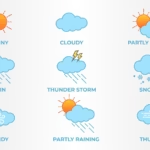
Weather symbols are vital signs used in weather forecasts to communicate different weather conditions clearly and quickly. They help people prepare for different weather conditions, are essential for planning agricultural activities, provide safety data, assist in making informed decisions, and are used globally for consistent communication.
Weather Instruments
Weather instruments are tools used to measure various aspects of the weather, helping us predict future weather and understand current conditions.
Examples of Weather Instruments
Weather instruments are tools used to measure various aspects of the weather, helping us predict future weather and understand current conditions. The following are examples of weather instruments:
- Thermometer – Measures temperature.
- Barometer – Measures atmospheric pressure.
- Anemometer – Measures wind speed.
- Hygrometer – measures humidity.
- Rain Gauge – measures rainfall.
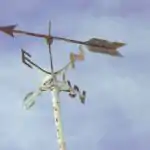
- wind Vane – Shows wind direction.
- Weather Balloon – Measures temperature, pressure, and humidity at higher altitudes.
- Snow Gauge – Measures snowfall.
- Evaporimeter (Atmometer) – Measures evaporation rate.
- Weather Satellite – Captures weather images and data from space.
- Windsock – Shows wind direction and estimates wind speed.
- Ceilometer – Measures the height of cloud bases.
- Radiosonde – Transmits weather data from balloons to ground stations.
Uses of Weather Instruments
Weather instruments are used to measure various aspects of the weather, helping us predict future weather and understand current conditions. These include:
- Thermometer: Measures daily temperature.
- Barometer: Predicts weather changes.
- Anemometer: Measures wind speed for weather forecasting, flying, and sailing.
- Hygrometer: Tracks humidity levels.
- Rain Gauge: Measures rainfall for agriculture and weather tracking.
- Wind Vane: shows wind direction for predicting weather patterns.
- Weather Balloon: Collects atmospheric data.
- Snow Gauge: Measures snow depth.
- Weather satellite: provides large-scale weather data.
- Windsock: Indicates wind direction and speed.
- Ceilometer: Determines cloud height for aviation safety.
- Radiosonde: Gathers upper-atmosphere data for weather models.
These tools provide information for weather predictions and safety planning.
Teaching Methods
To deliver this lesson, the teacher will adopt the following methods: Discussion, clarification, Presentation, Hands-on activity, Group work, note-taking, Oral questioning.
instructional Procedures
To deliver this lesson, the teacher will adopt the following steps:
Step 1: Introduction
Time: 5 mins
Teaching Skill: Set Induction
Teacher’s Activity: Teacher asks pupils to mention any weather condition they have observed recently.
Pupils’ Activity: Pupils share their experiences of recent weather conditions.
learning Point: Pupils connect personal experiences with weather concepts.
Step 2: Presentation
Time: 10 mins
Teaching Skill: Description
Teacher’s Activity: Teacher introduces weather symbols using charts and explains their meanings.
Pupils’ Activity: Pupils observe the charts and listen to explanations.
Learning Point: Significance of different weather symbols.
Step 3: Explanation
Time: 10 mins
Teaching Skill: Demonstration
Teacher’s Activity: Teacher demonstrates how to use weather instruments, such as a thermometer.
Pupils’ Activity: Pupils observe and take notes on the use of weather instruments.Learning Point: The operation and use of weather instruments.
step 4: Practice
Time: 5 mins
teaching Skill: Illustration
Teacher’s Activity: Teacher instructs pupils to draw and label three weather symbols on their notebooks.
Pupils’ Activity: Pupils draw and label weather symbols.
Learning Point: Reinforce understanding thru drawing.
Step 5: Group Discussion
Time: 5 mins
Teaching Skill: Group work
Teacher’s Activity: Teacher organizes pupils into groups to discuss the importance of weather symbols.
pupils’ Activity: Pupils discuss in groups and share ideas with the class.
Learning point: Community and agricultural relevance of weather symbols.
Step 6: Note-taking
Time: 2 mins
Teaching Skill: Explanation
Teacher’s Activity: Teacher dictates key points for pupils to copy into their notebooks.pupils’ Activity: Pupils copy the notes into their notebooks.
Learning Point: Consolidate their understanding through note-taking.
Step 7: Evaluation/Review
Time: 3 mins
Teaching Skill: Oral questioning
Teacher’s Activity: Teacher reviews the lesson by asking questions to assess pupils’ understanding.pupils’ Activity: Pupils answer questions and participate in a class recap.Learning Point: Comprehension is evaluated, and the lesson is reinforced.
Step 8: Conclusion
Time: 2 mins
Teaching Skill: Summarization
Teacher’s Activity: Teacher summarizes the key concepts learned, emphasizing the importance of weather symbols and instruments in daily life and safety.
Pupils’ Activity: Pupils listen to the summary and ask clarifying questions.
Learning Point: Reinforce key concepts and address any remaining questions.
Lesson Keywords
- Weather Symbol – A visual portrayal of weather conditions.
- Weather Instrument – A tool used to measure weather conditions.
- Thermometer – Measures temperature.
- Barometer – measures atmospheric pressure.
- Anemometer – measures wind speed.
Lesson Evaluation
To evaluate the learning, the teacher asks pupils to:
- List five weather symbols and explain their importance.
- Identify and describe the use of three weather instruments.
- Draw and label three weather symbols.
- Discuss in groups why weather symbols are crucial for farmers.
Assignment/Homework
- Draw your own weather chart using the symbols learned.
- Research and write about a weather instrument not discussed in class.
- Explain how weather forecasts affect daily activities in your community.
Differentiation
- For slower learners: Provide one-on-one assistance and use simpler explanations.
- For advanced learners: Encourage autonomous research on specific weather instruments or symbols.
- For visual/auditory/kinesthetic learners: Use visual aids, verbal explanations, and hands-on activities to cater to different learning styles.
Note for teachers
Ensure to use real-life examples and relatable scenarios to explain the importance of weather symbols and instruments. Encourage pupils to share their own experiences and observations to make the lesson more engaging.


Community Join the conversation Open discussion +