

Class: Primary 6
Term: Third Term
Subject: Basic Science & Technology
Curriculum Theme: basic Science
Previous Lesson: Meaning and Types of mineral resources in Nigeria
topic: Mineral Resources
Content/Learning Area: Physical characteristics of some major mineral resources
Time allocation: 40 Minutes
Performance Objectives
By the end of the lesson, pupils should be able to:
- Cognitive Domain: Identify major mineral resources.
- Affective Domain: Show interest in learning about mineral resources.
- Psychomotor Domain: Examine and describe the physical characteristics of mineral resources.
- Social Domain: Collaborate wiht peers to discuss mineral resources.
Reference Materials
- 9 Years Basic Education Curriculum
- Abuja Educational Resource Centre scheme of work
- NAPPS National Unified Scheme of Work
- Spectrum Basic Science and Technology Book 6
- Evans Basic Science and Technology Book 6
instructional Materials
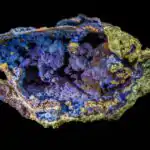
To deliver this lesson, the teacher will employ the help of the following materials: samples of mineral resources (if available), charts showing mineral resources, and textbooks.
Rationale for the Lesson
Understanding mineral resources is crucial for pupils to appreciate Nigeria’s natural wealth and its economic importance.
Prerequisite/Previous Knowledge
Pupils have a basic understanding of natural resources.
Lesson Content
Mineral Resources
Mineral resources are naturally occurring substances found on or in the Earth that are of economic value.
Physical Characteristics of Mineral Resources
Mineral resources possess distinct physical characteristics that aid in their identification. These characteristics include:
- Color – The visual appearance of the mineral.
- Luster – How light reflects off the mineral’s surface (e.g., metallic, glassy, dull).
- Streak – The color of the mineral in powdered form when rubbed on a streak plate.
- Hardness – The mineral’s resistance to scratching.
- Cleavage – The tendency of a mineral to break along specific planes.
- Fracture – The way a mineral breaks when it does not cleave.
- Specific Gravity – The density of the mineral relative to water.
- Clarity – The ability of light to pass through the mineral.
- Texture – The feel of the mineral (e.g., smooth, rough, granular).
- Odor – The smell of the mineral (some minerals have a distinct odor).
Teaching Methods
To deliver this lesson, the teacher will adopt the following methods: Explanation, Visual Aids, discussion, Observation.
Instructional procedures
To deliver this lesson,the teacher will adopt the following steps:
Step 1: Introduction
Time: 5 minutes
teaching Skill: set Induction
Teacher’s Activity: Engages pupils by asking about different types of rocks and what they are made of.
Pupils’ Activity: Respond to the teacher’s questions and share their prior knowledge.
Step 2: Explanation of Mineral Resources
Time: 10 minutes
Teaching Skill: Explanation
Teacher’s Activity: Explains what mineral resources are and their importance.
Pupils’ activity: Listen attentively and ask clarifying questions.
Step 3: Identifying physical Characteristics
time: 15 minutes
Teaching Skill: Observation
Teacher’s Activity: guides pupils to observe and describe the physical characteristics of mineral samples (if available) or charts.
Pupils’ Activity: Examine the samples/charts and describe the color, luster, and other characteristics.
Step 4: Class Discussion
Time: 5 minutes
Teaching Skill: Discussion
Teacher’s Activity: Facilitates a class discussion on the different types of mineral resources and their uses.
Pupils’ Activity: Participate in the discussion and share their ideas.
step 5: Note-Taking
Time: 2 minutes
Teaching Skill: writing
Teacher’s Activity: Guides pupils to write down key points from the lesson.
Pupils’ Activity: Write the notes in their notebooks.
Step 6: Evaluation/Review
Time: 2 minutes
Teaching Skill: Questioning
Teacher’s Activity: Asks questions to assess pupils’ understanding of the lesson.
Pupils’ Activity: Answer the questions asked by the teacher.
Objective-aligned checks:
- Identify major mineral resources.
- Examine and describe the physical characteristics of mineral resources.
step 7: Conclusion
Time: 1 minute
Teaching Skill: Summarizing
Teacher’s Activity: Summarizes the main points of the lesson.
Pupils’ Activity: Listen to the summary.
Lesson Keywords
- Mineral Resources – Naturally occurring substances of economic value.
- Color – The visual appearance of a mineral.
- Luster – how light reflects off a mineral’s surface.
- Hardness – A mineral’s resistance to scratching.
Lesson Evaluation
To evaluate the learning, the teacher asks pupils to:
- Define mineral resources.
- List three physical characteristics of mineral resources.
- Describe the luster of a specific mineral sample.
Assignment/Homework
- list five mineral resources found in Nigeria.
- Research and write about the uses of gold.
Differentiation
- For slower learners: Provide simplified notes and one-on-one assistance during observation.
- For advanced learners: Encourage them to research and present on a specific mineral resource.
- For visual/auditory/kinesthetic learners: use visual aids, verbal explanations, and hands-on activities.
Note for Teachers
Ensure to have samples or clear pictures of mineral resources for effective observation. Encourage pupils to ask questions and participate actively in the discussion.

Community Join the conversation Open discussion +