

Class: Primary Six
Term: First Term
Subject: Basic Science and Technology
Curriculum theme: Basic Science
Previous Lesson: Uses Of Weather Symbols and Weather Instruments in Changes In Our Climate
Topic: Changes in Our Climate: Keeping Weather Records
Content/Learning Area: Keeping weather Records
Time Allocation: 40 minutes
Performance objectives
By the end of the lesson, pupils should be able too:
- Cognitive Domain:
– explain the process of keeping weather records.
- Affective Domain:
– Appreciate the importance of accurate weather records in predicting climate changes.
- Psychomotor Domain:
– Demonstrate how to use a weather chart to record daily weather observations.
- Social Domain:
– Collaborate with classmates to maintain a weather record for a week.
reference Materials
- 9 – Years Basic Education curriculum
- Abuja Educational Resource Center Scheme of Work
- NAPPS National Unified Scheme of Work
- Online Facts from SlidePlayer – KEEPING WEATHER RECORDS
- Relevant Textbooks
Instructional Materials
To deliver this lesson, the teacher will employ the help of the following materials:
- A sample weather chart
- Markers and rulers
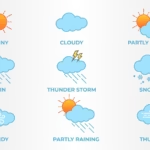
- Illustrative posters of weather symbols
- Daily newspapers with weather reports
- A wall clock for timing weather observations
Rationale for the Lesson
Understanding weather record-keeping is vital for pupils. It helps them monitor environmental changes, predict weather patterns, and prepare for various weather events. This practical skill fosters scientific thinking and is applicable to daily life and future studies.
Prerequisite/Previous Knowledge
The teacher begins by asking pupils to recall different weather symbols and their meanings. A fast review of the previous lesson on weather symbols will help bridge the gap to today’s topic.
Lesson Content
Changes In Our Climate: Keeping Weather Records
Weather records are crucial for understanding climate change over time. Daily weather observations help predict future patterns and prepare for different weather events.
ways Of Keeping Weather Records:
Keeping weather records involves several methods to track and document weather conditions over time. These include:
- Using a Weather Chart: Record daily observations like temperature, wind direction, and rainfall on a chart.
- Writing in a Weather Diary: Write down weather conditions daily in a diary.
- Electronic Devices: Use weather apps or software to log and analyze data.
- Photographs: Take daily pictures of the sky and weather as a visual record.
- Newspaper Clippings: save weather reports from newspapers.
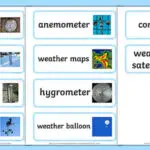
- Weather Station Instruments: Employ tools like thermometers, barometers, and rain gauges to measure and record specific weather parameters accurately.
- Spreadsheet Software: Utilize programs like Microsoft Excel or Google Sheets to create organized tables for entering and analyzing weather data.
Teaching Methods
To deliver this lesson, the teacher will adopt the following methods: Direct Teaching, Discussion, Exhibition, Group Work, and Writing Activity.
Instructional Procedures
To deliver this lesson, the teacher will adopt the following steps:
Step 1: Introduction
Time: 5 mins
Teaching Skill: Set Induction
Teacher’s Activity: The teacher asks pupils to recall weather symbols and their uses.
Pupils’ Activity: Pupils recall and mention weather symbols and their meanings.
Step 2: Explanation of Key Concepts
Time: 8 mins
Teaching Skill: Interactive Explanation
Teacher’s Activity: The teacher explains the concept of weather records and their importance in tracking climate changes.
Pupils’ Activity: Pupils listen and engage with questions about the meaning of keeping weather records.
Step 3: Demonstration/Guided Practice
Time: 10 mins
Teaching Skill: Practical Engagement
Teacher’s Activity: The teacher demonstrates how to fill in a weather chart with daily observations (e.g., temperature, wind).
Pupils’ Activity: Pupils observe and ask questions while the teacher fills in the weather chart.
Step 4: Autonomous Practise
Time: 8 mins
Teaching Skill: Cooperative Learning
Teacher’s Activity: The teacher divides the class into groups, each group records a day’s weather using provided materials.
pupils’ Activity: Pupils work in groups to record weather, discussing observations among themselves.
Step 5: Note-Taking
Time: 5 mins
Teaching Skill: Independent Work
Teacher’s Activity: The teacher instructs pupils to copy notes from the board about keeping weather records.
Pupils’ Activity: Pupils copy notes and review them for understanding.
Step 6: evaluation/Review
Time: 3 mins
Teaching Skill: Q&A Session
Teacher’s Activity: The teacher asks questions to assess pupils’ understanding of keeping weather records.
Pupils’ Activity: Pupils respond to questions based on what they have learned during the lesson.
Step 7: Conclusion
Time: 1 min
Teaching Skill: recap
teacher’s Activity: The teacher summarizes the key points of the lesson and links them to real-life applications.
Pupils’ Activity: Pupils listen and may ask final questions for clarity.
Lesson Keywords
- Weather Chart – A table used to record daily weather conditions.
- Climate Change – Long-term changes in temperature and weather patterns.
- Weather Diary – A personal journal for noting daily weather observations.
- Wind Direction – The direction from which the wind is blowing.
- Temperature – The degree of hotness or coldness of the air.
Lesson evaluation
To evaluate the learning, the teacher asks pupils to:
- Why are weather records vital?
- Name three things you can record on a weather chart.
- Show how to fill out a daily weather chart.
- What is one benefit of working together to keep weather records?
- How can weather records help predict future weather?
Assignment/Homework
- Keep a simple weather diary for the next week, noting the daily weather conditions.
- Research and write about how weather records are used by farmers in Nigeria.
- Create a weather chart for your local area for the next five days.
- Interview a family member about their memories of past weather events and record their experiences.
- Find and explain three different weather symbols used in weather forecasts.
Differentiation
- For slower learners: Provide one-on-one assistance and simplified weather charts.
- For advanced learners: More advanced pupils can research different methods of weather record-keeping and present their findings to the class.
- For visual/auditory/kinesthetic learners: Use visual aids like posters and videos, encourage verbal explanations, and incorporate hands-on activities like creating weather instruments.
Note for Teachers
encourage pupils to use local weather patterns and examples to make the lesson more relatable. Emphasize the importance of accuracy and consistency in keeping weather records. Provide additional support to pupils who struggle with the practical aspects of filling out weather charts.

Community Join the conversation Open discussion +