

Class: Primary 6
Term: Third Term
Subject: Basic Science & Technology
Curriculum Theme: Basic Science
Previous Lesson: Air, Applications of air pressure
Topic: Mineral Resources
Content/Learning area: Meaning of minerals; Types of mineral resources in Nigeria
Time Allocation: 40 Minutes
Performance Objectives
By the end of the lesson, pupils should be able too:
- Cognitive Domain: Define minerals and mineral resources.
- Affective Domain: Show interest in learning about Nigeria’s mineral wealth.
- Psychomotor Domain: Identify different types of mineral resources.
- Social Domain: Participate actively in group discussions about mineral resources.
Reference Materials
- 9 Years Basic Education Curriculum
- Abuja Educational Resource Center Scheme of work
- NAPPS National Unified Scheme of Work
- Spectrum Basic science and Technology Book 6
- Evans Basic Science and Technology Book 6
Instructional Materials
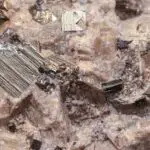
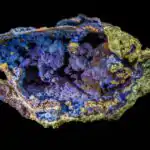
To deliver this lesson, the teacher will employ the help of the following materials: samples of minerals (tin, coal, iron ore, crude oil), pictures or charts of mining sites in Nigeria, and textbooks.
rationale for the Lesson
Understanding mineral resources is crucial for pupils to appreciate Nigeria’s natural wealth and its economic importance. This knowledge fosters awareness of resource management and sustainable progress.
Prerequisite/Previous Knowledge
Pupils have a basic understanding of natural resources and where they come from.
Lesson Content
Mineral Resources
Minerals are naturally occurring, inorganic substances with a definite chemical composition and crystal structure. Mineral resources are concentrations of minerals that are valuable and economically feasible to extract.
Types of Mineral Resources in nigeria
Nigeria is endowed with various mineral resources, contributing significantly to its economy.These resources can be categorized into metallic and non-metallic minerals.
- Crude Oil – A major source of revenue for Nigeria, used for fuel and various petrochemical products.
- Natural gas – often found with crude oil, used for electricity generation and industrial processes.
- Coal – A fossil fuel used for power generation, found in states like enugu.
- Tin Ore (Cassiterite) – Used in the production of tin, found in Plateau State.
- Iron Ore – Essential for steel production, found in Kogi and Enugu States.
- Gold – A precious metal used in jewelry and electronics, found in various states.
- Limestone – Used in cement production, found in many parts of Nigeria.
- Lead and Zinc – Used in batteries and other industrial applications, found in states like Ebonyi.
- Gypsum – Used in the production of plaster and cement, found in states like Sokoto.
- Salt – An essential mineral used in food and chemical industries, found in states like Ebonyi.
Teaching methods
To deliver this lesson, the teacher will adopt the following methods: Description, Visual Aids, Discussion, Question and Answer.
Instructional procedures
To deliver this lesson, the teacher will adopt the following steps:
Step 1: Introduction
Time: 5 minutes
Teaching Skill: Set Induction
Teacher’s Activity: The teacher shows samples of minerals (tin, coal, iron ore, crude oil) to the pupils and asks them what they know about these materials.Pupils’ Activity: Pupils observe the mineral samples and share their existing knowledge about them.
Step 2: Defining Minerals
Time: 10 minutes
Teaching Skill: Explanation
Teacher’s Activity: The teacher explains the meaning of minerals and mineral resources,emphasizing their natural occurrence and economic value.
pupils’ Activity: Pupils listen attentively and ask questions to clarify their understanding.
Step 3: Types of Mineral Resources
Time: 15 minutes
Teaching Skill: Visual Aids/Discussion
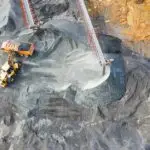
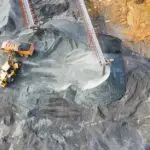
Teacher’s Activity: The teacher displays pictures or charts of different mineral resources found in Nigeria and leads a discussion on their uses and locations.
Pupils’ Activity: Pupils observe the visual aids, participate in the discussion, and identify the different types of mineral resources.
Step 4: Examples of Mineral Resources
Time: 5 minutes
Teaching Skill: Question and Answer
Teacher’s Activity: The teacher asks pupils to give examples of mineral resources found in their locality or state.
Pupils’ Activity: Pupils provide examples of mineral resources based on their knowledge and experiences.
Step 5: Note-Taking
Time: 3 minutes
Teaching Skill: Summarization
Teacher’s Activity: The teacher writes a summary of the lesson on the board.
Pupils’ Activity: Pupils copy the notes into their notebooks.
Step 6: Evaluation/Review
Time: 2 minutes
Teaching Skill: assessment
Teacher’s Activity: The teacher asks questions to evaluate the pupils’ understanding of the lesson.
Pupils’ Activity: Pupils answer the questions to demonstrate their understanding.
Objective-aligned checks:
- Define minerals and mineral resources.
- Identify different types of mineral resources.
Step 7: Conclusion
Time: 2 minutes
Teaching skill: Closure
Teacher’s Activity: The teacher summarizes the main points of the lesson and assigns homework.
pupils’ Activity: Pupils listen to the summary and note the homework assignment.
Lesson Keywords
- Minerals – Naturally occurring,inorganic substances.
- Mineral Resources – Concentrations of minerals that are valuable and economically feasible to extract.
- Crude Oil – A major source of revenue for Nigeria, used for fuel and petrochemical products.
- Natural Gas – Often found with crude oil, used for electricity generation and industrial processes.
- Coal – A fossil fuel used for power generation.
- Iron Ore – Essential for steel production.
- Limestone – Used in cement production.
Lesson Evaluation
To evaluate the learning, the teacher asks pupils to:
- Define minerals and mineral resources.
- List five types of mineral resources found in Nigeria.
- State one use of each of the mineral resources listed.
Assignment/Homework
- Research and write about the environmental impact of mining activities in Nigeria.
- Draw or find pictures of mining sites in Nigeria and label the mineral resources being extracted.
differentiation
- For slower learners: Provide simplified notes and focus on identifying the most common mineral resources.
- For advanced learners: Encourage them to research the economic importance of mineral resources to Nigeria’s GDP.
- For visual/auditory/kinesthetic learners: Use more visual aids, audio recordings, and hands-on activities with mineral samples.
Note for Teachers
Ensure to collect samples of minerals available in the local environment to make the lesson more practical and engaging. Emphasize the importance of responsible mining practices to protect the environment.
Community Join the conversation Open discussion +