

Class: Junior Secondary School 2 (JSS2, JSS 2)
Term: 2nd Term
Week: 8
Age: 13 years
Duration: 45 minutes
Subject: Mathematics
Curriculum Theme: Mathematics
Previous Lesson: Angles in Polygons, Angle Sums, and Classification of Polygons
Topic: Scale Drawing
Subject Matter: Drawing plane objects to scale, Converting actual lengths to scale, Calculation from scale drawing, Combination of plane shapes to produce design.
Specific Objectives
By the end of the lesson, pupils should be able to:
- Cognitive Domain:
(a) Explain scale drawing and identify common types of scales.
(b) Convert actual lengths into scaled lengths and vice versa.
(c) Solve simple calculations involving scale drawings. - Affective Domain:
(a) Develop interest in using scale drawings for real-life applications like maps, designs, and constructions. - Psychomotor Domain:
(a) Draw simple plane objects to scale using ruler, graph sheets, and mathematical instruments. - Social Domain:
(a) Work in groups to design composite shapes using scale drawings.
Reference Materials
The following resources was used in planning this lesson:
- 9 Years Basic Education Curriculum
- Lagos State Unified Scheme of Work for Junior Secondary Schools
- Math is Fun – Scale Drawing Definition
- Relevant Textbooks
Instructional Materials
The teacher will teach this lesson with the aid of:
- Rulers, protractors, compasses
- Graph sheets
- Sample scale drawings
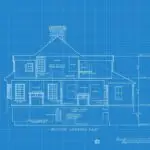
- Pictures of maps and building plans
- Whiteboard and markers
Rationale for the Lesson
This lesson helps learners understand how large or small objects are represented accurately on paper using scales, which is essential in map reading, architecture, and technical drawing.
Prerequisite/Previous Knowledge
Pupils already know how to measure line segments, identify plane shapes, and use basic drawing instruments from previous classes.
Lesson Content/Board Summary
Lesson Content
Scale Drawing
Scale drawing is the reduced or enlarged representation of an actual object using a fixed ratio called a scale. It allows large objects to be drawn on paper in smaller sizes while keeping their proportions accurate.
Drawing Plane Objects to Scale
Plane objects such as rectangles, triangles, or simple shapes can be drawn using a chosen scale that reduces or enlarges their actual dimensions.
The following are examples of drawing objects to scale:
- A table of actual length 150 cm drawn with a scale of 1:50 becomes:
150 ÷ 50 = 3 cm. - A rectangular field measuring 40 m by 25 m drawn to scale 1:200 becomes:
40 m → 4000 cm → 4000 ÷ 200 = 20 cm;
25 m → 2500 cm → 2500 ÷ 200 = 12.5 cm.
Converting Actual Lengths to Scale
Conversion means changing real-life sizes into their corresponding scaled lengths using the given scale ratio.
The following are steps for converting actual lengths to scale:
- Change measurements to the same unit.
- Divide the actual length by the scale factor.
- Use the result as the scaled length in the drawing.
Calculation from Scale Drawing
Calculations help determine actual distances or dimensions by reversing the scale ratio when the scaled drawing is known.
Examples are:
- If a scaled drawing shows 4 cm with a scale of 1:100, actual length = 4 × 100 = 400 cm.
- A map scale of 1:2000 shows two towns 3.5 cm apart. Actual distance = 3.5 × 2000 = 7000 cm = 70 m.
Combination of Plane Shapes to Produce Design
Composite designs can be formed by joining shapes like rectangles, circles, squares, and triangles and drawing them to a common scale.
Examples include:
- Designing a house plan using a rectangle and two attached squares.
- Drawing a school logo using a circle and a triangle.
Teaching Methods/Instructional Techniques:
Discussion, Lecture, Explanation, Demonstration, Guided Practice, Group Work, Question and Answer, Visual Aids
Instructional Procedures
To deliver this lesson, the teacher will adopt the following steps:
Step 1: Introduction
Time: 5 minutes
Teaching Skill: Set Induction
Teacher’s Activity: Teacher displays a map and a building plan and asks pupils how large objects can fit onto paper. Leads pupils to recall measurement concepts from previous lessons.
Pupils’ Activity: Pupils respond with ideas and share observations.
Learning Point: Pupils understand that scales are used to represent large objects in smaller sizes.
Step 2: Understanding Scale Drawing
Time: 8 minutes
Teaching Skill: Explanation
Teacher’s Activity: Teacher defines scale drawing and explains scale ratios using simple examples.
Pupils’ Activity: Pupils listen and ask questions.
Learning Point: Pupils grasp the concept of scale.
Step 3: Converting Actual Lengths to Scaled Lengths
Time: 10 minutes
Teaching Skill: Demonstration
Teacher’s Activity: Teacher demonstrates conversion using sample actual measurements and scales.
Pupils’ Activity: Pupils solve a few guided examples.
Learning Point: Pupils learn how to convert actual dimensions into scaled lengths.
Step 4: Drawing and Combining Shapes to Scale
Time: 10 minutes
Teaching Skill: Guided Practice
Teacher’s Activity: Teacher guides pupils to draw simple shapes to scale and combine them to form composite designs.
Pupils’ Activity: Pupils participate by drawing on graph sheets.
Learning Point: Pupils translate scale calculations into drawings.
Step 5: Note-Taking
Time: 5 minutes
Teaching Skill: Explanation
Teacher’s Activity: Teacher writes the board summary for pupils to copy.
Pupils’ Activity: Pupils copy the notes.
Learning Point: Pupils document the key points.
Step 6: Evaluation/Review
Time: 5 minutes
Teaching Skill: Questioning
Teacher’s Activity: The teacher evaluates the learning by asking the following questions:
- What is a scale drawing?
- Convert 240 cm to scaled length using scale 1:60.
- If 2.5 cm on a map represents 100 m, find the scale.
- Draw a rectangle of actual length 120 cm and width 80 cm using a scale of 1:40.
Pupils’ Activity: Pupils answer questions orally and perform short calculations.
Learning Point: Pupils show understanding of scale and drawing applications.
Step 7: Conclusion
Time: 2 minutes
Teaching Skill: Reinforcement
Teacher’s Activity: Teacher summarizes the lesson and emphasizes the importance of scale drawing in real life.
Pupils’ Activity: Pupils listen and ask final questions.
Learning Point: Pupils consolidate the lesson concepts.
Lesson Keywords
- Scale – a ratio showing the reduction or enlargement of an object
- Dimension – measurement of length, width, or height
- Actual Length – the real-life measurement of an object
- Scaled Length – the reduced or enlarged measurement used in drawing
- Composite Shape – a figure formed by combining two or more shapes
Differentiation
Provide step-by-step guidance and simplified tasks for slower learners, while advanced learners solve extra problems and create more complex composite designs.
Note for teachers using this lesson plan
Ensure pupils understand unit conversion before drawing. Encourage neatness in drawing and check accuracy of scaled measurements.

Community Join the conversation Open discussion +