

Class: Junior Secondary School 2 (JSS2, JSS 2)
Term: 2nd Term
Week: 3
Age: 13 years
Duration: 45 minutes
Subject: Mathematics
Curriculum Theme: Mathematics
Previous Lesson: Factorization Using Common Factors and Literal Coefficients
Topic: Algebraic Fractions
subject Matter: Algebraic fractions with monomial denominators (addition, subtraction, multiplication and division), word problems leading to simple algebraic fractions.
Specific Objectives
By the end of the lesson, pupils should be able to:
- Cognitive Domain:
(a) Identify algebraic fractions with monomial denominators and carry out addition and subtraction of such fractions.
(b) Perform multiplication and division of algebraic fractions with monomial denominators and solve word‐problems involving simple algebraic fractions. - Affective Domain:
(a) Value precision in simplifying algebraic fractions and check their work for accuracy. - Psychomotor Domain:
(a) Write workings clearly for operations on algebraic fractions (addition, subtraction, multiplication, division) and solve one or two word-problem examples. - Social Domain:
(a) Work in pairs or small groups to compare different methods of simplifying algebraic fractions and help each other correct errors.
Reference Materials
The following resources was used in planning this lesson:
- 9 Years Basic Education Curriculum
- Lagos State Unified Scheme of Work for Junior Secondary Schools
- Wikipedia – Algebraic fraction
- Relevant Textbooks
Instructional Materials
The teacher will teach this lesson with the aid of:
- A chart showing example algebraic fractions with monomial denominators
- A whiteboard and markers to work through additions, subtractions, multiplications and divisions
- Hand‐out worksheets containing practice problems including word problems
- Visual aids (posters) with rules for operations on algebraic fractions
- Calculators (optional) for verification of numerical parts in word problems
Rationale for the Lesson
This lesson enables pupils to deepen their understanding of algebraic fractions with monomial denominators and equips them with skills to perform key operations and apply them in simple contexts.
Prerequisite/Previous Knowledge
Pupils should already understand the concept of algebraic expressions, monomials and ordinary fractions, and be able to simplify simple algebraic expressions.
Lesson Content/Board Summary
Algebraic Fractions
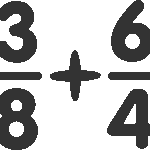
Addition and Subtraction of Algebraic Fractions with Monomial Denominators
An algebraic fraction is one where the numerator and/or denominator contain algebraic expressions. When denominators are monomials (single‐term expressions) the operations follow similar rules to numerical fractions.
These include:
- Identify like denominators (same monomial in denominator).
- If denominators are the same, add or subtract only the numerators and keep the denominator.
- If denominators differ, find the least common monomial denominator, convert each fraction accordingly and then perform the operation.
- Simplify the resulting algebraic fraction by cancelling common factors between numerator and denominator where possible.
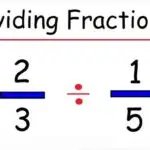
Multiplication and Division of Algebraic Fractions with Monomial Denominators
When multiplying or dividing algebraic fractions with monomial denominators the rules are extensions of fraction rules, and the presence of algebraic terms means variable factors must be handled correctly.
The following are the key steps:
- For multiplication: multiply numerator by numerator and denominator by denominator, then simplify by cancelling any common factors.
- For division: invert (take reciprocal) of the divisor fraction, then multiply as above; finally simplify the result.
- Always check that the monomial denominator is not zero (i.e., the algebraic expression cannot make denominator zero).
Word Problems Involving Simple Algebraic Fractions
Real‐life or story‐based problems can be modelled with algebraic fractions (with monomial denominators) and require translation of words into algebraic fraction operations, then solution.
Examples includes:
- If (dfrac{3x}{4y}) of a pool is filled and (dfrac{2x}{7y}) more is added, what fraction of the pool is filled in terms of (x,y)?
- A quantity is represented by (dfrac{5a}{3b}). If one half of this is used, what remains?
- One process takes (dfrac{m}{2n}) hours and another takes (dfrac{3m}{5n}) hours. How many hours in total? Simplify the answer.
Teaching Methods/Instructional Techniques:
Lecture, Explanation, Demonstration, Visual Aids, Group Work, Question and Answer
Instructional Procedures
To deliver this lesson, the teacher will adopt the following steps:
Step 1: Introduction
Time: 5 minutes
Teaching Skill: Set Induction
Teacher’s Activity: The teacher asks pupils to recall what they learnt previously about fractions and algebraic expressions, and then introduces the idea of fractions whose denominators are monomials.
Pupils’ Activity: Pupils respond by recalling prior knowledge and engage with the teacher’s questions.
Learning Point: Pupils are primed to link previous knowledge of algebraic expressions and fractions to algebraic fractions.
Step 2: Presentation of Addition and Subtraction of Algebraic Fractions
Time: 10 minutes
Teaching Skill: Explanation
Teacher’s Activity: The teacher explains key steps for adding/subtracting algebraic fractions with monomial denominators, writes examples on board and works through one or two together.
Pupils’ Activity: Pupils take notes and follow the worked examples, asking questions if unclear.
Learning Point: Pupils understand how to perform addition and subtraction of algebraic fractions with monomial denominators.
Step 3: Presentation of Multiplication and Division of Algebraic Fractions
Time: 10 minutes
Teaching Skill: Demonstration
Teacher’s Activity: The teacher demonstrates multiplication and division of algebraic fractions with monomial denominators using board work, showing simplification steps and caution about zero denominators.
Pupils’ Activity: Pupils follow the steps, write down the workings, and attempt a short example under guidance.
Learning Point: Pupils understand and can perform multiplication and division of algebraic fractions with monomial denominators.
Step 4: Word Problem Application
Time: 10 minutes
Teaching Skill: Group Work
Teacher’s Activity: The teacher gives pupils short word problems involving algebraic fractions with monomial denominators, then guides them to form algebraic expressions and solve in groups.
Pupils’ Activity: In groups, pupils interpret the word problem, translate into algebraic fractions, carry out operations and present their solutions.
Learning Point: Pupils apply the learnt operations of algebraic fractions to contextual word problems.
Step 5: Note-Taking
Time: 5 minutes
Teaching Skill: Explanation
Teacher’s Activity: The teacher writes the board summary (Lesson Content/Board Summary) clearly for pupils to copy into their exercise books.
Pupils’ Activity: Pupils copy the board summary and ensure they understand the key points.
Learning Point: Pupils have a concise record of the lesson content for revision.
Step 6: Evaluation/Review
Time: 3 minutes
Teaching Skill: Questioning
Teacher’s Activity: The teacher evaluates the learning by asking the following questions:
- Add (dfrac{4a}{5b} + dfrac{3a}{5b}).
- Multiply (dfrac{2x}{3y} times dfrac{5x}{4y}) and simplify.
- A quantity is (dfrac{6m}{7n}) and (dfrac{2m}{7n}) is removed. What fraction remains?
- Divide (dfrac{8p}{3q} div dfrac{2p}{q}).
Pupils’Activity: Pupils answer the questions orally or write the workings briefly as required.
Learning Point: Pupils demonstrate comprehension of addition, subtraction, multiplication, division and word problems involving algebraic fractions with monomial denominators.
Step 7: Conclusion
Time: 2 minutes
Teaching Skill: Reinforcement
Teacher’s Activity: The teacher summarises the key points of algebraic fractions with monomial denominators, emphasises practice and warns against omission of variables in denominators.
Pupils’ Activity: Pupils listen and ask clarifying questions if necessary.
Learning Point: Pupils leave with a clear understanding of operations on algebraic fractions with monomial denominators and an awareness of ongoing practice needed.
Lesson Keywords
- Algebraic fraction – fraction in which the numerator or denominator (or both) are algebraic expressions
- Monomial denominator – a single‐term algebraic expression as the denominator of a fraction (fctemis.org)
- Simplify – to reduce an algebraic fraction to lowest terms by cancelling common factors
- Reciprocal – the inverted form of a fraction (denominator becomes numerator and vice versa) used in division of fractions
- Word-problem – a story or real‐life scenario which involves translating into algebraic expressions and solving
Differentiation
Provide slower learners with step-by-step guided worksheets highlighting each operation; advanced learners can be challenged with additional complex word problems involving algebraic fractions.
Note for teachers using this lesson plan
Ensure pupils clearly understand that denominators cannot be zero in algebraic fractions; monitor group work to ensure correct translation of word problems; emphasise practice to build fluency in operations.

Community Join the conversation Open discussion +