

Class: Junior Secondary School 2 (JSS2, JSS 2)
Term: 2nd Term
Week: 6
Age: 13 years
Duration: 45 minutes
Subject: Mathematics
Curriculum Theme: Mathematics
Previous Lesson: Solving Linear Inequalities, Graphical Representation, and Word Problems
Topic: Plane Shapes And Figures
subject Matter: Properties of: Parallelogram, Rhombus, Kite.
Specific Objectives
By the end of the lesson, pupils should be able to:
- Cognitive Domain:
(a) Identify the properties of a parallelogram, rhombus, and kite.
(b) Distinguish between the three shapes based on their sides, angles, and diagonals. - Affective Domain:
(a) Show appreciation for the relevance of geometric shapes in everyday objects. - Psychomotor Domain:
(a) Draw accurate sketches of a parallelogram, rhombus, and kite using a ruler. - Social Domain:
(a) Work cooperatively in groups to classify shapes based on their properties.
Reference Materials
The following resources was used in planning this lesson:
- 9 Years Basic Education Curriculum
- Lagos State Unified Scheme of Work for Junior Secondary Schools
- Math is Fun – “Quadrilaterals” (https://www.mathsisfun.com/quadrilaterals.html)
- BBC Bitesize – “Properties of Shapes” (https://www.bbc.co.uk/bitesize/topics/zvmxsbk)
- Relevant Textbooks
Instructional Materials
The teacher will teach this lesson with the aid of:
- Chart showing different quadrilaterals
- Geometric sets (ruler, protractor, set square)
- Cardboard cutouts of parallelogram, rhombus, and kite
- Multimedia projector (optional)
- Whiteboard and markers
Rationale for the Lesson
Understanding the properties of shapes helps learners develop spatial reasoning and supports their ability to solve geometric problems in higher mathematics.
Prerequisite/Previous Knowledge
Pupils are familiar with basic plane shapes, attributes such as sides and angles, and can already identify quadrilaterals from earlier lessons.
Lesson Content/Board Summary
Lesson Content
Plane Shapes and Figures
Properties of a Parallelogram
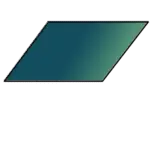
A parallelogram is a quadrilateral with opposite sides that are parallel and equal. It has slanted sides and opposite angles that look alike.
The following are the properties of a parallelogram:
- Opposite sides are equal.
- Opposite sides are parallel.
- Opposite angles are equal.
- Adjacent angles are supplementary.
- Diagonals bisect each other.
Properties of a Rhombus
A rhombus is a special type of parallelogram where all the four sides are equal in length. It looks like a “slanted square” and has diagonal symmetry.
The following are the properties of a rhombus:
- All four sides are equal.
- Opposite sides are parallel.
- Opposite angles are equal.
- Diagonals bisect each other at right angles.
- Diagonals bisect the interior angles.
Properties of a Kite
A kite is a quadrilateral with two pairs of adjacent sides that are equal. It has a unique shape similar to the flying kite used for recreation.
These include the properties of a kite:
- Two pairs of adjacent sides are equal.
- One pair of opposite angles are equal.
- Diagonals intersect at right angles.
- One diagonal bisects the other.
- One diagonal bisects the angles from which the equal sides meet.
Teaching Methods/Instructional Techniques:
Discussion, Lecture, Explanation, Demonstration, Group Work, Question and Answer, Visual Aids
Instructional Procedures
To deliver this lesson, the teacher will adopt the following steps:
Step 1: Introduction
Time: 5 minutes
Teaching Skill: Set Induction
Teacher’s Activity: Teacher displays chart of quadrilaterals and asks pupils to recall names of familiar shapes from previous lessons.
Pupils’ Activity: Pupils identify shapes such as squares, rectangles, and parallelograms.
Learning Point: Pupils recall earlier knowledge and prepare for deeper study of specific quadrilaterals.
Step 2: Properties of a Parallelogram
Time: 10 minutes
Teaching Skill: Explanation
Teacher’s Activity: The teacher explains and lists the properties of a parallelogram using diagrams and board sketches.
Pupils’ Activity: Pupils observe and note the stated properties.
Learning Point: Pupils understand key features of a parallelogram.
Step 3: Properties of a Rhombus
Time: 10 minutes
Teaching Skill: Demonstration
Teacher’s Activity: Teacher draws a rhombus and highlights its properties, emphasizing diagonal behavior.
Pupils’ Activity: Pupils compare the rhombus to the parallelogram and identify similarities.
Learning Point: Pupils learn distinct and shared properties of a rhombus.
Step 4: Properties of a Kite
Time: 10 minutes
Teaching Skill: Discussion
Teacher’s Activity: Teacher presents a cardboard kite shape and discusses its properties, noting unique features.
Pupils’ Activity: Pupils participate by identifying equal sides and angles in the kite.
Learning Point: Pupils understand what makes a kite different from other quadrilaterals.
Step 5: Note-Taking
Time: 5 minutes
Teaching Skill: Explanation
Teacher’s Activity: Teacher writes the board summary for pupils to copy.
Pupils’ Activity: Pupils copy the notes neatly into their notebooks.
Learning Point: Pupils record the key content of the lesson.
Step 6: Evaluation/Review
Time: 3 minutes
Teaching Skill: Questioning
Teacher’s Activity: The teacher evaluates the learning by asking the following questions:
- State two properties of a parallelogram.
- Mention two properties of a rhombus.
- List two properties of a kite.
Pupils’ Activity: Pupils respond to the questions orally.
Learning Point: Pupils demonstrate understanding of the properties of the three shapes.
Step 7: Conclusion
Time: 2 minutes
Teaching Skill: Reinforcement
Teacher’s Activity: Teacher summarizes key differences between the shapes and encourages pupils to practice more drawings.
Pupils’ Activity: Pupils listen attentively.
Learning Point: Pupils consolidate their understanding of the lesson.
Lesson Keywords
- Parallelogram – a quadrilateral with opposite sides parallel
- Rhombus – a quadrilateral with all four sides equal
- Kite – a quadrilateral with two pairs of equal adjacent sides
- Diagonal – a line joining opposite corners of a shape
- Supplementary – angles whose sum is 180°
Differentiation
Provide visual aids for slower learners, allow peer support during drawing tasks, and challenge fast learners with additional comparison questions.
Note for teachers using this lesson plan
Ensure learners use geometric tools correctly. Emphasize the differences among the shapes and monitor group activities closely for accuracy.

Community Join the conversation Open discussion +