

Class: Primary 5
Term: 2nd Term
Subject: Basic Science and Technology
Curriculum Theme: Basic Technology
Previous Lesson: Units And Symbols Of Temperature Degree Fahrenheit
Topic: Measuring Temperature of Objects in °C and °F
Content/Learning Area: Measuring the temperature of an object in °C.Measuring the temperature of an object in °F.Time Allocation: 40 minutes
Performance Objectives
By the end of the lesson, pupils should be able to:
- Cognitive Domain:
1. Define temperature and explain the difference between °C and °F.
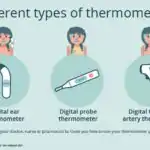
2. Identify the devices used to measure temperature.
- Affective Domain:
1. Appreciate the importance of temperature measurement in daily life.
2. Show interest in using thermometers for measuring temperature.
- Psychomotor Domain:
1.Accurately measure and record the temperature of different objects using a thermometer.2. Use the thermometer safely and correctly.
- Social Domain:
1. Work cooperatively with classmates to perform temperature measurement experiments.2. Share their findings and discuss differences in temperature readings.
Reference Materials
The following resources were used in planning this lesson:
- 9 – Years Basic Education Curriculum
- Abuja Educational Resource Center Scheme of Work
- NAPPS National Unified Scheme of Work
- Online Information from: Labomat – How to measure the temperature?
- Relevant Textbooks: “Basic Science and Technology for Primary Schools”
Instructional materials
To deliver this lesson, the teacher will employ the help of the following materials:
- Thermometers (both Celsius and Fahrenheit)
- Ice water and hot water
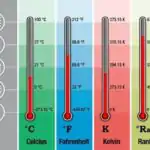
- Charts of temperature scales
- Whiteboard and markers
- Measuring containers
Rationale for the lesson
Understanding how to measure temperature is vital because it helps pupils make sense of temperature changes in their habitat, such as whether something is hot or cold.This skill is used daily when cooking, working with appliances, and even understanding the weather. It also introduces the concepts of Celsius and Fahrenheit, both of which are used worldwide for scientific purposes.
Prerequisite/Previous Knowledge
Pupils should already be familiar with the concepts of temperature, the use of thermometers, and the basic symbols for temperature measurement (°C and °F), having learned about the units and symbols in the previous lesson.
Lesson Content
Measuring Temperature of Objects in °C and °F
Temperature is a measure of how hot or cold an object is. We can measure it using a thermometer. There are two main scales for measuring temperature: Celsius (°C) and Fahrenheit (°F).
Measuring Temperature of Objects in Celsius (°C)
Measuring temperature in Celsius involves using a thermometer calibrated to the Celsius scale to determine the degree of hotness or coldness of an object.
The following are the steps to measure temperature in Celsius (°C):
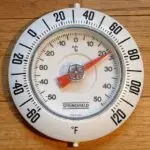
- To measure temperature in °C, place the thermometer in or near the object you wont to measure.
- Wait for a few seconds until the thermometer gives a steady reading.
- For example, the temperature of ice water is 0°C, and the temperature of boiling water is 100°C.
Measuring Temperature of Objects in Fahrenheit (°F)
Measuring temperature in Fahrenheit involves using a thermometer calibrated to the Fahrenheit scale to determine the degree of hotness or coldness of an object.The following are the steps to measure temperature in Fahrenheit (°F):
- To measure temperature in °F,the same steps apply,but the scale is different.
- Such as, ice water will be at 32°F, and boiling water will be at 212°F.
Teaching Methods
to deliver this lesson, the teacher will adopt the following methods: Discussion, demonstration, description, hands-on practice, question and answer.
Instructional Procedures
To deliver this lesson, the teacher will adopt the following steps:
Step 1: Introduction (Set Induction)
Time: 5 mins
Teaching Skill: Set Induction
Teacher’s Activity: Introduce the concept of measuring temperature. Show the thermometer and explain how it effectively works.
Pupils’ Activity: listen and observe. Ask questions about temperature.
Step 2: Explanation of Celsius
time: 7 mins
Teaching Skill: Explanation
Teacher’s Activity: Explain how to measure temperature in °C using an example (e.g., ice water).
Pupils’ Activity: Observe demonstration and take notes.
Step 3: Explanation of Fahrenheit
Time: 7 mins
Teaching Skill: explanation
Teacher’s Activity: Show how to measure temperature in °F using an example (e.g., hot water).
pupils’ Activity: Observe demonstration and take notes.
Step 4: Guided Practice
Time: 10 mins
Teaching Skill: Guided practice
Teacher’s Activity: Let pupils work in pairs to measure the temperature of various objects (ice water, hot water).
Pupils’ Activity: Work in pairs to measure temperatures using thermometers.
Step 5: Note-Taking
Time: 5 mins
Teaching Skill: autonomous Activity
Teacher’s Activity: Pupils write down the steps involved in measuring temperature in °C and °F.
Pupils’ Activity: Write notes on the board.
Step 6: Evaluation/Review
Time: 4 mins
Teaching Skill: Question and Answer
Teacher’s Activity: Ask pupils to answer questions based on the lesson content.
Pupils’ Activity: Respond to the teacher’s questions.
Objective-aligned checks:
- Define temperature and explain the difference between °C and °F.
- Identify the devices used to measure temperature.
- Show interest in using thermometers for measuring temperature.
Step 7: Conclusion
Time: 2 mins
Teaching Skill: Conclusion
Teacher’s Activity: Summarize the key points of the lesson.reinforce the importance of measuring temperature.
Pupils’ Activity: Summarize what they learned.
Lesson Keywords
- Temperature – A measure of how hot or cold something is.
- Celsius (°C) – A temperature scale where 0°C is the freezing point of water and 100°C is the boiling point.
- Fahrenheit (°F) – A temperature scale where 32°F is the freezing point of water and 212°F is the boiling point.
- Thermometer – An instrument used to measure temperature.
- Measurement – The process of finding the size, quantity, or degree of something.
Lesson Evaluation
to evaluate the learning, the teacher asks pupils to:
- What is the unit of measurement for Celsius and Fahrenheit?
- How do you measure the temperature of an object in °C?
- If you placed a thermometer in boiling water, what temperature would you expect to see in Celsius and Fahrenheit?
- What is the difference between the Celsius and Fahrenheit scales?
- How can you ensure the thermometer reading is accurate?
Assignment/Homework
- Measure the temperature of water in your home’s refrigerator in both Celsius and Fahrenheit.
- Research and write down three daily activities where measuring temperature is critically important.
- Explain in your own words why it is important to know how to measure temperature accurately.
Differentiation
- for slower learners: Provide one-on-one assistance and use simpler language to explain the concepts.
- For advanced learners: Challenge them to convert temperatures between Celsius and Fahrenheit using formulas.
- For visual/auditory/kinesthetic learners: Use visual aids like charts, verbal explanations, and hands-
Community Join the conversation Open discussion +