

Class: Senior Secondary School 1 (SS1 / SSS1)
Term: First Term
Week: 1
Age: 15 years
Duration: 45 minutes
Subject: Islamic Religious Studies
Curriculum Theme: Islamic Religious Studies
Previous Lesson: .
Topic: Revelation, recording and memorisation of the Glorious Qur’an during the life time of the Prophet Muhammad S.A.W
Subject Matter: definition of key terms on revelation and memorisation, how the Glorious Qur’an was revealed during the Prophet’s lifetime, how the Glorious Qur’an was recorded during the Prophet’s lifetime, how the Glorious Qur’an was memorised during the Prophet’s lifetime, items on which the Qur’an was written, names of Sahabah who memorised the Glorious Qur’an
Specific Objectives
By the end of the lesson, pupils should be able to:
Cognitive Domain:
- Define key terms related to the revelation, recording, and memorisation of the Glorious Qur’an.
- Describe how the Glorious Qur’an was revealed to Prophet Muhammad (S.A.W).
- Explain the methods used for recording the Glorious Qur’an during the Prophet’s lifetime.
- Discuss the process of memorising the Glorious Qur’an during the Prophet’s era.
Affective Domain:
- Appreciate the divine wisdom in the revelation and preservation of the Glorious Qur’an.
- Value the efforts of the Sahabah (Companions) in preserving the Glorious Qur’an.
Psychomotor Domain:
- List the various items on which the Glorious Qur’an was written.
- Identify prominent Sahabah who played a significant role in memorising the Glorious Qur’an.
Social Domain:
- Discuss the collective responsibility of the early Muslim community in preserving the Qur’an.
Reference Materials
The following resources were used in planning this lesson:
- Senior Secondary Schools Education Curriculum
- State Unified Scheme of Work
- Islamic Religious Studies for Senior Secondary Schools 1
Instructional Materials
The teacher will teach this lesson with the aid of:
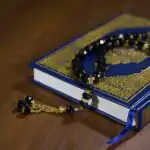
- Copies of the Glorious Qur’an
- Stones
- Bones
- Leaves used for writing
Rationale for the Lesson
This lesson helps pupils understand the divine origin and meticulous preservation of the Glorious Qur’an. It enables pupils to appreciate the authenticity of the Qur’an and the dedicated efforts of the Prophet Muhammad (S.A.W) and his companions in safeguarding its text for future generations.
Prerequisite/Previous Knowledge
Pupils are expected to have basic knowledge about Prophet Muhammad (S.A.W) and that the Qur’an is the holy book of Islam.
Lesson Content/Board Summary
Revelation, Recording, and Memorisation of the Glorious Qur’an
Definition of Key Terms
Revelation (Wahy): This refers to the divine communication from Allah (S.W.T) to His chosen prophets, particularly Prophet Muhammad (S.A.W), through the angel Jibreel (Gabriel). The Qur’an was revealed gradually over 23 years.
Recording (Kitabah): This is the process of writing down the revealed verses of the Glorious Qur’an as they were conveyed to Prophet Muhammad (S.A.W).
Memorisation (Hifz): This is the act of committing the Glorious Qur’an to memory, word for word, which was a common practice among the companions of the Prophet (S.A.W).
How the Glorious Qur’an was Revealed
The Glorious Qur’an was revealed to Prophet Muhammad (S.A.W) in stages over approximately 23 years (13 years in Makkah and 10 years in Madinah). The revelation primarily occurred through the angel Jibreel, who would bring the divine messages to the Prophet. Sometimes, the revelation came in the form of a dream or a direct inspiration from Allah (S.W.T).
How the Glorious Qur’an was Recorded during the Prophet’s Lifetime
Immediately after a revelation, Prophet Muhammad (S.A.W) would recite the verses to his companions and instruct specific scribes (Katibul Wahy – Scribes of Revelation) to write them down. These scribes would use readily available materials for recording. The Prophet also specified the exact position of each new revelation within the existing text of the Qur’an.
Items on which the Qur’an was Written
Due to the lack of paper during that era, the Glorious Qur’an was written on various simple materials:
- Shoulder blades of animals: Flat bones from sheep, camels, etc.
- Palm stalks/leaves: The broad, flat parts of date palm trees.
- Stones: Flat, smooth stones.
- Pieces of leather: Tanned animal skins.
- Wooden tablets: Small, flat pieces of wood.
- Parchment: Treated animal skin.
How the Glorious Qur’an was Memorised during the Prophet’s Lifetime
Memorisation was the primary method of preserving the Qur’an. The Prophet (S.A.W) himself would memorise the revelations, and then his companions would memorise them directly from him. They would recite the verses repeatedly and teach them to others. Many companions dedicated their lives to memorising the entire Qur’an, earning the title of ‘Huffaz’ (memorizers).
Names of Sahabah who Memorised the Glorious Qur’an
Many companions of the Prophet (S.A.W) memorised the entire Qur’an. Some of the most prominent among them include:
- Abu Bakr As-Siddiq
- Umar ibn Al-Khattab
- Uthman ibn Affan
- Ali ibn Abi Talib
- Zayd ibn Thabit (who was also a chief scribe)
- Abdullah ibn Mas’ud
- Ubayy ibn Ka’ab
- Abu Ad-Darda
- Aisha bint Abi Bakr (wife of the Prophet)
- Hafsa bint Umar (wife of the Prophet)
Teaching Methods/Instructional Techniques
Discussion, Lecture, Demonstration, Question and Answer, Visual Aids
Instructional Procedures
Step 1: Introduction
Time: 5 minutes
Teaching Skill: Set Induction
Teacher’s Activity: The teacher greets the pupils and asks them what they know about the Glorious Qur’an and how it came to be in its current form.
Pupils’ Activity: Pupils respond by sharing their prior knowledge about the Qur’an.
Learning Point: Pupils recall previous knowledge about the Qur’an and are introduced to the lesson topic.
Step 2: Definition of Key Terms
Time: 8 minutes
Teaching Skill: Explanation/Definition
Teacher’s Activity: The teacher defines “Revelation,” “Recording,” and “Memorisation” in the context of the Qur’an, using simple language.
Pupils’ Activity: Pupils listen attentively and take notes on the definitions.
Learning Point: Pupils understand the meaning of important terms related to the lesson.
Step 3: How the Qur’an was Revealed
Time: 7 minutes
Teaching Skill: Narration/Explanation
Teacher’s Activity: The teacher narrates the process of how the Glorious Qur’an was revealed to Prophet Muhammad (S.A.W) through Angel Jibreel over 23 years.
Pupils’ Activity: Pupils listen and ask questions for clarification.
Learning Point: Pupils understand the divine method and gradual nature of the Qur’anic revelation.
Step 4: Recording of the Qur’an
Time: 7 minutes
Teaching Skill: Demonstration/Explanation
Teacher’s Activity: The teacher explains how the Qur’an was recorded during the Prophet’s lifetime and shows the instructional materials (stones, bones, leaves) to illustrate the writing surfaces.
Pupils’ Activity: Pupils observe the materials and discuss their significance.
Learning Point: Pupils learn about the early methods and materials used for recording the Qur’an.
Step 5: Memorisation of the Qur’an
Time: 6 minutes
Teaching Skill: Discussion/Explanation
Teacher’s Activity: The teacher explains the importance of memorisation (Hifz) as a primary method of preserving the Qur’an and how the companions dedicated themselves to it.
Pupils’ Activity: Pupils discuss the role of memorisation and its benefits.
Learning Point: Pupils understand the role of memorisation in the preservation of the Qur’an.
Step 6: Sahabah who Memorised the Qur’an
Time: 5 minutes
Teaching Skill: Listing/Questioning
Teacher’s Activity: The teacher asks pupils to mention some prominent Sahabah who were known for memorising the entire Qur’an and supplements their answers.
Pupils’ Activity: Pupils mention names of Sahabah they know and listen to the teacher for additional names.
Learning Point: Pupils identify key individuals who contributed to the preservation of the Qur’an through memorisation.
Step 7: Evaluation/Review
Time: 5 minutes
Teaching Skill: Questioning/Assessment
Teacher’s Activity: The teacher evaluates the learning by asking the following questions:
- Define the term “Revelation” in the context of the Glorious Qur’an.
- List three items on which the Glorious Qur’an was recorded during the Prophet’s time.
- Mention two prominent Sahabah who were known for memorising the entire Qur’an.
- Briefly explain how the Glorious Qur’an was preserved through memorisation during the Prophet’s lifetime.
Pupils’ Activity: Pupils answer orally and in writing.
Learning Point: Pupils demonstrate understanding of the lesson.
Step 8: Conclusion
Time: 2 minutes
Teaching Skill: Summarisation/Assignment
Teacher’s Activity: The teacher summarises the main points of the lesson and assigns pupils to research the role of Zayd ibn Thabit in the compilation of the Qur’an after the Prophet’s death.
Pupils’ Activity: Pupils listen to the summary and copy down the assignment.
Learning Point: Pupils consolidate their learning and are given a task for further study.
Lesson Keywords
- Revelation – Divine communication from Allah to His prophets.
- Wahy – Arabic term for revelation.
- Recording – The act of writing down the Qur’an.
- Kitabah – Arabic term for recording/writing.
- Memorisation – Committing the Qur’an to memory.
- Hifz – Arabic term for memorisation.
- Sahabah – Companions of Prophet Muhammad (S.A.W).
- Huffaz – Those who have memorised the entire Qur’an.
Differentiation
For pupils who grasp concepts quickly, the teacher can encourage them to lead discussions or research deeper into specific aspects of the Qur’an’s preservation. For pupils who require more support, the teacher can provide simplified explanations, visual aids, and direct questions, ensuring they understand the core concepts.
Note for teachers using this lesson plan
Teachers should ensure pupils understand the importance of both written and oral preservation methods. Emphasise the Prophet’s role in guiding the scribes and the companions’ dedication. Encourage pupils to appreciate the authenticity of the Qur’an due to these meticulous preservation efforts. Use the instructional materials to make the lesson tangible and engaging for the pupils.

Community Join the conversation Open discussion +