

Class: Senior Secondary School 1 (SS1 / SSS 1)
Term: 1st Term
Week: 10
Age: 15 years
Duration: 45 minutes
Subject: Dying and Bleaching
Curriculum Theme: Trade
Previous Lesson: Introduction to Plain Dyeing of Fabric: Tie Dye vs Plain Dyeing.
Topic: PLAIN DYING
Subject Matter: materials needed for plain dyeing, preparing dye solution, setting up dye bath, dyeing fabric evenly, rinsing and drying plain dyed fabric
Specific Objectives
By the end of the lesson, pupils should be able to:
Cognitive Domain:
- Define plain dyeing.
- List the materials needed for plain dyeing.
- Describe the steps involved in plain dyeing.
Affective Domain:
- Appreciate the importance of safety measures during dyeing.
- Value the neatness and evenness of dyed fabrics.
Psychomotor Domain:
- Prepare a dye solution correctly.
- Set up a dye bath effectively.
- Dye a fabric evenly.
- Rinse and dry a plain dyed fabric properly.
Social Domain:
- Work cooperatively with peers during practical activities.
Reference Materials
The following resources were used in planning this lesson:
- 9 Years Basic Education Curriculum for Senior Secondary Schools.
- State Unified Scheme of Work for Dying and Bleaching (SSS 1).
- Textbook on Dyeing and Bleaching for Senior Secondary Schools.
Instructional Materials
The teacher will teach this lesson with the aid of:
- Cotton fabric samples
- Various dyes (e.g., direct dyes)
- Basins or buckets
- Stirring spoons or sticks
- Measuring cups
- Gloves
- Aprons
- Clean water supply
Rationale for the Lesson
This lesson helps pupils understand the practical process of plain dyeing, which is a fundamental skill in textile production and design. Learning these steps enables pupils to apply dyeing techniques for various purposes, including personal use or commercial ventures.
Prerequisite/Previous Knowledge
Pupils are assumed to have basic knowledge of different types of fabrics and their properties, as well as general safety rules in a practical workshop environment.
Lesson Content/Board Summary
PLAIN DYING
Definition of Plain Dyeing
Plain dyeing is a process where a fabric is immersed in a dye solution to uniformly colour it in a single hue. The goal is to achieve an even and consistent colouration across the entire fabric surface.
Materials Needed for Plain Dyeing
The following materials are needed for plain dyeing:
- Fabric: Usually cotton or other cellulosic fibres, which absorb dye well.
- Dyes: Specific dyes suitable for the fabric type (e.g., direct dyes for cotton).
- Basins/Buckets: For holding dye solution and rinsing.
- Stirring Spoons/Sticks: For mixing the dye and agitating the fabric.
- Measuring Cup/Scale: For accurate measurement of dye and chemicals.
- Gloves: To protect hands from dye stains and chemicals.
- Apron: To protect clothing from splashes.
- Clean Water: For preparing dye solution and rinsing.
- Salt/Soda Ash (Optional): To help dye absorption or fix the colour.
Steps in Plain Dyeing
The process of plain dyeing involves several key steps:
- Preparation of Fabric: Ensure the fabric is clean, free from dirt, and pre-wetted for better dye absorption.
- Preparation of Dye Solution: Dissolve the dye powder in a small amount of hot water first to make a paste, then add it to the required volume of water in the dye bath.
- Setting Up the Dye Bath: Fill a basin or bucket with the correct amount of water according to the dye instructions and add the prepared dye solution. Ensure the temperature is appropriate for the dye type.
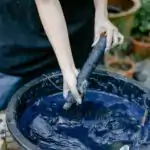
- Dyeing the Fabric Evenly: Carefully immerse the pre-wetted fabric into the dye bath. Stir continuously and gently for the recommended dyeing time to ensure even dye uptake and prevent streaks or patches.
- Rinsing the Fabric: After dyeing, remove the fabric and rinse it thoroughly under cold running water until the water runs clear. This removes excess, unfixed dye.
- Drying the Fabric: Gently squeeze out excess water from the fabric. Hang it to air dry in a shaded area to prevent colour fading from direct sunlight.
Teaching Methods/Instructional Techniques
Discussion, Lecture, Demonstration, Question and Answer, Visual Aids
Instructional Procedures
Step 1: Introduction
Time: 5 minutes
Teaching Skill: Set Induction
Teacher’s Activity: The teacher greets the pupils, checks attendance, and asks pupils if they know how clothes get their colours. The teacher then introduces the topic “Plain Dyeing” and explains its relevance.
Pupils’ Activity: Pupils respond to questions and listen attentively to the introduction.
Learning Point: Pupils are introduced to the topic and its importance.
Step 2: Materials Needed for Plain Dyeing
Time: 7 minutes
Teaching Skill: Explanation/Identification
Teacher’s Activity: The teacher displays various materials needed for plain dyeing (e.g., fabric, dyes, basins, gloves) and explains the function of each.
Pupils’ Activity: Pupils observe the materials, identify them, and ask questions for clarification.
Learning Point: Pupils identify and understand the purpose of materials used in plain dyeing.
Step 3: Preparing the Dye Solution
Time: 8 minutes
Teaching Skill: Demonstration/Practical
Teacher’s Activity: The teacher demonstrates how to safely and accurately prepare the dye solution, emphasizing correct measurements and mixing techniques.
Pupils’ Activity: Pupils observe the demonstration carefully and take notes.
Learning Point: Pupils learn the correct procedure for preparing a dye solution.
Step 4: Setting Up the Dye Bath
Time: 5 minutes
Teaching Skill: Demonstration
Teacher’s Activity: The teacher demonstrates how to set up the dye bath, including adding the prepared dye solution and ensuring the correct temperature.
Pupils’ Activity: Pupils watch and understand the setup process.
Learning Point: Pupils understand how to prepare the dye bath for dyeing.
Step 5: Dyeing the Fabric Evenly
Time: 8 minutes
Teaching Skill: Practical/Guidance
Teacher’s Activity: The teacher guides pupils on how to immerse the fabric into the dye bath and stir it continuously to achieve an even colour. Safety precautions are reinforced.
Pupils’ Activity: Pupils participate in the practical demonstration, carefully dyeing fabric samples under supervision.
Learning Point: Pupils practice the technique of dyeing fabric evenly.
Step 6: Rinsing and Drying Plain Dyed Fabric
Time: 7 minutes
Teaching Skill: Demonstration/Practical
Teacher’s Activity: The teacher demonstrates the proper method of rinsing the dyed fabric until the water runs clear and then how to prepare it for drying in a shaded area.
Pupils’ Activity: Pupils practice rinsing and preparing their dyed fabric samples for drying.
Learning Point: Pupils learn how to rinse and dry dyed fabric correctly to ensure colour fastness and prevent fading.
Step 7: Evaluation/Review
Time: 5 minutes
Teaching Skill: Questioning/Assessment
Teacher’s Activity: The teacher evaluates the learning by asking the following questions:
- What is plain dyeing?
- Mention three materials needed for plain dyeing.
- Describe two important steps in preparing a dye solution.
- Why is it important to rinse dyed fabric thoroughly?
Pupils’ Activity: Pupils answer orally and in writing.
Learning Point: Pupils demonstrate understanding of the lesson.
Step 8: Conclusion
Time: 2 minutes
Teaching Skill: Summarization
Teacher’s Activity: The teacher summarizes the key learning points about plain dyeing and assigns homework, which could be to research different types of dyes.
Pupils’ Activity: Pupils listen to the summary and copy the homework.
Learning Point: Pupils recall the main aspects of plain dyeing.
Lesson Keywords
- Plain Dyeing – The process of colouring a fabric uniformly in a single, even hue.
- Dye Bath – The solution containing dye and water in which fabric is immersed.
- Dye Solution – The mixture of dye powder dissolved in water.
- Rinsing – Washing away excess, unfixed dye from the fabric after dyeing.
- Even Dyeing – Achieving a consistent and uniform colouration across the entire fabric without streaks or patches.
Differentiation
The teacher will provide additional support to pupils who are struggling with practical steps by offering one-on-one guidance. More advanced pupils can be encouraged to experiment with different fabric types or dye concentrations.
Note for teachers using this lesson plan
Ensure all safety precautions are strictly followed during the practical session, especially when handling dyes and hot water. Emphasize the importance of accurate measurements for successful dyeing results. Have adequate ventilation in the classroom or practical area.


Community Join the conversation Open discussion +