

Class: Primary 5
Term: 2nd Term
Subject: Basic Science And Technology
Curriculum Theme: Basic Technology
Previous Lesson: Forms Of Energy
Topic: Energy Conversion: Electrical and Chemical Energy to Heat Energy
Content/Learning Area: Energy conversion from one form to another, Electrical energy to heat energy, Chemical energy to heat energy.
time Allocation: 40 minutes
Performance Objectives
By the end of the lesson, pupils should be able to:
- Cognitive Domain: Explain the concept of energy conversion and identify examples of electrical and chemical energy converting to heat energy.
- Affective Domain: Appreciate the importance of energy conversion in daily life.
- Psychomotor Domain: Demonstrate how electrical energy can produce heat energy (e.g., using a simple electric bulb or heater).
- Social Domain: Collaborate with peers to discuss the uses of heat energy in homes.
Reference Materials
The following resources were used in planning this lesson:
- 9 – Years Basic Education Curriculum
- Abuja Educational Resource Centre Scheme of Work
- NAPPS National Unified Scheme of Work
- Online details from: Britannica – energy conversion | Definition, Examples
- Relevant textbooks.
Instructional materials
To deliver this lesson, the teacher will use the following materials:
- Diagrams showing energy conversion processes.
- A light bulb and battery.
- A small candle and matchstick.
- A video or picture of electrical appliances producing heat energy.
Rationale for the Lesson
Understanding energy conversion helps pupils recognize how energy transforms to perform useful tasks, such as generating heat for cooking, warming, and industrial processes.
Prerequisite/Previous Knowledge
Pupils have learned about forms of energy and are familiar with examples of electrical and chemical energy in their environment.
Lesson Content
Energy Conversion: Electrical and Chemical Energy to Heat Energy
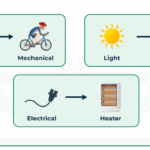
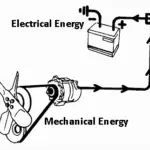
Energy conversion is the process where energy changes from one form to another to perform useful tasks.
- Electrical Energy to heat Energy:
When electrical energy passes through a device, it produces heat.
Examples are:
1. Electric irons
2. Heaters
3. Stoves
4. Electric kettles
5. Hair dryers
- Chemical Energy to Heat energy:
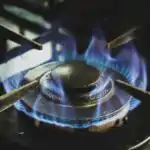
Burning fuels produces heat energy.
Examples are:
1. Burning wood for cooking
2. Lighting candles
3. Burning kerosene in lanterns
4.Burning charcoal for grilling
5. Burning gas in cooking stoves
Electrical and Chemical Energy Changing to Heat
An electric iron, kettle and toaster change electrical energy mainly into heat through a heating element. A charcoal fire changes stored chemical energy in the fuel into heat and light during burning.
Energy conversion does not create energy from nothing; some energy spreads to the surroundings. Pupils should observe appliances only when a responsible adult controls the supply and must never touch a hot element or bare wire.
Teaching Methods
To deliver this lesson, the teacher will adopt the following methods: Clarification,Discussion,Exhibition,Experiment,Guided Writing,Question and Answer.
Instructional Procedures
To deliver this lesson, the teacher will adopt the following steps:
Step 1: Introduction
time: 5 mins
Teaching Skill: Set Induction
Teacher’s Activity: Asks pupils questions about forms of energy and their uses.
Pupils’ Activity: Respond enthusiastically to questions.
Step 2: Explanation of Electrical Energy Conversion
Time: 10 mins
Teaching Skill: explanation
Teacher’s Activity: Explains energy conversion and demonstrates electrical energy to heat energy using a bulb.
Pupils’ Activity: Listen attentively and observe demonstrations.
step 3: Discussion on Chemical Energy Conversion
Time: 10 mins
Teaching Skill: Discussion
Teacher’s Activity: Leads pupils to discuss chemical energy conversion (e.g., burning a candle).
Pupils’ Activity: Discuss and share ideas on chemical energy to heat energy.
Step 4: Demonstration of Chemical Energy Conversion
Time: 7 mins
Teaching Skill: Experiment
Teacher’s Activity: Guides pupils to light a candle and observe heat production.
Pupils’ Activity: Perform the activity under teacher supervision.
Step 5: Note-Taking
Time: 5 mins
Teaching Skill: Guided Writing
Teacher’s Activity: Dictates and writes key points on the board for pupils to copy.Pupils’ Activity: copy notes accurately.
Step 6: Evaluation/Review
Time: 2 mins
Teaching Skill: Assessment
Teacher’s Activity: Asks evaluation questions to check understanding.Pupils’ Activity: Answer the questions individually.
Objective-aligned checks:
- Explain the concept of energy conversion and identify examples of electrical and chemical energy converting to heat energy.
- Demonstrate how electrical energy can produce heat energy (e.g., using a simple electric bulb or heater).
Step 7: Conclusion
Time: 1 min
Teaching Skill: Summary
Teacher’s Activity: Summarizes the topic and relates it to real-life applications.Pupils’ Activity: Listen and ask final questions if necessary.
Lesson Keywords
- Energy Conversion – The process where energy changes from one form to another.
- Electrical Energy – Energy derived from electric potential or kinetic energy of charged particles.
- Heat Energy – A form of energy that transfers due to temperature difference.
- Chemical energy – Energy stored in the bonds of chemical compounds.
- Appliances – Devices or equipment designed to perform a specific task.
Lesson Evaluation
To evaluate the learning, the teacher asks pupils to:
- Define energy conversion.
- Explain how electrical energy converts to heat energy.
- Provide two examples of chemical energy converting to heat energy.
- Demonstrate energy conversion using any available material in class.
- State two uses of heat energy in homes.
Assignment/Homework
- List five appliances that convert electrical energy to heat energy.
- Describe an experiment to demonstrate chemical energy converting to heat energy.
- Explain the importance of energy conversion in everyday life.
Differentiation
- For slower learners: Provide simplified diagrams and one-on-one assistance during demonstrations.
- For advanced learners: Challenge them to research and present on other forms of energy conversion.
- For visual/auditory/kinesthetic learners: Use visual aids, verbal explanations, and hands-on activities to cater to their learning styles.
Note for Teachers
Ensure all materials are prepared beforehand for smooth demonstrations.Emphasize practical activities to make the concept more relatable. Happy teaching!

Community Join the conversation Open discussion +