

Class: Primary 5
Term: 3rd Term
Subject: Basic Science And technology
Curriculum Theme: Basic Technology
Previous Lesson: Meaning Of Magnetism And Properties Of Magnet
Topic: Uses And Types Of Magnet
Content/Learning Area: Uses And Types Of Magnet
Time Allocation: 40 minutes
Performance Objectives
By the end of the lesson, pupils should be able to:
- Cognitive Domain: Identify different types of magnets and explain their uses.
- Affective Domain: Appreciate the usefulness of magnets in daily life.
- Psychomotor Domain: Demonstrate how magnets attract metallic objects.
- Social Domain: Cooperate with group members during magnet-related activities.
Reference materials
The following resources were used in planning this lesson:
- 9 years Basic Education Curriculum
- Abuja Educational Resource Center Scheme of Work
- NAPPS National Unified Scheme of Work
- Online Data from: Magnum Magnetics – Different Types of Magnets and magnetism
- Relevant Textbooks
Instructional Materials
To deliver this lesson, the teacher will employ the help of the following materials:
- Bar magnets
- Horseshoe magnets
- Compass
- paper clips
- Nails and other small metallic objects
- A chart showing types and uses of magnets
- Magnetized and non-magnetized objects
Rationale for the Lesson
Magnets are useful tools in homes, schools, and industries. Understanding how they work helps pupils recognize their importance and practical uses in daily life.
Prerequisite/Previous Knowledge
Pupils have seen objects stick to refrigerator doors and other magnetic materials and have interacted with metallic items.
Lesson Content
Uses And Types Of Magnet
Magnets are objects that attract materials like iron. They are used in many tools and machines.
Types of Magnet
magnets come in different shapes and forms. Each type has its own use depending on its shape and strength. These include:
- Bar magnet
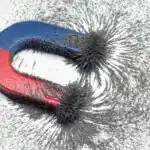
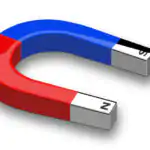
- Horseshoe magnet
- Disc magnet
- ring magnet
- Cylinder magnet
Uses of Magnet
Magnets are used in many ways at home, in school, and in factories. The following are:
- Used in electric bells
- Used in loudspeakers
- Used to pick up metallic objects
- Used in refrigerator doors
- Used in magnetic compasses
- Used in electric motors
- Used in science experiments
- Used to hold notes on boards
- Used in mobile phones
- Used in generators
Types and Uses of Magnets
Magnets may be permanent or temporary and may have bar, horseshoe, ring or disc shapes. Electromagnets become magnetic when electric current flows through a coil around a suitable core.
Magnets are used in compasses, speakers, electric motors, refrigerator catches and cranes that lift iron or steel. Keep strong magnets away from sensitive electronic or medical devices and do not let small magnets enter the mouth.
Teaching Methods
To deliver this lesson, the teacher will adopt the following methods: Discussion, explanation, Storytelling, Demonstration, Group Work, Visual Aids
Instructional Procedures
To deliver this lesson, the teacher will adopt the following steps:
Step 1: Introduction
Time: 5 mins
Teaching Skill: Set Induction
TeacherS activity: Tells a story of how a boy found a strange object that picked up nails and asks pupils to guess what it is
Pupils’ Activity: Pupils listen and respond actively
Step 2: Meaning and Types of Magnet
Time: 8 mins
Teaching Skill: Explanation, Demonstration
Teacher’s Activity: explains the meaning of magnets and shows different types using real magnets
Pupils’ activity: Pupils observe and name the types of magnets shown
Step 3: Uses of Magnet
Time: 8 mins
Teaching Skill: Discussion, Visual Aids
Teacher’s Activity: Uses chart and objects to explain and show different uses of magnets
Pupils’ activity: Pupils give examples of magnet use and observe demonstrations
Step 4: Group Activity
Time: 7 mins
Teaching Skill: group Work, Demonstration
Teacher’s Activity: Groups pupils to test magnets on various objects to discover what they attract
Pupils’ Activity: Pupils test objects and report findings in groups
Step 5: Note-Taking
Time: 5 mins
Teaching Skill: Writing
Teacher’s Activity: Guides pupils to write down the lesson content in their notebooks
Pupils’ Activity: pupils copy the lesson content neatly into notebooks
Step 6: Evaluation/Review
Time: 5 mins
Teaching Skill: Questioning
Teacher’s activity: Asks pupils questions to assess understanding and gives short tasks
Pupils’ Activity: Pupils answer questions and complete tasks
Objective-aligned checks:
- Identify different types of magnets and explain their uses.
- Demonstrate how magnets attract metallic objects.
Step 7: Conclusion
Time: 2 mins
Teaching Skill: Instructional closure
Teacher’s Activity: Summarizes key points and reminds pupils were magnets are used at home
Pupils’ Activity: Pupils listen and ask final questions
Lesson Keywords
- Magnet: An object that attracts iron
- Bar Magnet: A straight, rod-like magnet
- Horseshoe Magnet: A U-shaped magnet
- Attract: To pull objects closer
- Compass: A tool that uses magnets to show direction
Lesson Evaluation
To evaluate the learning, the teacher asks pupils to:
- Define a magnet
- Name three types of magnets
- Mention five uses of magnets
- Identify objects that magnets attract
- Demonstrate how a magnet works using nails and clips
Assignment/Homework
- List five additional uses of magnets not mentioned in class.
- Draw and label three different types of magnets.
- Explain how a compass works and why it is useful.
Differentiation
- For slower learners: Provide one-on-one assistance and simplified explanations.
- For advanced learners: Challenge them to research and present on the history of magnets or their use in advanced technologies.
- For visual/auditory/kinesthetic learners: use practical demonstrations and group activities to support all learners,including those with learning difficulties.
Note for Teachers
Provide real magnets and ensure every pupil has a chance to interact with them. Keep explanations simple and allow time for hands-on activities.


Community Join the conversation Open discussion +