

Class: Primary One
Term: third Term
subject: History
curriculum theme:
Previous Lesson: Meaning and Examples of Traditional Rulers
Topic: Titles and Names of Popular Traditional Rulers
Content/Learning Area: Identifying titles and names of traditional rulers, appreciating the roles of traditional rulers, pronouncing titles correctly, discussing leadership concepts
Time Allocation: 40 minutes
Performance Objectives
By the end of the lesson, pupils should be able to:
- Cognitive Domain:
1. Identify at least two titles and names of popular traditional rulers.
2. Understand the roles and importance of traditional rulers in society.
3. Explain the concept of leadership as demonstrated by traditional rulers.
- affective Domain:
1. Appreciate the roles and importance of traditional rulers in society.
- Psychomotor Domain:
1. Pronounce the titles of traditional rulers correctly.
- Social Domain:
1. Participate actively in class discussions.
Reference Materials
- 9 – Years Basic Education Curriculum
- abuja Educational Resource Centre Scheme of Work
- NAPPS National Unified Scheme of Work
- Relevant Textbooks
Instructional Materials
To deliver this lesson, the teacher will use a whiteboard or chart paper, markers, and relevant pictures of traditional rulers.
Rationale for the Lesson
Understanding traditional rulers helps pupils appreciate their cultural heritage and the concept of leadership,crucial for understanding Nigeria’s history and diverse cultures.
Prerequisite/Previous Knowledge
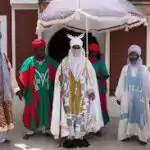
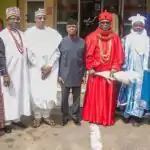
The teacher will start by asking pupils what they know about leaders in their communities and then introduce the concept of traditional rulers, emphasizing their importance in preserving culture and heritage. The teacher will show pictures of different traditional rulers.
Lesson Content
Titles and Names of Popular Traditional Rulers
A title holder in traditional societies holds a specific title showing their role and rank. These titles often represent leadership, wisdom, and heritage.
Examples of Titles and Names
Examples are:
- Esu: A Yoruba title.
- Tor Tiv: Paramount ruler of the Tiv peopel.
- Bong Gwom: Traditional ruler of Jos.
- Ngolong Ngas: Paramount ruler of the Ngas people.
- Ochi Idoma: Traditional ruler of the Idoma people.
- Oba: Yoruba title for a king.
- Emir: Title for Islamic rulers in northern Nigeria.
- Obi: Igbo title for a ruler.
- Sultan: Spiritual leader of Muslims in Sokoto.
- Olu: Title for rulers in some Itsekiri areas.
- Alaafin: Ruler of the Oyo Empire.
- Obong: Ruler of the Efik kingdom.
- Lamido: Ruler in Adamawa, Taraba, and parts of Borno.
- Ohinoyi: Ruler of Ebiraland.
- Ataoja: Ruler of Osogbo.
- Eze: Igbo title for kings.
- Igwe: Another Igbo title for rulers.
- Amanyanabo: Title for rulers in some Ijaw communities.
- Dein: Title for the traditional ruler of Agbor Kingdom.
- gbom Gbom Jos: Another title for the traditional ruler of Jos.
These titles show the diversity of Nigeria’s traditional leadership.
Teaching Methods
To deliver this lesson, the teacher will adopt the following methods: Discussion, question and Answer, Use of Pictures.
Instructional Procedures
To deliver this lesson, the teacher will adopt the following steps:
Step 1: Introduction
Time: 5 minutes
Teaching Skill: Set Induction
Teacher’s Activity: Asks pupils what they know about leaders in their communities.
Pupils’ Activity: Respond to the teacher’s questions.
step 2: Description of Key Concepts
Time: 10 minutes
Teaching Skill: Explanation
Teacher’s Activity: Explains the concept of “title holder” in traditional societies and introduces the importance of traditional rulers.
Pupils’ activity: Listen attentively and ask clarifying questions.
Step 3: Exhibition/Guided Practise
Time: 10 minutes
Teaching Skill: Modeling
Teacher’s Activity: Presents examples of titles and names of popular traditional rulers, explaining their significance and pronunciation.
Pupils’ Activity: Repeat the titles and names after the teacher.
Step 4: Autonomous Practice
Time: 5 minutes
Teaching Skill: Monitoring
Teacher’s Activity: asks pupils to list two titles of traditional rulers they remember.
Pupils’ Activity: Write down two titles and names.
Step 5: Note-Taking
Time: 5 minutes
Teaching Skill: Note-taking
Teacher’s Activity: Guides pupils in taking notes on key concepts and examples.
Pupils’ Activity: Write down key points in their notebooks.
Step 6: Evaluation/Review
Time: 5 minutes
Teaching Skill: Questioning
Teacher’s activity: Asks evaluation questions to assess understanding.
Pupils’ Activity: Answer the evaluation questions.
Objective-aligned checks:
- Identify at least two titles and names of popular traditional rulers.
- Explain the concept of leadership as demonstrated by traditional rulers.
Step 7: Conclusion
Time: 5 minutes
Teaching Skill: Summarizing
Teacher’s Activity: Summarizes the key points of the lesson and assigns homework.Pupils’ Activity: Listen to the summary and note the homework assignment.
Lesson Keywords
- Traditional Ruler – A leader recognized by custom and tradition in a community.
- Title Holder – Someone who holds a specific title indicating their role and rank.
- Oba – Yoruba title for a king.
- Emir – Title for Islamic rulers in northern Nigeria.
- Obi – Igbo title for a ruler.
Lesson Evaluation
To evaluate the learning,the teacher asks pupils to:
- Name two titles of traditional rulers.
- What is a “title holder”?
- Why are traditional rulers crucial?
- Name a traditional ruler and their title.
- What are some responsibilities of a traditional ruler?
Assignment/Homework
- Draw a picture of a traditional ruler.
- Write the title of the traditional ruler you drew.
Differentiation
- For slower learners: Provide one-on-one assistance and use simpler language.
- For advanced learners: Encourage them to research additional titles and their ancient significance.
- For visual/auditory/kinesthetic learners: Use pictures, pronunciation exercises, and role-playing activities.
Note for Teachers
Ensure to use visual aids and real-life examples to make the lesson engaging. Encourage pupils to participate actively and ask questions to clarify their understanding.

Community Join the conversation Open discussion +