

Class: Primary Two
Term: Third Term
Subject: National Values Education
Curriculum Theme: Civic education
previous Lesson: The Importance Of Title Holding In The Community As A Leader
Topic: Leadership – Customary Leaders In the Community
Content/Learning Area: What are traditional Leaders?, Meaning of Tradition, How Traditions are formed, What the Leaders Discuss about the Development of the Community
Time Allocation: 40 minutes
Performance Objectives
By the end of the lesson, pupils should be able too:
- Cognitive Domain:
1. Explain the meaning of tradition and identify how traditions are formed.
2. Explain the role of traditional leaders in maintaining and nurturing community traditions.
3. Discuss the importance of community discussions and decisions made by traditional leaders.
- Affective Domain:
1. Show recognition for the role of traditional leaders in the community.
2. Demonstrate respect for cultural heritage and traditions.
- Psychomotor Domain:
1. Actively participate in group discussions about traditional leaders.
- social Domain:
1. Work collaboratively with peers in group discussions.
Reference Materials
- 9 – Years Basic Education curriculum
- Abuja Educational Resource Center Scheme of Work
- NAPPS National Unified Scheme of Work
- Relevant Textbooks
Instructional Materials
To deliver this lesson, the teacher will use a whiteboard or chart paper, markers, and relevant pictures or illustrations.
Rationale for the Lesson
Understanding traditional leadership is crucial for appreciating cultural heritage and community development. This lesson provides a foundation for future learning about governance and community responsibility.
Prerequisite/Previous Knowledge
The teacher will begin by asking pupils to share examples of leaders they know in their community.This will lead into a discussion about the diffrent types of leaders and the roles they play, setting the stage for learning about traditional leaders.
Lesson Content
What are Traditional Leaders?
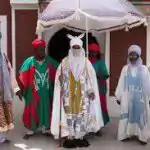
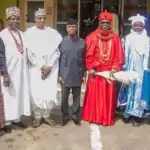
Traditional leaders hold authority based on custom, tradition, and family history. They are seen as keepers of the community’s history, values, and beliefs. Their main jobs include:
- Solving disagreements.
- Protecting cultural traditions.
- Guiding the community.
- Representing the community to outsiders.
- Preserving cultural heritage.
- Upholding moral standards.
Meaning of Tradition
Traditions are customs, beliefs, and practices passed down through generations. They are part of a community’s history and culture. Examples are:
- Religious events and celebrations.
- traditional dances and music.
- Clothing styles and food.
- Language and stories.
- Festivals and ceremonies.
- Folklore and myths.
how Traditions are Formed
Traditions develop over time through learning, adapting, and sharing.They reflect a community’s experiences, beliefs, and values. They are formed through:
- Oral storytelling: Elders share stories and knowledge with younger people.
- Rituals and ceremonies: These events strengthen traditions and build community.
- Social norms and expectations: Unwritten rules guide behavior and preserve traditions.
- Cultural exchange: Interaction with other communities can influence traditions.
- Ancient events: Significant events shape traditions and collective memory.
What the Leaders Discuss about the Development of the Community
Traditional leaders are significant for community development. They discuss things like:
- Community projects: Planning for schools, hospitals, and other buildings.
- Economic development: Improving the community’s economy, supporting local businesses, and attracting investment.
- Environmental protection: Protecting natural resources and the habitat.
- Social issues: Things like education, health, and safety.
- Infrastructure development: Roads, water supply, and electricity.
- Conflict resolution: Mediating disputes and maintaining peace.
Teaching Methods
To deliver this lesson, the teacher will adopt the following methods: Discussion, Group work, question and answer.
Instructional Procedures
To deliver this lesson, the teacher will adopt the following steps:
Step 1: Introduction
Time: 5 minutes
Teaching Skill: Set Induction
Teacher’s Activity: Asks pupils to share examples of leaders they know. Introduces the topic: Traditional Leaders in the Community.Pupils’ Activity: Share examples of leaders,listen to the introduction.
Step 2: Explanation of Key Concepts
Time: 10 minutes
Teaching Skill: Explanation
Teacher’s Activity: Explains the meaning of “traditional leader” and “tradition,” providing clear examples.
Pupils’ activity: Listen attentively, ask clarifying questions.
Step 3: Demonstration/Guided practice
Time: 10 minutes
Teaching Skill: Modeling
Teacher’s Activity: Guides pupils through examples of traditions and how they are formed, using real-life examples from the community.
Pupils’ Activity: Participate in discussions, offer examples.
Step 4: Self-reliant Practice
Time: 5 minutes
Teaching Skill: Group Work
Teacher’s Activity: Divides pupils into groups to discuss the roles of traditional leaders and the importance of community discussions.Pupils’ Activity: Work in groups, discuss and share ideas.
Step 5: Note-Taking
Time: 5 minutes
Teaching Skill: Summarizing
Teacher’s Activity: Guides pupils in summarizing key points of the lesson.
Pupils’ Activity: Take notes, summarize key concepts.
Step 6: Evaluation/Review
Time: 5 minutes
Teaching Skill: Questioning
Teacher’s Activity: asks evaluation questions to assess understanding.
Pupils’ activity: Answer questions, participate in review.
Objective-aligned checks:
- Explain the meaning of tradition and identify how traditions are formed.
- Explain the role of traditional leaders in maintaining and nurturing community traditions.
- Show recognition for the role of traditional leaders in the community.
Step 7: Conclusion
Time: 2 minutes
Teaching Skill: Summarizing
teacher’s Activity: Summarizes the key points and encourages pupils to reflect on the importance of traditional leaders.
Pupils’ Activity: Listen to the summary and reflect on the lesson.
Lesson Keywords
- Traditional Leader – A person who holds authority based on custom and tradition.
- Tradition – customs, beliefs, and practices passed down through generations.
- Community Development – Efforts to improve the social, economic, and environmental well-being of a community.
- Cultural Heritage – The legacy of physical artifacts and intangible attributes of a group or society that are inherited from past generations.
- Social Norms – Unwritten rules that guide behavior in a community.
Lesson Evaluation
To evaluate the learning, the teacher asks pupils to:
- What are some traditions in your community?
- how do traditional leaders help keep traditions alive?
- What important topics do traditional leaders discuss in meetings?
- Why is it important to respect traditional leaders?
- Can you think of a time when a traditional leader helped your community?
Assignment/Homework
- Interview a traditional leader or elder in your community and ask about the history of a local tradition.
- Wriet a short paragraph about the role of traditional leaders in maintaining peace and order in the community.
- Draw a picture of a traditional ceremony or event in your community.
Differentiation
- For slower learners: Provide one-on-one assistance and simplified explanations.
- For advanced learners: encourage self-reliant research and deeper exploration of the topic.
- For visual/auditory/kinesthetic learners: Use visual aids, discussions, and hands-on activities to cater to different learning styles.
Note for Teachers
Encourage pupils to share their personal experiences and perspectives related to traditional leadership and cultural heritage. This will help create a more engaging and meaningful learning experience.


Community Join the conversation Open discussion +