

Note for teachers using this lesson plan
This lesson introduces Primary 1 pupils to the concept of traditional rulers in their immediate community. Teachers should prepare by gathering verified, current information, pictures, and, if possible, local objects related to the traditional ruler(s) in their specific state and Local Government Area/community. It is important to replace the FCT/AMAC examples provided in this plan with details relevant to your school’s actual location. By the end of the lesson, pupils should be able to identify their local traditional ruler, their title, palace, and some symbols of their authority.
Class: Primary 1
Term: Second Term
Week: 8
Age: 6 years
Duration: 45 minutes
Subject: Nigerian History
Curriculum Theme: Political Development
Focal competence: Recognising traditional institutions in their locality and LGA
Key competencies/values: Respect
Skills:
- Identification of traditional rulers and their roles in the community
Previous Lesson: Traditional Rulers and Their Roles in Community Life
Topic: Traditional Rulers: Identification
Subject Matter: Identifying traditional ruler(s) in the locality/LGA
Specific Objectives
By the end of the lesson, pupils should be able to:
Cognitive Domain
- Identify the traditional ruler or institution relevant to their locality.
- State the title used for their traditional ruler.
- Mention the palace or seat of authority of their traditional ruler.
- Recognise some symbols or regalia used by their traditional ruler.
Affective Domain
- Show respect for traditional rulers and their roles in the community.
- Appreciate the importance of traditional institutions.
Psychomotor Domain
- Point to pictures of traditional rulers and their regalia.
Reference Materials
The following resources were used in planning this lesson:
- 2025 Revised 9 Years Basic Education Curriculum
- Relevant State Unified Scheme of Work
- Nigerian History for Primary Schools, Book 1
- The HeadTeacher Scheme of work
Instructional Materials
The teacher will teach this lesson with the aid of:
- Pictures of traditional rulers (local if possible)
- Newspaper cuttings showing traditional rulers
- Verified local photographs or oral accounts of traditional rulers
- Charts showing different traditional regalia (e.g., crown, staff, beads, traditional cap)
- A local map or official information about the community’s traditional institution
Rationale for the Lesson
This lesson is important for Primary 1 pupils to understand who their traditional leaders are and their role in the community. It helps them connect with their cultural heritage and develop respect for authority. Learning about traditional rulers also lays a foundation for understanding local governance and community structures.
Prerequisite/Previous Knowledge
Pupils are familiar with their immediate community and some community leaders like their parents, teachers, and religious leaders.
Lesson Content/Board Summary
Traditional Rulers: Identification
Who is a Traditional Ruler?
A traditional ruler is an important leader in a community. They help to keep peace, settle disagreements, and preserve the culture and traditions of their people. They are usually chosen based on the customs and history of the community.
Identifying Traditional Rulers in the Locality
Note to Teachers: Please replace the FCT Abuja (AMAC) example below with the specific traditional ruler(s) and details of your school’s actual locality/LGA.
Every community has a traditional ruler. For example, in the Abuja Municipal Area Council (AMAC) of FCT Abuja, some traditional rulers include the Sarkin Bwari.
Title of the Traditional Ruler
The title is the special name given to a traditional ruler. It helps us know who they are. Different communities use different titles for their traditional rulers. Examples include:
- Sarkin (for some parts of Northern Nigeria, e.g., Sarkin Bwari in FCT)
- Oba (for Yoruba land)
- Eze (for Igbo land)
- Emir (for some parts of Northern Nigeria)
- Igwe (for some parts of Igbo land)
Palace or Seat of Authority
The palace is the special house or building where the traditional ruler lives and works. It is the seat of their authority and where important community decisions are often made.
- The Emir lives in the Emir’s Palace.
- The Oba lives in the Oba’s Palace.
- The Eze lives in the Eze’s Palace.
Symbols of Authority (Regalia)
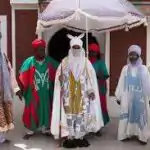
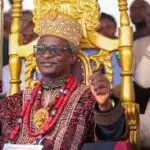
Traditional rulers wear or carry special items that show they are leaders. These items are called regalia or symbols of authority. They are very important and are part of their tradition.
- Crowns
- Beads
- Staffs (Opa Ase)
- Special traditional caps
- Royal robes
Teaching Methods/Instructional Techniques
Discussion, Question and Answer, Explanation, Observation, Show and Tell, Guided Practice.
Instructional Procedures
Step 1: Introduction
Time: 5 minutes
Teaching Skill: Storytelling/Engagement
Teacher’s Activity: The teacher greets the pupils and asks them about important people in their community. The teacher then introduces the topic by asking if they know who the leader of their town or village is.
Pupils’ Activity: Pupils respond to greetings and share names of people they consider important in their community.
Learning Point: Introduction to community leaders
Step 2: Explanation of Traditional Ruler
Time: 8 minutes
Teaching Skill: Explanation/Demonstration
Teacher’s Activity: The teacher explains what a traditional ruler is, using simple language and showing pictures of different traditional rulers. The teacher emphasizes that these rulers help their communities.
Pupils’ Activity: Pupils listen attentively and observe the pictures shown by the teacher.
Learning Point: Meaning of traditional ruler
Step 3: Identifying Local Traditional Ruler (AMAC Example)
Time: 7 minutes
Teaching Skill: Localisation/Identification
Teacher’s Activity: The teacher introduces the traditional ruler of the school’s locality/LGA (e.g., Sarkin Bwari for AMAC in FCT Abuja), showing a picture of him. The teacher states his name and title clearly.
Pupils’ Activity: Pupils listen and try to repeat the name and title of their local traditional ruler.
Learning Point: Local traditional ruler identification
Step 4: Discussing Titles and Palace
Time: 7 minutes
Teaching Skill: Explanation/Questioning
Teacher’s Activity: The teacher explains that traditional rulers have special titles (e.g., Oba, Eze, Emir, Sarkin) and live in a special house called a palace. The teacher shows pictures of different palaces.
Pupils’ Activity: Pupils listen and identify the titles and palaces in the pictures.
Learning Point: Titles and palaces of rulers
Step 5: Exploring Symbols of Authority
Time: 6 minutes
Teaching Skill: Visual Aid/Description
Teacher’s Activity: The teacher shows pictures or actual examples of traditional regalia (e.g., crowns, staffs, beads) and explains that these are symbols of the ruler’s authority. The teacher asks pupils to describe what they see.
Pupils’ Activity: Pupils observe the regalia and describe them, pointing out features.
Learning Point: Symbols of ruler’s authority
Step 6: Guided Identification Practice
Time: 4 minutes
Teaching Skill: Guided Practice/Reinforcement
Teacher’s Activity: The teacher displays various pictures and asks pupils to identify which ones show traditional rulers, their palaces, or their regalia. The teacher guides them to name the local ruler again.
Pupils’ Activity: Pupils point to and name the items and the local traditional ruler.
Learning Point: Practice identifying rulers/symbols
Step 7: Evaluation/Review
Time: 5 minutes
Teaching Skill: Questioning/Assessment
Teacher’s Activity: The teacher evaluates the learning by asking the following questions:
- Who is the traditional ruler of our community/LGA?
- What is the title of our traditional ruler?
- Where does our traditional ruler live?
- Mention one thing a traditional ruler wears that shows he is a leader.
Pupils’ Activity: Pupils answer orally and in writing.
Learning Point: Identification of local ruler
Step 8: Note-Taking
Time: 4 minutes
Teaching Skill: Guided Writing
Teacher’s Activity: The teacher guides pupils to copy the essential Board Summary notes into their notebooks, specifically the name of their local traditional ruler, their title, palace, and one symbol.
Pupils’ Activity: Pupils copy the notes carefully into their notebooks.
Learning Point: Recording lesson information
Step 9: Conclusion
Time: 2 minutes
Teaching Skill: Summarization
Teacher’s Activity: The teacher briefly reminds pupils that traditional rulers are important leaders who help their communities and deserve respect. The teacher thanks the pupils for their participation.
Pupils’ Activity: Pupils listen and respond respectfully.
Learning Point: Importance of traditional rulers
Continuous Assessment/Further Study
Type: Homework
Instruction: Ask your parents or guardians to tell you more about the traditional ruler of your community. Draw a picture of a traditional ruler or one of their symbols of authority in your notebook.
- Ask your parents: What is the full name of our traditional ruler?
- Ask your parents: What is one important thing our traditional ruler does for our community?
- Draw a picture of a crown, staff, or traditional cap.
Lesson Keywords
- Traditional Ruler – An important leader in a community who keeps peace and traditions.
- Locality – The area or community where you live.
- Title – The special name given to a traditional ruler (e.g., Oba, Eze, Emir, Sarkin).
- Palace – The special house where a traditional ruler lives and works.
- Regalia – Special items like crowns, staffs, or beads worn by a traditional ruler to show authority.
Differentiation
For weaker learners: Provide pre-printed pictures of the local traditional ruler, their palace, and regalia for them to simply point to and name. Use more repetition and simple, direct questions. Pair them with stronger learners for support during identification activities.
For faster learners: Encourage them to name other traditional rulers they may know from other communities or states. Ask them to describe the roles of traditional rulers in more detail, such as settling disputes or preserving culture, if they are able.
Suggested Lesson Videos
You can search on YouTube for: traditional rulers nigeria for kids primary 1
Teacher Guide for Using This Lesson Plan
Before the lesson, ensure you have gathered verified information and visual aids (pictures, newspaper cuttings, or even simple drawings) of the traditional ruler(s) in your specific locality/LGA. This is crucial for making the lesson relevant and concrete for the pupils. Begin by engaging pupils with questions about local leaders they know. As you introduce the concept of a traditional ruler, use the prepared local examples to make the identification process clear. When discussing titles, palaces, and symbols, always refer back to your local context. Guide pupils through activities where they actively identify and name these elements. Encourage respect and appreciation for the traditional institution. During the note-taking stage, ensure pupils correctly copy the details of their specific local traditional ruler. Conclude by reinforcing the importance of these leaders in their community.

Community Join the conversation Open discussion +