

Note for teachers using this lesson plan
This lesson introduces Primary 1 pupils to the concept of traditional title holders and the importance of respecting them within the community. Prepare by gathering pictures or videos of local traditional rulers and discussing their roles. If possible, invite a local traditional title holder to speak briefly to the class, ensuring their safety and the pupils’ appropriate conduct. By the end of the lesson, pupils should be able to identify and demonstrate simple ways of showing respect to these community leaders. Remember to adapt examples of traditional title holders and their duties to your specific state and local government area/community.
Class: Primary 1
Term: Third Term
Week: 4
Age: 6 years
Duration: 45 minutes
Subject: Nigerian History
Curriculum Theme: Political Developments
Focal competence: Respecting traditional title holders in their locality and LGA
Skills:
- Identification of title holders and their duties in the community
Previous Lesson: Duties of traditional title holders in the community
Topic: Traditional Title Holders: Respect
Subject Matter: Ways of respecting traditional title holders in the community
Specific Objectives
By the end of the lesson, pupils should be able to:
Cognitive Domain
- Identify at least three ways to respect traditional title holders in the community.
- State one reason why traditional title holders should be respected.
Affective Domain
- Appreciate the importance of showing respect to traditional title holders.
- Value the cultural roles of traditional title holders in their community.
Psychomotor Domain
- Demonstrate appropriate respectful greetings to traditional title holders.
Reference Materials
The following resources were used in planning this lesson:
- 2025 Revised 9 Years Basic Education Curriculum
- Relevant State Unified Scheme of Work
- Primary 1 Social Studies Textbook for Nigerian Schools
- The HeadTeacher Scheme of work
Instructional Materials
The teacher will teach this lesson with the aid of:
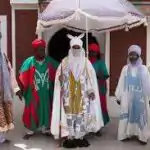
- Pictures of traditional title holders in the community (e.g., Oba, Emir, Igwe, Chief)
- Video clips showing traditional title holders in community events
- A Traditional title holder from the community (if available and appropriate)
- Verified local photographs, objects, or oral accounts of traditional rulers
- Chart showing respectful greetings
Rationale for the Lesson
This lesson is important because it teaches young pupils about the significance of traditional title holders in their community and how to show them respect. Understanding these cultural figures helps pupils appreciate their heritage and promotes good citizenship through respectful interactions with authority figures. It also lays a foundation for understanding community leadership and cultural values.
Prerequisite/Previous Knowledge
Pupils are familiar with different types of leaders in their homes and schools, and they understand the general concept of showing respect to elders.
Lesson Content/Board Summary
Traditional Title Holders: Respect
Who are Traditional Title Holders?
Traditional title holders are important leaders in our communities. They are usually chosen by the people or through tradition to help manage the community and preserve our culture. Examples include Obas, Emirs, Igwes, Chiefs, and other community heads. Teachers, please use examples from your local community, such as the Sarkin Bwari in FCT Abuja or other local chiefs.
Reasons for Respecting Traditional Title Holders
We respect traditional title holders because:
- They help to maintain peace and order in the community.
- They settle disagreements among people.
- They preserve our culture, traditions, and history.
- They are symbols of our heritage and identity.
- They represent the community to outsiders.
Ways to Show Respect to Traditional Title Holders
We can show respect to traditional title holders in many ways:
- Greeting them politely, for example, by kneeling, bowing, or prostrating, depending on the culture.
- Speaking to them with respect and using polite words.
- Listening carefully when they speak.
- Not interrupting them when they are talking.
- Obeying their good advice and instructions.
- Dressing neatly and appropriately when we are around them.
- Standing up when they enter a place and remaining standing until they ask us to sit.
Respecting Culture Without Harmful Practices
It is important to respect our culture and traditions. However, we must ensure that all practices are safe and do not cause harm to anyone. We should always follow practices that promote peace, kindness, and well-being for everyone in the community.
Teaching Methods/Instructional Techniques
Discussion, Demonstration, Question and Answer, Explanation, Observation, Role-play, Visual Aids.
Instructional Procedures
Step 1: Introduction
Time: 5 minutes
Teaching Skill: Engaging/Reviewing
Teacher’s Activity: The teacher greets the pupils and asks them to recall people they respect in their homes and schools. The teacher then introduces the topic of traditional title holders as important people in the community.
Pupils’ Activity: Pupils respond by mentioning parents, teachers, and older siblings. They listen attentively to the introduction.
Learning Point: Importance of respect
Step 2: Identifying Traditional Title Holders
Time: 7 minutes
Teaching Skill: Identification/Explanation
Teacher’s Activity: The teacher displays pictures or video clips of various traditional title holders (e.g., Oba, Emir, Igwe, Chief). The teacher explains that these are important leaders in our communities and mentions some local examples (e.g., Sarkin Bwari in FCT or other local chiefs).
Pupils’ Activity: Pupils observe the pictures/videos and try to identify the traditional title holders. They listen to the teacher’s explanation and examples.
Learning Point: Names of title holders
Step 3: Reasons for Respect
Time: 7 minutes
Teaching Skill: Discussion/Reasoning
Teacher’s Activity: The teacher leads a discussion on why traditional title holders are respected. The teacher explains that they help maintain peace, settle disputes, and preserve culture, writing key points on the board.
Pupils’ Activity: Pupils contribute ideas on why these leaders are important and listen to the teacher’s explanations.
Learning Point: Reasons for respect
Step 4: Ways to Show Respect (Demonstration)
Time: 7 minutes
Teaching Skill: Demonstration/Modelling
Teacher’s Activity: The teacher demonstrates appropriate ways to greet and show respect to traditional title holders (e.g., bowing, kneeling, polite speech). The teacher encourages pupils to practice these respectful gestures.
Pupils’ Activity: Pupils observe the teacher’s demonstrations and practice the respectful greetings and behaviours.
Learning Point: Respectful greetings and conduct
Step 5: Safe Cultural Practices
Time: 7 minutes
Teaching Skill: Clarification/Guidance
Teacher’s Activity: The teacher explains that while respecting culture is good, all practices must be safe and not harmful. The teacher gives simple examples of good cultural practices (like sharing) and warns against any harmful ones (though not explicitly naming them, just emphasizing safety).
Pupils’ Activity: Pupils listen and understand that cultural practices should always be safe and kind.
Learning Point: Safe cultural practices
Step 6: Activity: Duties of Title Holders
Time: 5 minutes
Teaching Skill: Application/Matching
Teacher’s Activity: The teacher discusses simple, verified duties of traditional title holders (e.g., settling disputes, leading festivals, representing the community). The teacher then asks pupils to match a title holder to one of their duties.
Pupils’ Activity: Pupils listen to the duties and attempt to match them to the traditional title holders discussed.
Learning Point: Title holders’ duties
Step 7: Evaluation/Review
Time: 5 minutes
Teaching Skill: Questioning/Assessment
Teacher’s Activity: The teacher evaluates the learning by asking the following questions:
- Mention one traditional title holder you know.
- State one reason why we should respect traditional title holders.
- Demonstrate one way to show respect to a traditional title holder.
Pupils’ Activity: Pupils answer orally and in writing.
Learning Point: Respect for title holders
Step 8: Note-Taking
Time: 4 minutes
Teaching Skill: Guided Writing
Teacher’s Activity: The teacher guides pupils to copy the essential Board Summary notes on reasons for respect and ways to show respect into their notebooks.
Pupils’ Activity: Pupils copy the notes carefully into their notebooks.
Learning Point: Recording lesson points
Step 9: Conclusion
Time: 3 minutes
Teaching Skill: Summarising
Teacher’s Activity: The teacher briefly reminds pupils that traditional title holders are important community leaders and showing them respect is a good cultural practice. The teacher encourages them to always be respectful.
Pupils’ Activity: Pupils listen and affirm their understanding of the importance of respect.
Learning Point: Valuing community leaders
Continuous Assessment/Further Study
Type: Homework
Instruction: Draw a picture of a traditional title holder from your community and write two sentences about how you can show them respect.
- Draw a traditional title holder.
- Write one reason why we respect them.
- Write one way to show them respect.
Lesson Keywords
- Traditional – Something that has been done for a very long time, passed down from olden days.
- Title Holders – Important leaders in the community who have special names or positions.
- Respect – Showing honour, care, and good manners to someone.
- Community – The group of people living in one place.
Differentiation
For weaker learners, the teacher will provide more visual aids and simplified explanations, focusing on identifying just one traditional title holder and one way to show respect. Faster learners can be encouraged to name more traditional title holders and explain more reasons for respecting them, or even role-play a more complex respectful interaction.
Suggested Lesson Videos
For further visual learning, teachers can search on YouTube for: traditional rulers nigeria for kids primary 1
Teacher Guide for Using This Lesson Plan
Before the lesson, ensure you have relevant pictures or video clips of traditional title holders, preferably from your local government area or state. Discuss with pupils what respect means in simple terms before introducing the concept of traditional title holders. When discussing duties, use simple, verifiable examples. Encourage active participation through questions and role-play, especially for demonstrating respectful conduct. Emphasize that while culture is important, safety and kindness must always come first. Guide pupils carefully during the note-taking stage (Step 8) to ensure they copy accurately. Check for understanding throughout the lesson, especially during the evaluation, and provide support or extension as needed.
Community Join the conversation Open discussion +