

Note for teachers using this lesson plan
Dear teacher, this lesson introduces pupils to the important roles played by traditional title holders in their communities. Please prepare by gathering pictures or video clips of local traditional title holders and, if possible, invite a title holder to speak to the class. Emphasize the importance of respecting these leaders. By the end of the lesson, pupils should be able to state some key duties of traditional title holders in their own community.
Class: Primary 1
Term: Third Term
Week: 3
Age: 6 years
Duration: 45 minutes
Subject: Nigerian History
Curriculum Theme: Political Developments
Focal competence: Respecting traditional title holders in their locality and LGA
Skills:
- Identification of title holders and their duties in the community
Previous Lesson: Various traditional title holders in the community
Topic: Traditional Title Holders: Duties
Subject Matter: Duties of traditional title holders in the community
Specific Objectives
By the end of the lesson, pupils/students should be able to:
Cognitive Domain
- Identify some traditional title holders in their community.
- State at least two duties of traditional title holders.
Affective Domain
- Show respect for traditional title holders.
- Appreciate the roles of traditional title holders in maintaining peace.
Psychomotor Domain
- Point to pictures of traditional title holders.
- Mimic actions that show respect to traditional title holders.
Social Domain
- Participate in discussions about community leaders.
Reference Materials
The following resources were used in planning this lesson:
- 2025 Revised 9 Years Basic Education Curriculum
- Relevant State Unified Scheme of Work
- Macmillan Primary History for Primary 1
- The HeadTeacher Scheme of work
Instructional Materials
The teacher will teach this lesson with the aid of:
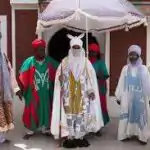
- Pictures of traditional title holders in the community
- Video clips of traditional title holders in the community
- A Traditional title holder in the community (if available)
- Verified local photographs, objects or oral accounts
Rationale for the Lesson
This lesson helps Primary 1 pupils understand the important people who help traditional rulers govern the community. It teaches them about the duties these title holders perform, such as assisting in meetings and settling disputes. Knowing these roles helps pupils appreciate their community’s leadership structure and fosters respect for traditional institutions.
Prerequisite/Previous Knowledge
Pupils have some basic understanding of community leaders and the concept of helping others in the community.
Lesson Content/Board Summary
Traditional Title Holders: Duties
Who are Traditional Title Holders?
Traditional title holders are important people in our community who work with the traditional ruler (like an Emir, Oba, Eze, or Chief). They help the ruler to lead and take care of the people.
Duties of Traditional Title Holders
Traditional title holders have many important duties. Some of them are:
- They help the traditional ruler to make decisions for the community.
- They assist in keeping peace and order among the people.
- They represent the traditional ruler in different places or events.
- They help to settle disagreements between people in the community.
- They teach younger people about our culture and traditions.
Assistance to the Traditional Ruler and Community
Title holders give a lot of help to the traditional ruler and the community. For example:
- They advise the traditional ruler on important matters.
- They help to share messages from the ruler to the people.
- They make sure that community rules are followed.
- They support community development projects.
Roles in Meetings, Ceremonies, and Dispute Settlement
Traditional title holders play special roles in different community activities:
- Meetings: They attend meetings with the traditional ruler to discuss community issues and find solutions.
- Ceremonies: They take part in traditional ceremonies and festivals, helping to organize and lead them.
- Dispute Settlement: When people have problems or disagreements, title holders help to listen to both sides and find a fair way to settle the dispute.
Teaching Methods/Instructional Techniques
Discussion, Explanation, Question and Answer, Demonstration, Observation, Storytelling
Instructional Procedures
Step 1: Introduction
Time: 5 minutes
Teaching Skill: Storytelling/Questioning
Teacher’s Activity: The teacher tells a simple story about a wise traditional ruler and his helpers. The teacher then asks pupils if they know any important people who help their traditional ruler in the community.
Pupils’ Activity: Pupils listen to the story and share names of community leaders they know.
Learning Point: Community leaders introduction
Step 2: Identifying Traditional Title Holders
Time: 8 minutes
Teaching Skill: Display/Identification
Teacher’s Activity: The teacher displays pictures or video clips of traditional title holders from the local community (e.g., specific chiefs, elders, council members). The teacher names them and briefly explains that these are people who help the traditional ruler. (Teacher should use names/titles relevant to the local community, e.g., for AMAC, mention traditional leaders and their council members if appropriate for P1).
Pupils’ Activity: Pupils observe the pictures/videos and try to identify the title holders as named by the teacher.
Learning Point: Local title holders identification
Step 3: Discussing General Duties
Time: 7 minutes
Teaching Skill: Explanation/Discussion
Teacher’s Activity: The teacher explains in simple terms some general duties of traditional title holders, such as helping the ruler make decisions and keeping peace. The teacher uses simple examples.
Pupils’ Activity: Pupils listen and ask simple questions about the duties.
Learning Point: General duties understanding
Step 4: Role in Assisting the Traditional Ruler
Time: 6 minutes
Teaching Skill: Explanation/Examples
Teacher’s Activity: The teacher further explains how title holders assist the traditional ruler, for example, by giving advice or carrying messages. The teacher can use a simple scenario to illustrate.
Pupils’ Activity: Pupils listen to the examples and understand how title holders help the ruler.
Learning Point: Assistance to ruler
Step 5: Role in Community Meetings
Time: 5 minutes
Teaching Skill: Explanation
Teacher’s Activity: The teacher explains that title holders attend important community meetings to discuss issues and find solutions. The teacher might ask pupils if they have seen community meetings.
Pupils’ Activity: Pupils listen and share if they have seen or heard about community meetings.
Learning Point: Meeting participation
Step 6: Role in Ceremonies and Dispute Settlement
Time: 5 minutes
Teaching Skill: Explanation/Scenario
Teacher’s Activity: The teacher explains how title holders participate in ceremonies and help settle small disagreements between people. The teacher can use a simple “what if” scenario for dispute settlement.
Pupils’ Activity: Pupils listen and understand these important roles.
Learning Point: Ceremonies and disputes
Step 7: Evaluation/Review
Time: 5 minutes
Teaching Skill: Questioning/Assessment
Teacher’s Activity: The teacher evaluates the learning by asking the following questions:
- Who helps the traditional ruler in our community?
- Mention one duty of a traditional title holder.
- How do title holders help settle disagreements?
Pupils’ Activity: Pupils answer orally and in writing.
Learning Point: Duties recall
Step 8: Note-Taking
Time: 4 minutes
Teaching Skill: Guided Writing
Teacher’s Activity: The teacher guides pupils to copy the essential Board Summary notes about the duties of traditional title holders into their notebooks.
Pupils’ Activity: Pupils copy the notes carefully into their notebooks.
Learning Point: Note-taking skills
Step 9: Conclusion
Time: 3 minutes
Teaching Skill: Reinforcement
Teacher’s Activity: The teacher reminds pupils that traditional title holders are important people who help the traditional ruler and the community. The teacher emphasizes the need to respect them for their service.
Pupils’ Activity: Pupils listen and affirm their understanding of the importance of traditional title holders.
Learning Point: Respect for title holders
Continuous Assessment/Further Study
Type: Homework
Instruction: Ask your parents or guardians about a traditional title holder in your community and one thing they do to help the community. Write it down or draw a picture.
- Name of a title holder:
- One duty they perform:
Lesson Keywords
- Traditional – relating to old customs and beliefs
- Title Holders – important people given special names and roles in a community
- Duties – jobs or responsibilities someone has
- Community – a group of people living in the same place
- Ruler – a leader of a community or kingdom
Differentiation
For weaker learners, the teacher will provide more visual aids, simplify explanations, and allow them to draw pictures to represent duties. Faster learners can be encouraged to name more duties or identify more title holders, and perhaps share a small story about a local title holder’s contribution.
Suggested Lesson Videos
For further understanding, search on YouTube for: duties of traditional rulers and title holders primary 1 nigeria
Teacher Guide for Using This Lesson Plan
Before the lesson, ensure you have gathered appropriate visual aids (pictures, video clips) of traditional title holders specific to your local community. If possible, arrange for a local title holder to visit the class for a brief talk, which would greatly enhance the lesson. Begin by engaging pupils with a simple story to pique their interest in community leadership. When identifying title holders, use verified local names and titles, reminding pupils that these vary across different communities. Explain the duties using simple language and relatable examples for Primary 1 pupils. Encourage active participation through questions and answers. During the evaluation, ensure questions directly assess the pupils’ understanding of the duties taught. Guide pupils carefully during note-taking, ensuring they copy the main points accurately. For weaker learners, provide extra support by repeating key information and using gestures. Challenge faster learners by asking them to elaborate on the importance of these duties. Emphasize the importance of respect for traditional leaders throughout the lesson. The Board Summary should be copied by pupils after the main teaching and evaluation, serving as their permanent record of the lesson.

Community Join the conversation Open discussion +