

Class: Primary 1
Term: 2nd Term
Subject: History
Previous Lesson: Meaning Of Community
Topic: Groups Of Peopel In The Community
Content/Learning Area: Various groups of people in the community
Time Allocation: 40 minutes
Performance Objectives
By the end of the lesson, pupils should be able to:
- Cognitive Domain: Identify and describe the different groups of people in the community.
- Affective Domain: Appreciate the importance of cultural diversity in the community.
- Psychomotor Domain: Demonstrate how to greet people from different ethnic groups.
- Social Domain: Show respect for different cultural practices and languages in the community.
Reference Materials
The following resources were used in planning this lesson:
- 9 – Years Basic Education Curriculum
- Abuja Educational resource Centre Scheme of Work
- NAPPS National Unified Scheme of Work
- Online Details from: Wikipedia – List of ethnic groups in Nigeria
- Relevant Textbooks
Instructional Materials
To deliver this lesson, the teacher will use the following materials:
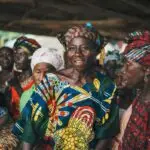
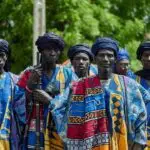
- Pictures of different groups of people
- Flashcards showing greetings in various languages
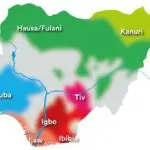
- A chart or poster wiht ethnic groups and regions
Rationale for the Lesson
Understanding the different groups of people in the community helps pupils appreciate cultural diversity. This promotes respect for others and helps pupils learn about the various traditions, languages, and practices that make up their community.
Prerequisite/Previous Knowledge
Pupils should have a basic understanding of what a community is and be familiar with some people in their local surroundings.
Lesson content
Group Of People In The Community
In every community, there are different groups of people.These groups can be based on culture, language, and traditions. The following are examples:
- The Hausa – they speak Hausa and can be found in the northern part of Nigeria.
- The Yoruba – They speak Yoruba and mostly live in the southwestern part of nigeria.
- The Igbo – They speak Igbo and are mainly found in the southeastern region.
- The Kanuri – They speak Kanuri and live in the northeastern part of Nigeria.
- The Ibibio – They speak Ibibio and can be found in the southeastern part of Nigeria.
- The Fulani – They speak Fula and are spread across many parts of Nigeria, often involved in cattle rearing.
- the Edo – They speak Edo and are primarily located in Edo State, known for their rich cultural heritage.
Each group has its own language, clothing, and way of life.
Teaching Methods
To deliver this lesson, the teacher will adopt the following methods: Questioning, Discussion, Direct Instruction, Explanation, Illustration, Cooperative Learning, Group Work, Autonomous Work, Oral Review, Summary.
instructional Procedures
To deliver this lesson, the teacher will adopt the following steps:
Step 1: Introduction
Time: 5 mins
Teaching Skill: Set Induction
Teacher’s Activity: Ask pupils, “Can you name some groups of people you know in our community?”
Pupils’ Activity: pupils respond by naming different people or groups they know.
Step 2: Explaining the Topic
Time: 10 mins
Teaching Skill: Direct Instruction
Teacher’s activity: Show pictures of different groups and explain who they are, where they live, and their languages.
Pupils’ Activity: Pupils listen and watch pictures as the teacher explains.
Step 3: group Activity
Time: 8 mins
Teaching Skill: Cooperative Learning
Teacher’s Activity: Divide the class into small groups, assign each group a different ethnic group to present.
Pupils’ Activity: Pupils work in groups, discussing and presenting their ethnic group.
Step 4: Note Taking
Time: 5 mins
Teaching Skill: Independent Work
Teacher’s Activity: Ask pupils to write down 3 groups of people in their community, including their languages.
Pupils’ Activity: Pupils write their notes in their books.
step 5: evaluation/Review
Time: 5 mins
Teaching Skill: Questioning
Teacher’s Activity: Ask questions to test pupils’ understanding of the lesson.
Pupils’ Activity: Pupils respond to the teacher’s questions.
Objective-aligned checks:
- Identify and describe the different groups of people in the community.
- Demonstrate how to greet people from different ethnic groups.
- Show respect for different cultural practices and languages in the community.
Step 6: Conclusion
Time: 5 mins
Teaching Skill: Recap/Closure
Teacher’s Activity: Summarize key points of the lesson, and explain why it’s vital to understand different groups in the community.
Pupils’ Activity: Pupils reflect on what they have learned and ask questions.
Lesson keywords
- Community – A group of people living in the same place or having a particular characteristic in common.
- Ethnic Group – A community or population made up of people who share a common cultural background or descent.
- Culture – The customs,arts,social institutions,and achievements of a particular nation,people,or group.
- Language – The method of human interaction, either spoken or written, consisting of the use of words in a structured and conventional way.
- Tradition – The transmission of customs or beliefs from generation to generation.
Lesson evaluation
To evaluate the learning, the teacher asks pupils to:
- Name two groups of people in their community.
- What language do the Yoruba people speak?
- Where can you find the Hausa people in Nigeria?
- List one thing that makes each group unique.
- How do you show respect to people from different ethnic groups?
Assignment/Homework
- Draw pictures of people from three different ethnic groups in Nigeria.
- Write down one greeting in a language other than your own.
- Ask your parents or guardians about their ethnic group and write a short paragraph about it.
Differentiation
- For slower learners: Provide simplified pictures and focus on identifying only the main ethnic groups.
- For advanced learners: Encourage them to research and present on a less commonly known ethnic group in Nigeria.
- For visual/auditory/kinesthetic learners: Use visual aids like maps and pictures, incorporate songs or chants in different languages, and have pupils act out greetings or cultural practices.
Note for Teachers
It is important to encourage the pupils to respect all groups of people in the community, regardless of their ethnicity or language. This helps to foster unity and appreciation for cultural diversity. Also, keep the activities engaging and allow pupils to express themselves freely. Happy teaching!
Community Join the conversation Open discussion +