

Class: Junior Secondary School 1 (JSS1, JSS 1)
Term: 2nd Term
Week: 4
Age: 12 years
Duration: 45 minutes
Subject: Pre-Vocational Studies
Curriculum Theme: Agricultural Science
Previous Lesson: Characteristics of Farm Animals and Their Essential Traits
Topic: Uses of farm animals
Subject Matter: Work animals, Sports, Guard, Hide and skin, Source of manure
Specific Objectives
By the end of the lesson, pupils should be able to:
- Cognitive Domain:
(a) Identify different uses of farm animals.
(b) Explain how farm animals contribute to agriculture and daily life. - Affective Domain:
(a) Appreciate the role of farm animals in providing labor and resources. - Psychomotor Domain:
(a) Demonstrate proper handling or care practices for selected farm animals. - Social Domain:
(a) Work in groups to discuss the benefits of farm animals in the community.
Reference Materials
The following resources were used in planning this lesson:
- 9 Years Basic Education Curriculum
- Lagos State Unified Scheme of work for Junior Secondary Schools
- Super Simple – Farm Animals
- Relevant Textbooks
Instructional Materials
The teacher will teach this lesson with the aid of:
- Charts and posters showing various farm animals and their uses
- Pictures and flashcards of animals used for work, sports, and guard purposes
- Samples of hides and skins
- Manure samples for demonstration
- Whiteboard and markers
Rationale for the Lesson
This lesson enables pupils to understand the practical uses of farm animals in agriculture, recreation, protection, and resource provision, enhancing appreciation and care for livestock.
Prerequisite/Previous Knowledge
Pupils are expected to have basic knowledge of common farm animals and their presence in local communities from previous lessons and everyday observation.
Lesson Content/Board Summary
Uses of Farm Animals
Farm animals provide various benefits to humans, including labor, protection, recreation, and raw materials for industry.
Work Animals
Work animals are farm animals trained to help humans perform physical tasks.
The following are examples of work animals and their uses:
- Horses – used for pulling carts, plowing fields, and transportation.
- Donkeys – used for carrying loads and farm produce.
- Oxen – used for plowing, threshing, and pulling heavy loads.
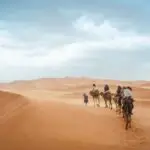
- Camels – used in arid areas for transport and carrying goods.
Sports
Some farm animals are used for sports and recreational purposes.
These include:
- Horses – used in horse racing and equestrian sports.
- Dogs – used in racing or agility competitions.
- Camels – used in camel racing in certain regions.
Guard
Certain farm animals serve as guards to protect property or livestock.
They are:
- Dogs – protect homes, farms, and herds.
- Geese – alert humans to intruders by loud honking.
- Donkeys – protect livestock from predators by aggressive behavior.
Hide and Skin
Farm animals provide hides and skins which are processed into leather and other materials.
Examples include:
- Cows – provide leather for shoes, bags, and belts.
- Goats – provide leather for gloves and small goods.
- Sheep – provide skins for clothing and blankets.
Source of Manure
Animal waste is an important natural fertilizer in agriculture.
The following are sources and uses of manure:
- Cow dung – enriches soil for crop production.
- Poultry droppings – improves soil fertility and plant growth.
- Horse manure – used in gardens and farms as organic fertilizer.
Teaching Methods/Instructional Techniques:
Discussion, Lecture, Explanation, Demonstration, Visual Aids, Group Work, Question and Answer
Instructional Procedures
To deliver this lesson, the teacher will adopt the following steps:
Step 1: Introduction
Time: 5 minutes
Teaching Skill: Set Induction
Teacher’s Activity: Teacher asks pupils to mention animals seen on farms and their uses, linking to prior lesson on farm animals.
Pupils’ Activity: Pupils respond and recall previously learned animals.
Learning Point: Pupils are engaged and prepared for learning the uses of farm animals.
Step 2: Work Animals
Time: 8 minutes
Teaching Skill: Explanation
Teacher’s Activity: Teacher presents charts and explains animals used for farm labor.
Pupils’ Activity: Pupils take notes and discuss examples in pairs.
Learning Point: Pupils understand the types and roles of work animals.
Step 3: Sports and Guard Animals
Time: 10 minutes
Teaching Skill: Discussion and Demonstration
Teacher’s Activity: Teacher explains animals used in sports and as guards, showing pictures and videos where possible.
Pupils’ Activity: Pupils observe, note, and participate in a brief discussion.
Learning Point: Pupils recognize animals’ roles beyond farm labor.
Step 4: Hide, Skin, and Manure
Time: 10 minutes
Teaching Skill: Explanation and Visual Aids
Teacher’s Activity: Teacher shows hides, skins, and manure samples while explaining their uses in agriculture and industry.
Pupils’ Activity: Pupils observe samples, take notes, and ask questions.
Learning Point: Pupils understand the material benefits of farm animals.
Step 5: Note-Taking
Time: 5 minutes
Teaching Skill: Explanation
Teacher’s Activity: Teacher summarizes lesson points on the board for pupils to copy.
Pupils’ Activity: Pupils copy board summary into their exercise books.
Learning Point: Pupils consolidate learning through written notes.
Step 6: Evaluation/Review
Time: 5 minutes
Teaching Skill: Questioning
Teacher’s Activity: The teacher evaluates the learning by asking the following questions:
- Name three animals used for work on the farm.
- List two farm animals used in sports.
- Mention one farm animal that serves as a guard.
- Give two uses of hide and skin from farm animals.
- Name two sources of manure from farm animals.
Pupils’ Activity: Pupils respond orally or in writing.
Learning Point: Pupils demonstrate understanding of the lesson objectives.
Step 7: Conclusion
Time: 2 minutes
Teaching Skill: Reinforcement
Teacher’s Activity: Teacher summarizes key points and encourages pupils to observe farm animals and their roles in the community.
Pupils’ Activity: Pupils listen and respond to clarifications.
Learning Point: Pupils appreciate the importance of farm animals.
Home Task: List four lesson examples connected with Uses of farm animals and add one correct use, step or safety rule.
Lesson Keywords
- Work animals – animals used to perform labor
- Sports animals – animals used for recreation or competitions
- Guard animals – animals used to protect people, property, or livestock
- Hide – skin of an animal used for leather and other products
- Manure – animal waste used as fertilizer
Differentiation
Support slower learners with visual aids and repeated explanations; encourage advanced learners to lead group discussions and share examples from local farms.
Note for teachers using this lesson plan
Ensure students safely handle samples during demonstrations. Incorporate local farm examples to make the lesson more relatable. Encourage practical observation at home or in school farms.
Community Join the conversation Open discussion +