

Class: Junior Secondary School 1 (JSS1, JSS 1)
Term: 1st Term
Week: 4
Age: 12 years
Duration: 45 minutes
Subject: Pre-Vocational Studies
Curriculum Theme: Agricultural Science
Sub Theme: Concept And Medium Of Agricultural Production
Previous Lesson: Importance Of Agriculture To The Nation Economy
Topic: Forms Of Agriculture: Types And Practices
Subject Matter: Types of Agricultural Practices in Localities, Pastoral, Arable, etc.
Specific Objectives
By the end of the lesson, pupils should be able to:
- Cognitive Domain:
(a) Define the meaning of agriculture and agricultural practices.
(b) Identify and explain the different forms of agriculture such as pastoral, arable, and mixed farming. - Affective Domain:
(a) Appreciate the importance of different agricultural practices to community survival.
(b) Develop a positive attitude toward farming as a valuable occupation. - Psychomotor Domain:
(a) Draw simple illustrations showing different types of farming practices.
(b) Classify local examples of agricultural activities into their respective types. - Social Domain:
(a) Work cooperatively in groups while discussing forms of agriculture.
(b) Respect the contribution of farmers in providing food and raw materials.
Reference Materials
The following resources were used in planning this lesson:
- 9 Years Basic Education Curriculum
- Lagos State Unified Scheme of work for Junior Secondary Schools
- Online information from: Britannica – Agriculture https://www.britannica.com/topic/agriculture
- Relevant Textbooks
Instructional Materials
The teacher will teach this lesson with the aid of:
- Charts showing different types of farming (pastoral, arable, mixed).
- Flashcards of crops and farm animals.
- Videos or pictures of local farms.
- Samples of simple farm tools.
- Whiteboard and markers.
Rationale for the Lesson
Understanding the forms of agriculture equips pupils with knowledge of food production methods and helps them value the role of farming in national development.
Prerequisite/Previous Knowledge
Pupils have seen crops like maize and cassava being planted in their communities and are familiar with common farm animals such as goats and chickens.
Lesson Content/Board Summary
Forms of Agriculture: Types and Practices
Types of Agricultural Practices
Agricultural practices are the different ways farmers produce crops and rear animals depending on the land, climate, and community needs.
The following are the major forms of agriculture:
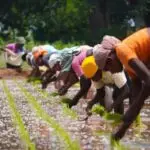
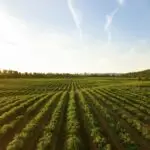
- Arable Farming – This involves the cultivation of crops such as maize, rice, yam, cassava, and beans.
- Pastoral Farming – This is the rearing of animals such as goats, cattle, sheep, and poultry.
- Mixed Farming – This combines both crop cultivation and animal rearing on the same farm.
- Fish Farming (Aquaculture) – This involves raising fish and other aquatic animals for food and income.
- Plantation Farming – This is the large-scale cultivation of a single crop such as cocoa, oil palm, or rubber.
Importance of Agricultural Practices
The following are the importance of agricultural practices:
- They provide food for man and animals.
- They supply raw materials for industries.
- They create employment opportunities.
- They contribute to the economy of the nation through trade and exports.
- They improve the standard of living in local communities.
Teaching Methods/Instructional Techniques:
Discussion, Lecture, Storytelling, Explanation, Visual Aids, Group Work, Question and Answer
Instructional Procedures
To deliver this lesson, the teacher will adopt the following steps:
Step 1: Introduction
Time: 5 minutes
Teaching Skill: Set Induction
Teacher’s Activity: The teacher narrates a short story about a farmer in the community who grows maize and rears goats to feed his family. The teacher then asks pupils to identify the practices in the story.
Pupils’ Activity: Pupils listen attentively and respond to questions by identifying crop farming and animal rearing.
Learning Point: Pupils are introduced to the idea of different forms of agriculture.
Step 2: Meaning of Agriculture
Time: 7 minutes
Teaching Skill: Explanation
Teacher’s Activity: The teacher defines agriculture and explains its purpose using charts and local examples.
Pupils’ Activity: Pupils listen, observe the charts, and repeat the definition.
Learning Point: Pupils understand the meaning of agriculture.
Step 3: Types of Agricultural Practices
Time: 15 minutes
Teaching Skill: Discussion and Illustration
Teacher’s Activity: The teacher explains the types of agricultural practices (arable, pastoral, mixed, fish farming, plantation) and shows relevant charts and flashcards.
Pupils’ Activity: Pupils take turns identifying examples of each type from their locality.
Learning Point: Pupils learn the various types of agricultural practices with examples.
Step 4: Importance of Agricultural Practices
Time: 10 minutes
Teaching Skill: Explanation and Group Work
Teacher’s Activity: The teacher leads a group discussion on the importance of agriculture and asks each group to provide one reason why agriculture is important.
Pupils’ Activity: Pupils discuss in groups and share their answers with the class.
Learning Point: Pupils understand why agricultural practices are important to individuals and the nation.
Step 5: Note-Taking
Time: 3 minutes
Teaching Skill: Writing
Teacher’s Activity: The teacher dictates the summarized notes from the board summary for pupils to copy.
Pupils’ Activity: Pupils copy the notes into their notebooks.
Learning Point: Pupils record important information from the lesson.
Step 6: Evaluation/Review
Time: 4 minutes
Teaching Skill: Questioning
Teacher’s Activity: The teacher evaluates the learning by asking the following questions:
- What is agriculture?
- Mention three forms of agriculture.
- Give two examples of crops grown in arable farming.
- State two importance of agricultural practices.
Pupils’ Activity: Pupils respond to the teacher’s questions.
Learning Point: Pupils demonstrate understanding of the topic.
Step 7: Conclusion
Time: 1 minute
Teaching Skill: Reinforcement
Teacher’s Activity: The teacher summarizes the lesson by emphasizing the types and importance of agricultural practices.
Pupils’ Activity: Pupils listen and ask questions if necessary.
Learning Point: Pupils are reminded of the key points of the lesson.
Home Task: List four lesson examples connected with Forms Of Agriculture: Types And Practices and add one correct use, step or safety rule.
Lesson Keywords
- Agriculture – the practice of growing crops and rearing animals.
- Arable Farming – the cultivation of crops.
- Pastoral Farming – the rearing of animals.
- Mixed Farming – a combination of crop cultivation and animal rearing.
- Plantation Farming – large-scale cultivation of one type of crop.
Differentiation
The teacher will use visual aids for slower learners, pair pupils for group discussions, and give extra tasks to faster learners to ensure all pupils participate effectively.
Note for teachers using this lesson plan
Ensure pupils relate examples of agriculture to their environment. Use local crops and animals they are familiar with for better understanding. Encourage pupils to value farming as a career option.


Community Join the conversation Open discussion +