

Class: Primary One
Term: Third Term
Subject: Pre-vocational Studies
Curriculum Theme: Agricultural Science
Previous Lesson: Farm Animals
Topic: Farm Animals
Content/Learning Area: Farm Animals, Animals and their Young Ones
Time Allocation: 40 minutes
Performance Objectives
By the end of the lesson, pupils should be able to:
- Cognitive Domain:
- List at least three farm animals and their young ones.
- Identify the benefits of raising farm animals.
- Psychomotor Domain:
- Draw and label two farm animals and their young ones.
- Affective Domain:
- Show appreciation for the diversity of farm animals.
- Demonstrate care and concern for farm animals.
- Social Domain:
- Work cooperatively with peers during activities.
Reference Materials
- 9 – Years basic Education Curriculum
- Abuja Educational Resource Center Scheme of Work
- NAPPS National Unified Scheme of Work
- Online Details
- Relevant Textbooks
Instructional Materials
To deliver this lesson, the teacher will employ the help of the following materials:
- Whiteboard or chart paper
- Markers or crayons
- Pictures of farm animals and their young ones
- Drawing materials for pupils
Rationale for the Lesson
Understanding farm animals is crucial for appreciating where our food comes from and the importance of animal welfare. This lesson lays a foundation for future studies in agriculture and promotes responsible citizenship.
Prerequisite/Previous knowledge
The teacher will begin by asking pupils what animals they have seen on farms.The teacher will then show pictures of various farm animals, sparking discussion and generating excitement about the lesson.
Lesson Content
Farm Animals
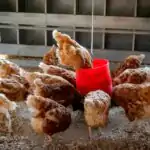
Farm animals are animals raised on farms for various reasons, such as providing food (meat, milk, eggs), materials (wool), or transportation. Examples are:
- Cows
- Pigs
- Sheep
- Goats
- Chickens
- Horses
- Ducks
- Turkeys
- Rabbits
- Donkeys
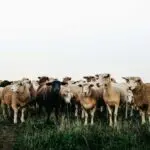
Sheep are a common example of a farm animal providing wool.
Animals and their Young Ones
Different farm animals have different names for their young. These include:
- Cow – Calf
- dog – Puppy
- Cat – Kitten
- Chicken – Chick
- Sheep – Lamb
- Goat – Kid
- Horse – Foal
- Duck – Duckling
- Pig – Piglet
- Turkey – Poult
This variety highlights the diversity of life on farms.
Teaching Methods
To deliver this lesson, the teacher will adopt the following methods: Discussion,Picture-based learning,Drawing and labeling activities.
Instructional Procedures
To deliver this lesson, the teacher will adopt the following steps:
Step 1: Introduction
Time: 5 minutes
Teaching Skill: Set Induction
Teacher’s Activity: Review previous lesson and introduce the topic of farm animals. show pictures of various farm animals.
pupils’ Activity: respond to teacher’s questions, observe pictures.
step 2: Clarification of Key Concepts
Time: 10 minutes
Teaching Skill: Explanation
Teacher’s Activity: Define farm animals and explain their importance. Discuss different types of farm animals.
Pupils’ Activity: Listen attentively, ask clarifying questions.
Step 3: Presentation/Guided Practice
Time: 10 minutes
Teaching Skill: Modeling
Teacher’s Activity: Demonstrate how to draw and label a farm animal and its young one. Provide examples of different animals and their young.
Pupils’ Activity: Observe the demonstration,ask questions.
Step 4: Autonomous Practice
Time: 10 minutes
teaching Skill: Monitoring
Teacher’s Activity: Supervise pupils as they draw and label farm animals and their young ones.
Pupils’ Activity: Draw and label two farm animals and their young ones.
Step 5: Note-Taking
Time: 2 minutes
Teaching Skill: Note-taking guidance
Teacher’s Activity: Guide pupils in writing down key facts about farm animals and their young ones.
Pupils’ Activity: Write down key facts in their notebooks.
Step 6: Evaluation/Review
Time: 3 minutes
Teaching Skill: Questioning
Teacher’s Activity: Ask evaluation questions to assess pupils’ understanding.
Pupils’ Activity: Answer evaluation questions.
Objective-aligned checks:
- List at least three farm animals and their young ones.
- Identify the benefits of raising farm animals.
- Draw and label two farm animals and their young ones.
Step 7: Conclusion
Time: 5 minutes
Teaching Skill: Summarizing
Teacher’s Activity: Summarize the key points about farm animals and their young ones, emphasizing the importance of caring for these animals. Assign homework.Pupils’ Activity: Listen to the summary, note homework assignment.
Lesson Keywords
- Farm Animal – An animal raised on a farm for food,materials,or work.
- Calf – The young of a cow.
- Lamb – The young of a sheep.
- chick – The young of a chicken.
- Foal – The young of a horse.
Lesson Evaluation
To evaluate the learning, the teacher asks pupils to:
- What is a farm animal?
- Name three farm animals and their young ones.
- Draw a picture of a cow and its calf.
- Why are farm animals critically importent?
Assignment/Homework
- Draw and label additional farm animals and their young ones.
- List five benefits of keeping farm animals.
Differentiation
- For slower learners: Provide one-on-one assistance and simplified instructions.
- For advanced learners: Encourage them to research and present data on additional farm animals and their young.
- For visual/auditory/kinesthetic learners: Use visual aids, verbal explanations, and hands-on activities like drawing and role-playing.
Note for Teachers
Ensure to use real-life examples and visual aids to make the lesson engaging and relatable for the pupils. Encourage active participation and provide constructive feedback during the drawing activity.


Community Join the conversation Open discussion +