

Class: Junior Secondary School 1 (JSS 1 / JS1)
Term: Third Term
Week: 9
Age: 12 years
Duration: 45 minutes
Subject: Pre-Vocational Studies
Curriculum Theme: Agricultural Science
Previous Lesson: .
Topic: CLASSIFICATION OF INSECT PESTS
Subject Matter: Classification based on: (a) mouth parts (b)piercing (c) sucking (d) biting and chewing
Specific Objectives
By the end of the lesson, pupils should be able to:
Cognitive Domain:
- Define insect pests.
- Identify different types of insect mouthparts.
- Classify insect pests based on their mouthparts (piercing and sucking, biting and chewing).
Affective Domain:
- Appreciate the importance of classifying insect pests.
- Show interest in protecting crops from pest damage.
- Recognize the impact of different pest types on plants.
Psychomotor Domain:
- Draw or sketch simple diagrams of different insect mouthparts.
- Give examples of insect pests for each classification type.
Social Domain:
- Discuss with peers how different insect pests feed.
- Share knowledge about common insect pests in their locality.
Reference Materials
The following resources were used in planning this lesson:
- 9 Years Basic Education Curriculum for Pre-Vocational Studies (Agricultural Science) JSS 1.
- State Unified Scheme of Work for Pre-Vocational Studies JSS 1.
- Pre-Vocational Studies for Junior Secondary Schools Book 1.
- https://www.fao.org/3/t0342e/t0342e03.pdf
- https://www.researchgate.net/publication/348270123_INSECT_PESTS_OF_AGRICULTURAL_CROPS_AND_THEIR_MANAGEMENT
Instructional Materials
The teacher will teach this lesson with the aid of:
- Charts showing different types of insect pests and their mouthparts.
- Pictures of damaged crops caused by various pests.
- Actual specimens of common insect pests (if available and safe).
Rationale for the Lesson
This lesson helps pupils understand how different insect pests feed on plants, which is important for identifying the pests and the damage they cause. Knowing how pests feed enables pupils to suggest appropriate methods for protecting crops and maintaining healthy farms.
Prerequisite/Previous Knowledge
Pupils should have basic knowledge of what insects are and that some insects can be harmful to plants.
Lesson Content/Board Summary
CLASSIFICATION OF INSECT PESTS
What are Insect Pests?
Insect pests are insects that damage crops, livestock, or stored products, causing economic losses or health problems. They feed on different parts of plants like leaves, stems, roots, flowers, and fruits.
Classification Based on Mouthparts
Insect pests are classified based on the type of mouthparts they possess, which determines how they feed on plants. The two main types are piercing and sucking, and biting and chewing mouthparts.
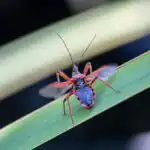
Piercing and Sucking Mouthparts
These insects have long, needle-like mouthparts adapted for piercing plant tissues and sucking out plant sap. They do not remove solid parts of the plant but extract liquids. Damage often appears as stunted growth, yellowing leaves, or wilting.
Examples of insect pests with piercing and sucking mouthparts include:
- Aphids
- Whiteflies
- Mealybugs
- Leafhoppers
- Stink bugs
Biting and Chewing Mouthparts
These insects have strong, jaw-like mouthparts (mandibles) that are used for cutting, tearing, and grinding solid plant tissues. They feed by chewing holes in leaves, stems, roots, or fruits.
Examples of insect pests with biting and chewing mouthparts include:
- Grasshoppers
- Caterpillars (larvae of moths and butterflies)
- Beetles (e.g., Colorado potato beetle, leaf beetles)
- Termites
- Locusts
Teaching Methods/Instructional Techniques
Discussion, Lecture, Demonstration, Question and Answer, Visual Aids
Instructional Procedures
Step 1: Introduction
Time: 5 minutes
Teaching Skill: Set Induction
Teacher’s Activity: The teacher greets the pupils and asks them to recall what they know about insects and some insects that damage plants.
Pupils’ Activity: Pupils respond to the teacher’s questions by mentioning insects like grasshoppers or caterpillars.
Learning Point: Pupils activate prior knowledge about insects and plant damage.
Step 2: Definition of Insect Pests
Time: 5 minutes
Teaching Skill: Explanation
Teacher’s Activity: The teacher explains what insect pests are and why they are a problem for farmers.
Pupils’ Activity: Pupils listen attentively and take notes on the definition of insect pests.
Learning Point: Pupils understand the term “insect pests.”
Step 3: Introduction to Classification of Insect Pests
Time: 5 minutes
Teaching Skill: Explaining
Teacher’s Activity: The teacher introduces the concept of classifying insect pests based on their mouthparts and explains why this classification is useful.
Pupils’ Activity: Pupils listen and ask questions for clarification.
Learning Point: Pupils learn the importance of classifying insect pests.
Step 4: Explanation of Piercing and Sucking Mouthparts
Time: 10 minutes
Teaching Skill: Demonstration/Explanation
Teacher’s Activity: The teacher explains insects with piercing and sucking mouthparts, describing how they feed and showing relevant charts or pictures. The teacher gives examples like aphids and whiteflies.
Pupils’ Activity: Pupils observe the charts, listen to the explanation, and copy notes on piercing and sucking mouthparts and examples.
Learning Point: Pupils understand and identify pests with piercing and sucking mouthparts.
Step 5: Explanation of Biting and Chewing Mouthparts
Time: 10 minutes
Teaching Skill: Demonstration/Explanation
Teacher’s Activity: The teacher explains insects with biting and chewing mouthparts, describing their feeding mechanism and showing relevant charts or pictures. The teacher gives examples like grasshoppers and caterpillars.
Pupils’ Activity: Pupils observe the charts, listen to the explanation, and copy notes on biting and chewing mouthparts and examples.
Learning Point: Pupils understand and identify pests with biting and chewing mouthparts.
Step 6: Discussion on Damage Caused
Time: 5 minutes
Teaching Skill: Discussion
Teacher’s Activity: The teacher facilitates a brief discussion on the visible damage caused by each type of pest (e.g., holes in leaves vs. stunted growth).
Pupils’ Activity: Pupils contribute to the discussion by describing damage they have observed on plants.
Learning Point: Pupils connect mouthpart types to specific types of plant damage.
Step 7: Evaluation/Review
Time: 5 minutes
Teaching Skill: Questioning/Assessment
Teacher’s Activity: The teacher evaluates the learning by asking the following questions:
- What are insect pests?
- Mention two types of mouthparts used to classify insect pests.
- Give two examples of insect pests with piercing and sucking mouthparts.
- Give two examples of insect pests with biting and chewing mouthparts.
Pupils’ Activity: Pupils answer orally and in writing.
Learning Point: Pupils demonstrate understanding of the lesson.
Step 8: Conclusion
Time: 5 minutes
Teaching Skill: Summarizing
Teacher’s Activity: The teacher summarizes the main points of the lesson, emphasizing the importance of knowing pest classification for effective control. The teacher then gives homework: “Draw and label two insect pests, one with piercing and sucking mouthparts and one with biting and chewing mouthparts.”
Pupils’ Activity: Pupils listen to the summary and copy the homework.
Learning Point: Pupils consolidate their learning and prepare for further study.
Home Task: List four lesson examples connected with CLASSIFICATION OF INSECT PESTS and add one correct use, step or safety rule.
Lesson Keywords
- Insect Pests – Insects that cause harm to crops, animals, or stored products.
- Mouthparts – The specialized structures around an insect’s mouth used for feeding.
- Piercing and Sucking – A type of mouthpart used by insects to pierce plant tissue and suck out sap.
- Biting and Chewing – A type of mouthpart used by insects to cut, tear, and grind solid plant material.
- Aphids – Small insects with piercing and sucking mouthparts that feed on plant sap.
- Grasshoppers – Insects with biting and chewing mouthparts known for eating leaves.
Differentiation
For pupils who grasp concepts quickly, the teacher can challenge them to research more examples of pests for each category or different types of damage. For pupils needing more support, the teacher can provide simplified diagrams and spend more time on one-on-one explanations and visual aids.
Note for teachers using this lesson plan
Ensure that the charts or pictures used are clear and large enough for all pupils to see. If actual specimens are used, ensure they are safely handled and disposed of. Encourage pupils to share their observations from their home or local environment regarding insect pests.
Community Join the conversation Open discussion +