

Class: primary Three
Term: third Term
Subject: basic Science and Technology
Curriculum Theme: Basic Science
Previous Lesson: Parts Of Plants And Their Uses
topic: Meaning and Examples of Levers
Content/Learning Area: What is a Lever?, Examples of Simple Levers
Time Allocation: 40 minutes
Performance Objectives
By the end of the lesson, pupils should be able to:
- Cognitive Domain:
1. Define a lever.
2. Identify examples of simple levers.
3. Explain how levers work.
- Psychomotor Domain:
1. Identify levers in everyday objects.
- Affective Domain:
1.Appreciate the importance of levers in everyday activities.
- Social domain:
1. Work collaboratively to identify and explain levers.
Reference Materials
- 9 – Years Basic Education Curriculum
- Abuja Educational Resource Center Scheme of Work
- NAPPS National Unified Scheme of Work
- Relevant Textbooks
Instructional Materials
To deliver this lesson,the teacher will use the following materials: Charts showing examples of levers,Real-life examples of levers (e.g., see-saw, pliers, can opener), Pictures of levers.
Rationale for the Lesson
Understanding levers is crucial for grasping basic principles of simple machines. This knowledge is applicable in various everyday tasks and forms a foundation for future learning in physics and engineering.
Prerequisite/previous Knowledge
The teacher will start by asking pupils to share examples of things they use to lift or move heavy objects. This will lead into a discussion about simple machines, setting the stage for the introduction of levers.
Lesson Content
What is a Lever?
A lever is a simple machine that makes lifting or moving heavy things easier. It’s a rigid bar that moves around a fixed point called the fulcrum. Levers help us use less effort to move objects.
Examples of Simple Levers
Levers are simple machines that help us lift or move heavy objects wiht less effort.
The following are examples of simple levers:
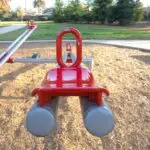
- See-Saw: A long board balanced in the middle (fulcrum). Children sitting on each end apply force.
- Pliers: The fulcrum is the pivot point. Hands apply force to grip and bend things.
- Can Opener: The fulcrum is where the opener pivots.the hand applies force to open the can.
- Crowbar: Used for prying and lifting heavy things.The fulcrum is where it rests against something solid.
- Scissors: The fulcrum is the pivot point in the middle. hands apply force to cut.
- Bottle Opener: The edge of the bottle cap acts as the fulcrum. Force is applied to the handle to lift the cap.
- Nutcracker: The hinge acts as the fulcrum. Force is applied to the handles to crack nuts.
Teaching Methods
To deliver this lesson, the teacher will adopt the following methods: Explanation, Exhibition, Question and Answer, Group Work.
Instructional Procedures
To deliver this lesson, the teacher will adopt the following steps:
Step 1: Introduction
Time: 5 minutes
Teaching Skill: Set Induction
Teacher’s Activity: Ask pupils to share examples of things they use to lift or move heavy objects.Pupils’ Activity: Share examples and participate in discussion.
Step 2: Explanation of Key Concepts
Time: 10 minutes
Teaching Skill: Explanation
Teacher’s Activity: define a lever and explain its components (rigid bar, fulcrum).Pupils’ Activity: Listen attentively and ask clarifying questions.
Step 3: exhibition/Guided Practice
Time: 10 minutes
Teaching Skill: Demonstration
Teacher’s Activity: Demonstrate how different levers work using real-life examples and charts.
Pupils’ Activity: Observe the demonstrations and participate in guided practice.
Step 4: Self-Reliant Practice
Time: 5 minutes
Teaching Skill: Guided Practice
Teacher’s Activity: Guide pupils to identify levers in pictures and real-life objects.
Pupils’ Activity: Identify levers independently.
Step 5: Note-Taking
Time: 5 minutes
Teaching Skill: note-Taking
Teacher’s Activity: Guide pupils in taking notes on key concepts and examples.
Pupils’ Activity: Take notes on key concepts and examples.
Step 6: Evaluation/Review
Time: 5 minutes
Teaching Skill: Questioning
Teacher’s Activity: Ask questions to assess understanding.
Pupils’ Activity: Answer questions to demonstrate understanding.
Objective-aligned checks:
- Define a lever.
- Identify examples of simple levers.
- Explain how levers work.
Step 7: Conclusion
Time: 5 minutes
Teaching Skill: Summarizing
Teacher’s Activity: Summarize the key concepts of levers and encourage pupils to look for levers in their surroundings. Answer any remaining questions.
Pupils’ Activity: Listen to the summary and ask any remaining questions.
Lesson Keywords
- lever – A simple machine that makes lifting or moving heavy things easier.
- Fulcrum – the fixed point around which a lever moves.
- Force – An influence that causes an object to undergo a certain change.
- Simple Machine – A device that makes work easier by changing the direction or magnitude of a force.
- Rigid Bar – A stiff bar that is part of a lever and moves around the fulcrum.
Lesson Evaluation
To evaluate the learning, the teacher asks pupils to:
- what is a lever and how does it work?
- Name three examples of simple levers found in your home.
- Explain how a see-saw uses a lever to lift.
- Where is the fulcrum located on a pair of scissors?
- Can you think of any other examples of levers?
Assignment/Homework
- Find and list five different levers you can find at home or in your community.
- Draw a diagram of one of the levers you found and label the fulcrum.
- Explain how each of the levers you listed makes work easier.
differentiation
- For slower learners: Provide one-on-one assistance and use simpler examples.
- For advanced learners: Encourage them to find more examples of levers and explain how they work.
- For visual/auditory/kinesthetic learners: Use visual aids, verbal explanations, and hands-on activities to cater to different learning styles.
Note for Teachers
Ensure to use real-life examples and hands-on activities to make the lesson engaging and understandable for the pupils. Encourage active participation and questioning to assess their understanding effectively.
Community Join the conversation Open discussion +