Class: Primary Three
Term: First Term
Subject: Basic Science and Technology
Curriculum theme: Basic Science
previous Lesson:
Topic: Measurement of Mass
Content/learning Area: Explain the meaning of Mass & weight, Identify and mention various instruments for measuring mass & Weight, Identify the metric units of measuring mass, Use mass balance to estimate the masses of objects in the classroom such as pencils, notebooks
Time Allocation: 40 minutes
Performance Objectives
By the end of the lesson, pupils should be able to:
- Cognitive Domain:
– Explain the meaning of mass and weight.
– Identify various instruments for measuring mass and weight.
– Identify the metric units of measuring mass.
- Psychomotor Domain:
– Use a mass balance to measure the mass of objects.
- Affective Domain:
– Show interest in learning about measurement of mass.
– Participate actively in class discussions and activities.
- Social Domain:
– Work cooperatively with peers during group activities.
Reference Materials
- 9 – Years Basic Education Curriculum
- Abuja educational Resource Center Scheme of Work
- NAPPS National Unified Scheme of work
- Relevant Textbooks
Instructional Materials
To deliver this lesson, the teacher will employ the help of the following materials:
- Mass balance
- various objects (pencils, notebooks, etc.)
- Whiteboard or chart paper
- Markers
- Pictures of diffrent measuring instruments
Rationale for the Lesson
Understanding mass measurement is crucial for everyday life and further studies in science. This lesson provides a foundation for future lessons on weight, density, and other related scientific concepts.
Prerequisite/Previous Knowledge
The teacher will start by asking pupils what they remember from the previous lesson on measuring length. A fast review will be done, followed by introducing the concept of mass by showing different objects and asking pupils to compare their heaviness.This will lead into a discussion about what mass is.
Lesson Content
What is Mass and Weight?
Mass is the amount of matter in an object. Weight is the force of gravity on an object’s mass. A heavy rock has more mass than a light feather, and thus weighs more as gravity pulls on it more strongly.
Instruments for Measuring Mass and Weight
Various instruments are used to measure mass and weight, each with its specific application:
The following are examples:
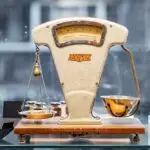
- Mass Balance: measures mass by comparing it to known standard masses.
- Spring Balance: Measures weight using a spring that stretches based on gravity’s force.
- Digital Scale: An electronic device for precise mass measurements.
- beam Balance: Measures mass by comparing an unknown mass with a known mass.
- Triple Beam Balance: A more accurate beam balance with three beams and adjustable weights.
- Kitchen Scale: A small scale for measuring food items, often in grams or ounces. Learn more about measuring weight.
- Weighing Scale: Used in markets and stores to measure the weight of goods being sold.
- Laboratory Balance: High-precision instruments used in scientific research for accurate mass determination.
Metric Units of Mass and Weight
Here’s a chart showing metric units of mass:
| Symbol | Unit | Equivalent |
|---|---|---|
| mg | Milligram | 1 mg |
| dg | Decigram | 10 mg |
| cg | Centigram | 10 dg |
| g | Gram | 10 cg |
| kg | Kilogram | 1000 g |
| t | Tonne | 1000 kg |
How to Estimate Masses of Classroom Objects
Estimating the mass of objects involves a systematic approach using a mass balance:
The following steps are involved:
- Place the object on the mass balance.
- Read the measurement on the scale.
- record the mass in grams or kilograms.
Teaching Methods
To deliver this lesson, the teacher will adopt the following methods: Discussion, Presentation, Practical Activity
Instructional Procedures
to deliver this lesson, the teacher will adopt the following steps:
Step 1: introduction
Time: 5 minutes
Teaching Skill: Set Induction
Teacher’s Activity: Review previous lesson, introduce the topic of mass measurement, and engage pupils with a question about comparing the heaviness of objects.
Pupils’ Activity: Participate in the review, listen attentively to the introduction, and answer the teacher’s questions.
Step 2: explanation of Key Concepts
Time: 10 minutes
Teaching Skill: Explanation
Teacher’s Activity: Explain the difference between mass and weight, define mass, and introduce the metric units of mass.
Pupils’ Activity: Listen attentively,take notes,and ask clarifying questions.
Step 3: Demonstration/Guided Practice
Time: 10 minutes
Teaching Skill: Demonstration
Teacher’s Activity: Demonstrate how to use a mass balance to measure the mass of an object. Guide pupils in measuring the mass of different objects.
Pupils’ Activity: Observe the demonstration, participate in the guided practice, and record their measurements.
Step 4: Autonomous Practice
Time: 5 minutes
Teaching Skill: Monitoring
teacher’s Activity: Allow pupils to work independently, measuring the mass of different objects. Monitor their progress and provide feedback.
Pupils’ Activity: Work independently, measure the mass of objects, and record their findings.
Step 5: Note-Taking
Time: 5 minutes
Teaching Skill: note-Taking
Teacher’s Activity: Guide pupils in summarizing the key concepts and their findings.
Pupils’ Activity: Take notes, summarize the lesson, and prepare for the evaluation.
Step 6: Evaluation/Review
Time: 5 minutes
Teaching Skill: Assessment
Teacher’s Activity: Ask questions to assess pupils’ understanding of the lesson.
Pupils’ Activity: Answer the teacher’s questions.
Step 7: Conclusion
Time: 2 minutes
Teaching Skill: Summarizing
Teacher’s Activity: Summarize the key points of the lesson.Pupils’ Activity: Listen to the summary and ask any final questions.
Lesson Keywords
- Mass – The amount of matter in an object.
- Weight – The force of gravity on an object’s mass.
- Balance – An instrument used to measure mass.
- Kilogram – A metric unit of mass.
- Gram – A smaller metric unit of mass.
Lesson Evaluation
To evaluate the learning, the teacher asks pupils to:
- What is the difference between mass and weight?
- Name three instruments used to measure mass.
- What is the unit for measuring mass that is abbreviated as “kg”?
- How do you use a mass balance to measure the mass of an object?
Assignment/Homework
- Measure the mass of five different objects at home using a kitchen scale or any available balance.
- Record the name of each object and its mass in a table.
- Bring the table to the next class for discussion.
Differentiation
- For slower learners: Provide one-on-one assistance and use simpler examples.
- For advanced learners: Encourage them to explore different types of balances and conduct more complex measurements.
- For visual/auditory/kinesthetic learners: Use visual aids, verbal explanations, and hands-on activities to cater to different learning styles.
Note for Teachers
Ensure that pupils understand the difference between mass and weight. Provide ample opportunities for hands-on practice with the mass balance. Encourage pupils to ask questions and participate actively in class discussions.