

Class: Primary Three
term: First Term
Subject: Basic Science and Technology
Curriculum Theme: physical & Health Education
Previous Lesson: Meaning and Types of Locomotor Movements
Topic: manipulative Movements
Content/Learning Area: Defining manipulative movement,Identifying throwing,catching,kicking,and heading,Demonstrating throwing,catching,kicking,and heading
Time Allocation: 40 minutes
Performance Objectives
By the end of the lesson,pupils should be able to:
- Cognitive Domain:
1. Define manipulative movement.
2. identify throwing, catching, kicking, and heading.
- Affective Domain:
1. Show interest in learning about manipulative movements.
2. Participate actively in class activities.
- Psychomotor Domain:
1.Demonstrate throwing.2. Demonstrate catching.
3. demonstrate kicking.
4. Demonstrate heading.
- Social Domain:
1. Work cooperatively with peers during activities.
2. Respect the opinions and contributions of others.
Reference Materials
- 9 – Years Basic Education Curriculum
- Abuja Educational Resource Center Scheme of Work
- NAPPS National Unified Scheme of Work
- Relevant Textbooks
Instructional Materials
To deliver this lesson,the teacher will employ the help of the following materials:
- Balls
- Frisbees
- Cones
- Whiteboard or chart paper
- Markers
Rationale for the Lesson
Understanding manipulative movements is crucial for physical growth and coordination. These skills are essential for various sports and everyday tasks, promoting healthy lifestyles and overall well-being.
Prerequisite/Previous Knowledge
The teacher will start by asking pupils what they did during break time, prompting discussion about activities involving movement and object control. This will lead into a discussion about manipulative movements.
Lesson Content
Manipulative Movements
Manipulative movements are actions using hands, feet, or other body parts to control objects. These are crucial for physical growth and coordination,essential for sports and daily life.
what are Manipulative movements?
Manipulative movements involve using our hands, feet, or other body parts to control objects. They’re crucial for physical development and coordination, crucial for many sports and daily activities.
Examples of Manipulative Movements:
These include:
- Throwing: Propelling an object through the air using your arm and hand. Examples include throwing a ball, frisbee, or paper airplane.
- Catching: Using your hands to stop a moving object. Examples include catching a ball, frisbee, or butterfly net.
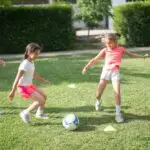
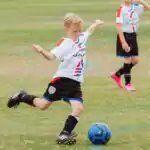
- Kicking: Using your foot to propel an object. Examples include kicking a ball, can, or soccer ball.
- Heading: Using your head to propel an object.examples include heading a soccer ball, volleyball, or basketball.
- Striking: Hitting an object with an implement. Examples include striking a ball with a bat, stick, or racket.
- dribbling: Moving an object along the ground with your hands or feet. examples include dribbling a basketball, soccer ball, or hockey puck.
Teaching Methods
To deliver this lesson, the teacher will adopt the following methods: Discussion, Exhibition, Practical Activities
Instructional Procedures
to deliver this lesson, the teacher will adopt the following steps:
Step 1: Introduction (Set Induction)
Time: 5 minutes
Teaching Skill: Questioning, Discussion
Teacher’s Activity: Briefly introduce the topic of manipulative movements and ask pupils what they think it means.
Pupils’ Activity: Share their ideas and participate in the discussion.
Step 2: Clarification of Key Concepts
Time: 10 minutes
Teaching Skill: Explanation, definition
Teacher’s Activity: Define manipulative movements and provide examples.
Pupils’ Activity: Listen attentively and ask clarifying questions.
Step 3: Demonstration/Guided Practice
Time: 15 minutes
Teaching Skill: Demonstration, Guided Practice
Teacher’s Activity: Demonstrate throwing, catching, kicking, and heading. Guide pupils through practice sessions.
Pupils’ Activity: Observe the demonstrations and practice the movements under teacher supervision.
Step 4: Self-reliant Practice
Time: 5 minutes
Teaching Skill: Monitoring, Feedback
Teacher’s Activity: Supervise pupils as they practice independently.
Pupils’ Activity: Practice throwing, catching, kicking, and heading independently.
Step 5: note-Taking
Time: 2 minutes
Teaching Skill: Note-Taking
Teacher’s Activity: Guide pupils in taking notes on key concepts and examples.
Pupils’ Activity: Take notes on the lesson.
Step 6: Evaluation/Review
Time: 3 minutes
Teaching Skill: Questioning, Feedback
Teacher’s Activity: Ask review questions to assess understanding.
Pupils’ Activity: Answer the review questions.
Objective-aligned checks:
- Define manipulative movement.
- identify throwing, catching, kicking, and heading.
- Show interest in learning about manipulative movements.
Step 7: Conclusion
Time: 2 minutes
Teaching Skill: Summarizing, Assigning Homework
Teacher’s Activity: Summarize the key concepts of manipulative movements and assign homework.Pupils’ Activity: Listen to the summary and note the homework assignment.
Lesson Keywords
- Manipulative Movements – Actions using hands, feet, or other body parts to control objects.
- Throwing – Propelling an object through the air.
- Catching – Using hands to stop a moving object.
- Kicking – Using the foot to propel an object.
- Heading – Using the head to propel an object.
Lesson Evaluation
To evaluate the learning,the teacher asks pupils to:
- What are manipulative movements?
- Name a manipulative movement we discussed.
- Why are these movements critically important?
- How can you improve your skills in these movements?
- Can you think of other examples of manipulative movements?
Assignment/Homework
- Identify and describe other examples of manipulative movements they see in their daily lives.
- Practice throwing and catching a ball with a family member.
- Write a short paragraph explaining the importance of manipulative movements in sports.
Differentiation
- for slower learners: Provide one-on-one assistance and break down the movements into smaller steps.
- for advanced learners: Encourage them to explore more complex variations of the movements.
- For visual/auditory/kinesthetic learners: Use visual aids, verbal instructions, and hands-on activities to cater to different learning styles.
Note for Teachers
Ensure to provide a safe and supportive surroundings for pupils to practice manipulative movements. Encourage active participation and provide constructive feedback to help pupils improve their skills.


Community Join the conversation Open discussion +