

Class: Primary Three
Term: Second Term
Subject: Basic Science and Technology
Curriculum theme: Physical & Health Education
Previous Lesson: Basketball, Basic Skills And Materials Needed For Basketball
Topic: Swimming
Content/Learning Area: What is Swimming?, Facilities And Equipments Needed For Swimming, Importance of swimming as a social activity
Time Allocation: 40 minutes
Performance Objectives
By the end of the lesson, pupils should be able to:
- Cognitive Domain:
1. Define the concept of swimming.
2. Identify and list facilities and equipment needed for swimming.
3. Explain the importance of swimming for physical health.
4. Discuss the significance of social activities related to swimming.
- Affective Domain:
1. Show interest in learning about swimming.2. Appreciate the importance of swimming for health and well-being.
- Psychomotor domain:
1. N/A
- Social Domain:
1.Participate actively in class discussions.
2. Work cooperatively with peers.
Reference Materials
- 9 – Years basic Education Curriculum
- Abuja Educational Resource Center Scheme of Work
- NAPPS National Unified Scheme of Work
- Relevant Textbooks
Instructional Materials
To deliver this lesson, the teacher will use the following materials:
- Whiteboard or chart paper
- Markers or pens
- pictures or illustrations of swimming pools, equipment, and people swimming
Rationale for the Lesson
This lesson introduces pupils to swimming, it’s facilities, equipment, and social benefits. Understanding swimming is crucial for water safety and promotes a healthy lifestyle.
Prerequisite/Previous Knowledge
Pupils have likely seen swimming pools or people swimming and may have some basic understanding of water activities.
Lesson Content
What is Swimming?
Swimming is a physical activity involving moving through water using different techniques. It’s a useful skill,a fun activity,and a competitive sport.
Facilities And Equipments Needed For Swimming
Swimming facilities and equipment are essential for a safe and enjoyable swimming experience. These include:
- Swimming Pool: A place filled with water for swimming.
- Swimwear: Clothes for swimming (swimsuits, trunks).
- Goggles: Eye protection for seeing underwater.
- Swim caps: Head coverings to protect hair and reduce water resistance.
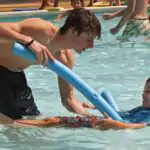
- Kick Boards: Floating boards for practicing leg movements.
- Fins: Foot attachments for better movement in water.
- Life Jackets/Floatation Devices: Safety equipment to help stay afloat.
- Lane Ropes: Ropes to divide swimming lanes.
- Starting Blocks: Platforms for starting races.
- first Aid Kit: For injuries or emergencies.
- Poolside Showers: For rinsing off before and after swimming.
- Changing Rooms: Private spaces for changing into and out of swimwear.
Importance of swimming as a social activity
Swimming offers numerous social benefits, fostering community and well-being. These include:
- Community Bonding: Swimming brings people together.
- social Interaction: Poolside chats and breaks offer social time.
- Inclusive Recreation: Suitable for all ages and fitness levels.
- Health and Well-being: Socializing while swimming improves mental health.
- Team Building: Swimming in groups or teams promotes cooperation.
- Family Fun: Swimming provides a recreational activity for families to enjoy together.
Teaching methods
To deliver this lesson, the teacher will adopt the following methods: Discussion, Question and answer, Use of visual aids.
Instructional Procedures
To deliver this lesson, the teacher will adopt the following steps:
Step 1: Introduction (Set Induction)
Time: 5 minutes
Teaching Skill: Questioning, explaining
Teacher’s Activity: Ask pupils if they know what swimming is. Show pictures of swimming pools and people swimming.
Pupils’ Activity: Respond to teacher’s questions and observe the pictures.
Step 2: Clarification of Key Concepts
Time: 10 minutes
Teaching Skill: Explaining, defining
Teacher’s Activity: Define swimming and explain its importance.
Pupils’ Activity: Listen attentively and ask questions.
Step 3: Exhibition/Guided Practice
Time: 10 minutes
Teaching Skill: Demonstrating, guiding
Teacher’s Activity: Show pictures of swimming equipment and facilities. Explain their uses.
Pupils’ Activity: Identify and name the equipment and facilities.
Step 4: Independent Practice
Time: 5 minutes
Teaching Skill: Monitoring, guiding
Teacher’s Activity: Ask pupils to list the equipment and facilities they can remember.
Pupils’ Activity: List the equipment and facilities.
Step 5: Note-Taking
Time: 5 minutes
Teaching Skill: Guiding, summarizing
Teacher’s Activity: Guide pupils to write short notes on the lesson.
Pupils’ Activity: Write notes.
Step 6: Evaluation/Review
Time: 5 minutes
Teaching Skill: Questioning, assessing
Teacher’s Activity: Ask evaluation questions.
Pupils’ Activity: Answer the questions.
Objective-aligned checks:
- Define the concept of swimming.
- Identify and list facilities and equipment needed for swimming.
- Explain the importance of swimming for physical health.
Step 7: Conclusion
Time: 2 minutes
Teaching Skill: Summarizing, reinforcing
Teacher’s Activity: Summarize the key points of the lesson and encourage pupils to share what they learned.
Pupils’ Activity: Share what they learned and ask any remaining questions.
Lesson Keywords
- Swimming – Moving through water using various techniques.
- Swimwear – Clothing designed for swimming.
- Goggles – Eye protection for underwater visibility.
- Kickboard – Floating board used for leg exercises.
- Social Activity – Activities involving interaction with others.
Lesson Evaluation
To evaluate the learning, the teacher asks pupils to:
- What is swimming?
- Name three facilities needed for swimming.
- Why is swimming a social activity?
- What equipment is used for swimming?
- What are some benefits of swimming?
Assignment/Homework
- Draw and label three pieces of swimming equipment.
- Write a short paragraph about why swimming is a good social activity.
- List three safety rules to follow when swimming.
Differentiation
- For slower learners: Provide one-on-one assistance and use simpler language.
- For advanced learners: Encourage them to research different swimming strokes and techniques.
- For visual/auditory/kinesthetic learners: Use visual aids, verbal explanations, and hands-on activities to cater to different learning styles.
Note for Teachers
Ensure to emphasize the importance of water safety and the proper use of swimming equipment. Encourage pupils to share their personal experiences with swimming to make the lesson more engaging.

Community Join the conversation Open discussion +