

Class: Primary Three
Term: Third Term
Subject: Basic Science and Technology
Curriculum Theme: Physical & Health Education
Previous Lesson: Meaning, Examples and Importance of Balanced Diet
Topic: First Aid and First Aiders
content/Learning Area: What is First Aid?, Who is a First Aider?, Contents of a First aid Box, Conditions that require First Aid, Objectives of First Aid
Time Allocation: [Time allocation to be inserted here]
Performance Objectives
By the end of the lesson, pupils should be able to:
- Cognitive Domain:
1. Define first aid and first aider.
2. List the contents of a first aid box.
3. Appreciate the importance of first aid in daily life.
- Affective Domain:
1. Discuss with peers the importance of knowing first aid.
- Psychomotor Domain:
1. Demonstrate how to use at least one item from the first aid box.
- Social domain:
1. Participate in group discussions about first aid scenarios and solutions.
Reference Materials
- 9 – Years Basic Education Curriculum
- Abuja Educational Resource Center Scheme of Work
- NAPPS National Unified Scheme of Work
- Relevant Textbooks
Instructional Materials
To deliver this lesson, the teacher will employ the help of the following materials:
- Whiteboard or chart
- Markers or pens
- Pictures or illustrations of first aid items and situations
- A sample first aid kit
Rationale for the Lesson
This lesson is crucial for equipping pupils with basic life-saving skills. Understanding first aid empowers them to respond effectively to emergencies and promotes safety awareness, benefiting them throughout their lives.
Prerequisite/Previous Knowledge
Pupils have likely encountered minor injuries and illnesses and may have some basic understanding of care.
Lesson Content
What is First Aid?
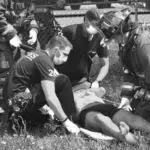
First aid is the immediate help given to someone who is injured or suddenly becomes ill before professional medical help arrives. It’s like giving a helping hand until a doctor can take over. Learn more about first aid here.
Who is a First Aider?
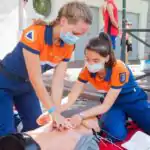
A first aider is a person trained to give first aid. They know how to help people who are hurt or sick.
Contents of a First Aid Box
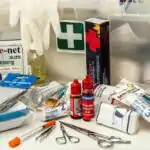
A first aid box contains various items used to treat injuries and provide immediate care.The following are examples:
Bandages
Bandages are essential for wound care and support. These include:
- Elastic Bandages: Used to wrap around sprains or strains.
- Gauze Bandages: Used to cover wounds and control bleeding.
- Triangular bandages: Can be used as a sling or to secure dressings.
Plasters (Adhesive Bandages)
Plasters are used for covering minor cuts and abrasions. These include:
- Standard Plasters: For minor cuts and scrapes.
- Waterproof Plasters: For wounds that might get wet.
- Fabric Plasters: more durable for active use.
Scissors
Scissors are used for cutting bandages, tape, and clothing when necessary. These include:
- Medical Scissors: To cut bandages and clothing.
- Blunt-Tip Scissors: To prevent accidental injuries.
- Trauma Shears: Heavy-duty scissors for cutting through tough materials.
Antiseptic Wipes
Antiseptic wipes are used to clean wounds and prevent infection. These include:
- Alcohol Wipes: To clean wounds and kill bacteria.
- Non-Alcoholic Wipes: Gentle for sensitive areas.
- Iodine Wipes: Stronger antiseptic for thorough cleaning.
Cotton Wool
Cotton wool is used for cleaning wounds and applying antiseptics. These include:
- Cotton Balls: To clean wounds and stop bleeding.
- Cotton Pads: For larger wounds.
- Cotton Swabs: For precise application of antiseptic.
They are:
- Adhesive Tape
- Sterile Dressings
- Tweezers
- Safety Pins
- Disposable Gloves
- Thermometer
- Pain Relief Medication
- Eye Wash
- Burn Gel
Conditions that Require First Aid
First aid is needed for various situations. Examples are:
Cuts and Scrapes
Cuts and scrapes require immediate cleaning and protection to prevent infection. These include:
- minor Cuts: Clean and apply a plaster.
- Deep Cuts: Apply pressure to stop bleeding.
- Abrasions: Clean thoroughly to remove debris.
Burns
Burns require immediate cooling and protection to minimize tissue damage. These include:
- Minor Burns: Cool with water and apply burn gel.
- Severe Burns: Seek immediate medical attention.
- Chemical Burns: flush with copious amounts of water.
Nosebleeds
Nosebleeds require proper management to stop the bleeding. These include:
- Minor Nosebleeds: Pinch the nose and lean forward.
- Persistent Nosebleeds: Pack nostrils with cotton wool and seek medical attention.
- Traumatic Nosebleeds: Seek immediate medical attention.
Sprains and Strains
Sprains and strains require rest, ice, compression, and elevation to reduce swelling and pain. These include:
- Sprains: Use the RICE method (rest, Ice, Compression, elevation).
- Strains: Use the RICE method.
- Severe Sprains/Strains: Seek medical evaluation.
Insect Bites and Stings
Insect bites and stings require cleaning and treatment to relieve itching and prevent allergic reactions. These include:
- Minor Bites/stings: Apply antiseptic cream and antihistamine.
- Severe Reactions: Seek immediate medical attention.
- Tick Bites: Remove the tick carefully and disinfect the area.
Fractures (Broken bones)
fractures require immobilization and immediate medical attention. These include:
- Simple Fractures: Immobilize with a splint.
- Compound Fractures: Seek immediate medical attention.
- Stress fractures: Rest and seek medical advice.
Choking
Choking requires immediate intervention to clear the airway.These include:
- Mild Choking: Encourage coughing.
- Severe Choking: Perform abdominal thrusts (Heimlich maneuver).
- Infant Choking: Perform back blows and chest thrusts.
Objectives of First Aid
The objectives of first aid are crucial in emergency situations. They are:
- Preserve life
- Prevent the condition from worsening
- Promote recovery
- Provide comfort
- Ensure professional medical help is obtained
Teaching Methods
To deliver this lesson, the teacher will adopt the following methods: Discussion, Presentation, Question and Answer.
Instructional Procedures
To deliver this lesson, the teacher will adopt the following steps:
Step 1: Introduction
Time: 5 minutes
Teaching Skill: Set Induction
Teacher’s Activity: Engage students with a brief discussion about injuries and illnesses. Introduce the concept of first aid.
Pupils’ Activity: Participate in the discussion,listen attentively.
Step 2: Clarification of Key Concepts
Time: 10 minutes
Teaching Skill: Explaining, defining
Teacher’s Activity: Define first aid and a first aider. Explain the importance of first aid.
Pupils’ Activity: Listen attentively, take notes.
Step 3: Exhibition/Guided Practice
Time: 15 minutes
Teaching Skill: Demonstrating, guiding
Teacher’s Activity: Demonstrate the use of at least one item from a first aid box (e.g.,applying a plaster).Pupils’ Activity: Observe the demonstration, ask questions.
Step 4: Autonomous practice
Time: 10 minutes
Teaching Skill: Monitoring, assisting
Teacher’s activity: Supervise pupils as they practice applying a plaster or other simple first aid techniques.
Pupils’ Activity: Practice applying a plaster or other simple first aid techniques.
Step 5: Note-Taking
Time: 5 minutes
Teaching Skill: Guiding, summarizing
Teacher’s Activity: Guide pupils in summarizing key concepts and writing notes.Pupils’ Activity: Take notes, summarize key concepts.
step 6: Evaluation/Review
Time: 10 minutes
Teaching Skill: Questioning, assessing
Teacher’s Activity: Ask questions to assess understanding. Review key concepts.
Pupils’ Activity: Answer questions,participate in review.
Objective-aligned checks:
- Define first aid and first aider.
- List the contents of a first aid box.
- Demonstrate how to use at least one item from the first aid box.
Step 7: Conclusion
Time: 5 minutes
Teaching Skill: Summarizing, encouraging
Teacher’s Activity: Summarize the lesson, emphasizing the importance of first aid.
Pupils’ Activity: Listen attentively.
Lesson Keywords
- First Aid – Immediate care given to an injured or ill person.
- first Aider – A trained person who provides first aid.
- Antiseptic – A substance that prevents infection.
- Bandage – material used to protect or support an injury.
- Plaster – Adhesive dressing for minor cuts.
Lesson Evaluation
To evaluate the learning, the teacher asks pupils to:
- What is first aid?
- Who is a first aider?
- List five contents of a first aid box.
- Mention five conditions that require first aid.
- State three objectives of first aid.
Assignment/Homework
- List ten items found in a first aid box and their uses.
- Describe a situation where you might need to use first aid.
- research and write down the steps to take when someone is choking.
Differentiation
- For slower learners: Provide simplified instructions and one-on-one assistance.
- For advanced learners: Encourage them to research additional first aid techniques and share their findings with the class.
- for visual/auditory/kinesthetic learners: Use visual aids, verbal explanations, and hands-on activities to cater to diffrent learning styles.
Note for teachers
Ensure to have a well-stocked first aid kit available for demonstration. Emphasize the importance of seeking professional medical help when necessary and not attempting to handle serious injuries alone. Encourage pupils to ask questions and share their experiences to create an engaging learning environment.
Community Join the conversation Open discussion +