

Class: Primary 6
Term: Third Term
Subject: Basic Science & Technology
Curriculum theme: Basic Technology
previous Lesson: Pulley, Construction and operation of simple fixed pulley
Topic: Pulley as a Machine
Content/Learning Area: Two mounted pulleys, fixed and movable materials
Time Allocation: 40 Minutes
Performance Objectives
By the end of the lesson, pupils should be able to:
- Cognitive Domain: Differentiate between fixed and movable pulleys.
- Affective Domain: Show interest in learning about simple machines.
- Psychomotor Domain: Construct a simple pulley system.
- Social Domain: Collaborate with peers during group activities.
reference Materials
- 9 Years Basic Education Curriculum
- Abuja Educational Resource Center Scheme of work
- NAPPS National Unified Scheme of Work
- Basic Science and Technology Textbook for Primary 6
- Evans Basic Science and Technology for Primary Schools, book 6
Instructional Materials
To deliver this lesson, the teacher will use the following materials: a mounted fixed pulley, a mounted movable pulley, rope, and weights.
Rationale for the Lesson
Understanding pulleys helps pupils grasp basic mechanical principles, essential for everyday applications and future technological studies.
Prerequisite/Previous Knowledge
Pupils have basic knowledge of simple machines and their uses.
Lesson Content
Pulley as a Machine
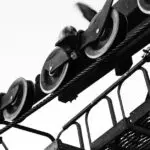
A pulley is a simple machine that uses a grooved wheel and a rope to raise,lower,or move a load. It changes the direction of force, making work easier.
Fixed Pulley
A fixed pulley has its wheel attached to a stationary object. It changes the direction of the force but does not reduce the amount of force needed to lift the load.
Movable Pulley
A movable pulley has its wheel attached to the load. It reduces the amount of force needed to lift the load, but the distance over which the force must be applied is increased.
Materials Used in Pulleys
Pulleys are constructed using various materials, each contributing to their functionality and durability.
- Rope – Used to transmit force around the pulley.
- Wheel – the grooved disc that rotates to facilitate movement.
- Axle – The central rod around which the wheel rotates.
- Frame/Mount – Supports the pulley system.
- Metal – Provides strength and durability to the pulley structure.
- Wood – Used in some pulley systems for its lightweight properties.
- Plastic – Offers a cost-effective and durable option for certain pulley components.
- Bearings – Reduce friction and allow for smoother rotation.
- Hooks/Clamps – Secure the load to the pulley system.
- Fasteners (Screws, Bolts) – Hold the pulley components together.
Teaching Methods
To deliver this lesson, the teacher will adopt the following methods: Clarification, Presentation, Group Work, Visual Aids.
Instructional Procedures
To deliver this lesson, the teacher will adopt the following steps:
step 1: introduction
Time: 5 minutes
Teaching Skill: Set Induction
Teacher’s Activity: Engages pupils by asking about their experiences with lifting heavy objects and introduces the concept of pulleys as tools to make work easier.
Pupils’ Activity: Share their experiences and listen to the introduction.
Step 2: Explanation of Pulleys
Time: 10 minutes
Teaching Skill: Explanation
Teacher’s Activity: Explains what a pulley is and its function as a simple machine.
Pupils’ Activity: Listen attentively and ask clarifying questions.
step 3: Demonstration of Fixed and Movable Pulleys
Time: 10 minutes
Teaching Skill: Demonstration
Teacher’s Activity: Demonstrates the difference between fixed and movable pulleys using mounted models.
pupils’ Activity: Observe the demonstration and identify the different types of pulleys.
Step 4: group Activity: Constructing a Simple Pulley System
Time: 10 minutes
teaching Skill: Group Work
Teacher’s Activity: Guides pupils in groups to construct a simple pulley system using provided materials.
Pupils’ Activity: Work in groups to construct the pulley system.
Step 5: Note-taking
Time: 3 minutes
Teaching Skill: Explanation
Teacher’s Activity: Guides pupils to write down key points about pulleys in their notebooks.Pupils’ Activity: Write down the key points in their notebooks.
Step 6: Evaluation/Review
Time: 2 minutes
Teaching Skill: Questioning
Teacher’s Activity: Asks questions to assess pupils’ understanding of the lesson.
Pupils’ Activity: Answer the questions asked by the teacher.
Step 7: Conclusion
Time: 2 minutes
Teaching Skill: Summarization
Teacher’s Activity: Summarizes the main points of the lesson and assigns homework.
Pupils’ Activity: Listen to the summary and note the homework assignment.
Lesson Keywords
- Pulley – A simple machine that uses a grooved wheel and rope to change the direction of force.
- Fixed Pulley – A pulley with its wheel attached to a stationary object.
- Movable Pulley – A pulley with its wheel attached to the load.
- Simple Machine – A device that makes work easier by changing the direction or magnitude of force.
- Load – The object being lifted or moved.
Lesson Evaluation
To evaluate the learning, the teacher asks pupils to:
- Differentiate between a fixed and movable pulley.
- Explain how a pulley makes work easier.
- List three materials used in constructing a pulley.
Assignment/Homework
- Draw a diagram of a fixed pulley and a movable pulley.
- explain where pulleys are used in everyday life.
- Research and write about the advantages and disadvantages of using pulleys.
Differentiation
- For slower learners: Provide simplified diagrams and one-on-one assistance during the group activity.
- For advanced learners: Challenge them to design a pulley system that can lift a heavier load.
- For visual/auditory/kinesthetic learners: Use visual aids, verbal explanations, and hands-on activities to cater to different learning styles.
note for Teachers
Ensure that the pulley models are properly mounted and safe for pupils to use. Provide clear instructions and supervision during the group activity to prevent accidents.
Community Join the conversation Open discussion +