

Class: Primary Six
Term: First Term
Subject: Basic Science and Technology
Curriculum Theme: Basic Technology
Previous Lesson: Colour, Secondary Colours
Topic: Color Separation
content/Learning Area: Components of Color Separation
Time Allocation: 40 minutes
Performance Objectives
By the end of the lesson, pupils should be able to:
- Cognitive Domain:
– Identify and explain the components of colour separation.
- Affective Domain:
– Appreciate the role of colour separation in various applications.
- Psychomotor Domain:
– Demonstrate the process of separating colours using simple tools.
- Social Domain:
– Work cooperatively in groups to discuss and apply colour separation techniques.
Reference Materials
- 9 – Years Basic Education Curriculum
- Abuja Educational Resource centre Scheme of Work
- NAPPS National Unified scheme of Work
- Online Facts from Britannica – Colour separation process | printing
- Relevant Textbooks
Instructional Materials
To deliver this lesson, the teacher will employ the help of the following materials:
- Colour separation charts
- markers and paper
- Simple filter paper or chromatography strips
- Beakers and water
- Example images of colour separation techniques
Rationale for the Lesson
Understanding colour separation is crucial for various fields like printing and art. This lesson builds a foundation for future science and art lessons, fostering creativity and problem-solving skills.
Prerequisite/Previous Knowledge
The teacher will begin by asking pupils what they remember about primary and secondary colours. A speedy review of mixing colours will lead into a discussion about how colours are separated, introducing the lesson topic.
Lesson Content
Colour Separation – Components of Colour Separation
What is Colour Separation?
Colour separation is the process of breaking down white light into its individual colours. This is critically important for understanding how we see colours.
Colour Models
Colour models are systems for representing colors numerically. These include:
- RGB (Red, green, Blue): Used in devices that produce light, like screens.
- RYB (Red, Yellow, Blue): Used in painting.
- CMYK (Cyan,Magenta,Yellow,Key/Black): Used in printing to create a wide range of colors by combining these four inks.
- HSL (Hue,Saturation,lightness): Represents colors based on their hue,saturation,and lightness values,often used in digital art and design.
White Light and its Components
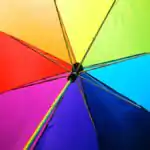
White light is made up of many colours blended together. When separated, these colours reveal the spectrum of light (ROYGBIV).
ROYGBIV
The colours in white light are: red, Orange, Yellow, Green, blue, Indigo, Violet. These colours are ofen seen in rainbows.
how to Separate colours
White light can be separated using a prism, a triangular piece of glass or plastic that bends light.
Real-Life example – Rainbow
Rainbows form when sunlight passes through raindrops, acting like tiny prisms.
teaching Methods
To deliver this lesson, the teacher will adopt the following methods: Interactive Discussion, Lecture & Demonstration, Group Work, Guided Note Taking, Q&A session, Recap & Feedback.
Instructional Procedures
To deliver this lesson, the teacher will adopt the following steps:
Step 1: Introduction
Time: 5 mins
Teaching Skill: Questioning
Teacher’s Activity: Introduce the concept of colour separation and its importance. Show examples.
Pupils’ Activity: Listen and ask questions about colour separation.
Step 2: Description of Key Concepts
Time: 10 mins
Teaching Skill: Description and Demonstration
Teacher’s Activity: explain the components of colour separation; demonstrate using a prism or relate to rainbows.
Pupils’ activity: Observe the demonstration and take notes.
Step 3: Demonstration/Guided Practice
Time: 10 mins
Teaching Skill: Guided Practice
Teacher’s Activity: Guide pupils through a simple colour separation experiment using filter paper and water.Pupils’ Activity: Perform the experiment, observe results, and discuss in groups.
Step 4: Autonomous Practice
Time: 5 mins
Teaching Skill: Monitoring
Teacher’s Activity: Observe pupils as they work independently on a colour separation activity.
Pupils’ Activity: Complete a worksheet or activity related to colour separation.
Step 5: Note-Taking
Time: 5 mins
Teaching Skill: Summarizing
Teacher’s Activity: Summarize key points of the lesson and have pupils write them down.Pupils’ Activity: Write down the summary and important points.
Step 6: Evaluation/Review
Time: 5 mins
Teaching skill: Questioning
Teacher’s Activity: Ask questions to assess pupils’ understanding of the lesson content.
Pupils’ Activity: Answer questions and participate in discussion.
step 7: Conclusion
Time: 5 mins
Teaching Skill: Summarizing
teacher’s activity: Review the key concepts of colour separation, emphasizing the importance of understanding how colours are combined and separated in everyday life. Praise pupils for their participation and effort.
Pupils’ Activity: Listen to the summary and ask any remaining questions.
Lesson Keywords
- Colour Separation – The process of breaking down white light into its individual colours.
- RGB – Red, Green, Blue colour model used in devices that produce light.
- RYB – Red, Yellow, Blue colour model used in painting.
- prism – A triangular piece of glass or plastic that bends light,used to separate colours.
- ROYGBIV – The spectrum of colours in white light: Red, Orange, Yellow, Green, Blue, Indigo, Violet.
Lesson evaluation
To evaluate the learning, the teacher asks pupils to:
- Define colour separation and list its components.
- Describe the process of separating colours using filter paper.
- Explain why colour separation is critically important in everyday applications.
- Demonstrate a simple colour separation experiment and explain the results.
- Discuss how teamwork was used in the group activity.
Assignment/Homework
- Research and write a short paragraph on how colour separation is used in printing.
- Draw a diagram illustrating how a prism separates white light into its component colours.
- List three real-life examples where colour separation can be observed.
Differentiation
- For slower learners: Provide one-on-one assistance and simplified instructions.
- For advanced learners: Encourage them to explore more complex colour separation techniques and research real-world applications.
- For visual/auditory/kinesthetic learners: Use visual aids,verbal explanations,and hands-on activities to cater to different learning styles.
Note for Teachers
ensure to provide clear and concise explanations, using real-life examples to enhance understanding.encourage active participation and provide constructive feedback to pupils during the experiment and discussions.
Community Join the conversation Open discussion +