

Class: Primary Six
Term: first Term
Subject: Basic Science and Technology
Curriculum Theme: basic Technology
Previous Lesson:
topic: Colour
Content/Learning Area: Defining colour, Types/examples of primary colours
Time Allocation: 40 minutes
Performance Objectives
By the end of the lesson, pupils should be able too:
- Cognitive Domain:
1. Define colour.
2. identify the three primary colours.
3. Explain why primary colours are critically vital.
- Affective Domain:
1. Show interest in learning about colours.
- Psychomotor Domain:
1. Identify primary colours in everyday objects.
- Social Domain:
1. Participate actively in class discussions.
Reference materials
- 9 – Years Basic education Curriculum
- Abuja Educational Resource Center Scheme of Work
- NAPPS National Unified Scheme of Work
- Relevant Textbooks
Instructional Materials
To deliver this lesson, the teacher will use the following materials:
- Chart showing primary colours
- Pictures of objects showing primary colours
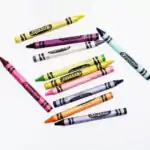
- Crayons or coloured pencils
Rationale for the Lesson
Understanding colour is fundamental to art, design, and everyday life. This lesson provides a basic understanding of colour theory, which will be built upon in future science and art lessons.
Prerequisite/Previous Knowledge
Pupils are familiar with different colours from their everyday experiences.
Lesson Content
What is Colour?
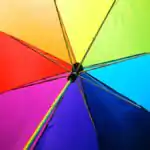
colour is how we see different wavelengths of light. Think of a rainbow! It shows all the different colours of light that make up white light. We see a red apple as it reflects red light and absorbs all other colours.
Types of Primary Colours
There are three primary colours: red, blue, and yellow. These are called primary colours because you can’t make them by mixing other colours. They are the building blocks of all other colours!
Examples of Primary Colours
Examples are:
- Red: A ripe tomato, a fire truck, a stop sign.
- Blue: The sky on a clear day, a blueberry, a blue crayon.
- Yellow: A banana, a sunflower, a yellow school bus.
- Green: Fresh leaves, green bell pepper, a green traffic light.
- Orange: An orange fruit,a carrot,a monarch butterfly.
Teaching Methods
To deliver this lesson, the teacher will adopt the following methods: Discussion, Question and answer, Exhibition
Instructional Procedures
To deliver this lesson, the teacher will adopt the following steps:
Step 1: Introduction (Set Induction)
Time: 5 minutes
Teaching Skill: Questioning
Teacher’s Activity: Ask pupils what colours they see around them.
Pupils’ Activity: Identify colours in the classroom.
Step 2: Description of Key Concepts
Time: 10 minutes
Teaching Skill: Clarification
Teacher’s Activity: Define colour and explain how we perceive it.
Pupils’ Activity: Listen attentively and ask questions.
Step 3: Demonstration/Guided Practise
Time: 10 minutes
Teaching Skill: Demonstration
Teacher’s Activity: Show examples of primary colours using charts and pictures.
Pupils’ Activity: Identify primary colours in the examples.
Step 4: Autonomous Practice
Time: 5 minutes
Teaching Skill: Guided Practice
Teacher’s Activity: Ask pupils to name objects of primary colours.
Pupils’ Activity: Name objects with primary colours.
step 5: Note-Taking
Time: 5 minutes
Teaching Skill: Note-Taking
Teacher’s Activity: Guide pupils to take notes on primary colours.Pupils’ Activity: Write down key points about primary colours.
Step 6: Evaluation/Review
Time: 5 minutes
Teaching Skill: Questioning
Teacher’s Activity: Ask evaluation questions.
Pupils’ Activity: Answer evaluation questions.
Objective-aligned checks:
- identify the three primary colours.
- Explain why primary colours are critically vital.
- Show interest in learning about colours.
Step 7: Conclusion
Time: 2 minutes
teaching Skill: Summarizing
Teacher’s Activity: Summarize the key points about colour and primary colours.Pupils’ Activity: Listen attentively and ask clarifying questions.
Lesson Keywords
- Colour – The visual perception of different wavelengths of light.
- Primary Colours – Red,blue,and yellow; the basic colours that cannot be created by mixing other colours.
- Wavelength – The distance between successive crests of a wave, especially light waves.
- Reflection – The process by which light bounces off a surface.
- Absorption – The process by which light is taken in and not reflected.
Lesson Evaluation
To evaluate the learning, the teacher asks pupils to:
- What is colour?
- Name the three primary colours.
- Give three examples of objects that are primary colours.
Assignment/Homework
- Find and list five examples of each primary colour in their environment.
- draw and colour objects using only the primary colours.
Differentiation
- For slower learners: Provide one-on-one assistance and simplified explanations.
- For advanced learners: Encourage them to explore secondary and tertiary colours.
- For visual/auditory/kinesthetic learners: Use visual aids, verbal explanations, and hands-on activities to cater to different learning styles.
Note for Teachers
Ensure to use real-life examples and visual aids to make the lesson engaging and understandable for the pupils. Encourage active participation and provide constructive feedback.
Community Join the conversation Open discussion +