

Class: Senior Secondary School 1 (SS1, SS 1, SSS1, SSS 1)
Term: Second Term
Week: 5
Age: 15 years
Duration: 45 minutes
Subject: Clothing and Textiles
Curriculum Theme: Clothing and Textiles
Previous Lesson: Sewing Tools: Types, Uses and Care.
Topic: SEWING EQUIPMENT (THE SEWING MACHINE)
Subject Matter: parts of the sewing machine and their functions, care of the sewing machine including oiling dusting and servicing, operating the sewing machine safely
Specific Objectives
By the end of the lesson, pupils should be able to:
Cognitive Domain:
- Identify and name at least five parts of a sewing machine.
- State the functions of various parts of the sewing machine.
- Explain methods of caring for a sewing machine.
- Describe safe practices when operating a sewing machine.
Affective Domain:
- Appreciate the importance of proper care for sewing equipment.
- Show interest in learning how to operate a sewing machine safely.
Psychomotor Domain:
- Point to and identify different parts of a sewing machine on a real machine.
- Demonstrate basic steps for oiling and dusting a sewing machine.
- Practice operating a sewing machine safely under supervision.
Social Domain:
- Work cooperatively with peers during practical demonstrations.
- Share knowledge on the care and operation of a sewing machine.
Reference Materials
The following resources were used in planning this lesson:
- 9 Years Basic Education Curriculum for Home Economics.
- State Unified Scheme of Work for Senior Secondary Schools.
- Ugoagwu, E.O. (2018). Clothing and Textile for Senior Secondary Schools 1-3. Learn Africa Plc.
Instructional Materials
The teacher will teach this lesson with the aid of:
- A functional sewing machine (manual or electric).
- Sewing machine manual.
- Duster/brush.
- Sewing machine oil and oil can.
- Fabric scraps for practice.
Rationale for the Lesson
This lesson helps pupils understand the main equipment used in garment construction, which is the sewing machine. Knowing its parts, how to care for it, and how to operate it safely is important for practical skills development and ensures the machine lasts longer.
Prerequisite/Previous Knowledge
Pupils may have seen a sewing machine before or have some basic knowledge of simple hand sewing tools.
Lesson Content/Board Summary
SEWING EQUIPMENT: THE SEWING MACHINE
Parts of the Sewing Machine and their Functions
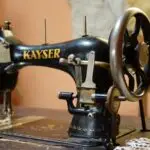
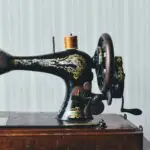
A sewing machine is a machine used to stitch fabric and other materials together with thread. It has many parts, each with a specific function.
The following are common parts of a sewing machine and their functions:
- Balance Wheel (Hand Wheel) – Used to raise and lower the needle manually.
- Bobbin Winder – Winds thread from the spool onto the bobbin.
- Spool Pin – Holds the spool of thread.
- Tension Disc – Controls the tightness of the upper thread.
- Thread Guide – Guides the upper thread from the spool to the needle.
- Take-up Lever – Pulls thread from the spool and feeds it to the needle, also controls thread tension.
- Needle Bar – Holds the needle in place.
- Needle Clamp – Secures the needle to the needle bar.
- Presser Foot – Holds the fabric firmly against the feed dog while sewing.
- Feed Dog – Moves the fabric forward during stitching.
- Stitch Length Regulator – Controls the length of the stitches.
- Bobbin Case – Holds the bobbin and controls the tension of the lower thread.
- Foot Pedal (Treadle) – Controls the speed of the machine (for electric machines or treadle machines).
Care of the Sewing Machine
Proper care of a sewing machine ensures its longevity and smooth operation.
The following are ways to care for a sewing machine:
- Dusting: Regularly clean the machine with a soft brush or duster to remove lint and dust, especially from the feed dog and bobbin area.
- Oiling: Apply a few drops of sewing machine oil to designated oiling points as indicated in the machine’s manual. This lubricates moving parts and prevents rust.
- Servicing: Have the machine professionally serviced by a technician at least once a year, or when it develops major faults.
- Covering: Keep the machine covered when not in use to protect it from dust and dirt.
- Cleaning after use: Remove all threads and fabric scraps after each use.
Operating the Sewing Machine Safely
Safety precautions are important to prevent accidents and damage to the machine.
The following are safety rules for operating a sewing machine:
- Ensure the work area is well-lit and tidy.
- Sit comfortably with good posture.
- Keep fingers away from the needle area while the machine is running.
- Turn off and unplug the machine when changing the needle, presser foot, or when leaving it unattended.
- Use the correct needle size and type for the fabric being sewn.
- Do not force the fabric through the machine; let the feed dog do its work.
- Avoid distractions while operating the machine.
Teaching Methods/Instructional Techniques
Discussion, Lecture, Demonstration, Question and Answer, Visual Aids
Instructional Procedures
Step 1: Introduction
Time: 5 minutes
Teaching Skill: Set Induction
Teacher’s Activity: The teacher greets the pupils and asks them to mention some tools used for sewing. The teacher then introduces the sewing machine as the main equipment for garment construction and states the lesson topic.
Pupils’ Activity: Pupils respond to questions and listen attentively to the teacher’s introduction.
Learning Point: Pupils are prepared for the lesson and understand the topic.
Step 2: Identification and Functions of Sewing Machine Parts
Time: 10 minutes
Teaching Skill: Demonstration/Explanation
Teacher’s Activity: The teacher displays a sewing machine and, pointing to each part, names it and explains its function. The teacher encourages pupils to observe and ask questions.
Pupils’ Activity: Pupils observe the sewing machine, listen to the teacher’s explanations, and identify the parts as they are named. They ask questions for clarification.
Learning Point: Pupils can identify and state the functions of various sewing machine parts.
Step 3: Care of the Sewing Machine
Time: 10 minutes
Teaching Skill: Demonstration/Discussion
Teacher’s Activity: The teacher discusses and demonstrates the proper ways to care for a sewing machine, focusing on dusting, oiling specific points, and covering the machine. The teacher emphasizes the importance of regular servicing.
Pupils’ Activity: Pupils observe the demonstration, participate in the discussion, and take notes on the care procedures.
Learning Point: Pupils understand and can explain how to care for a sewing machine.
Step 4: Safe Operation of the Sewing Machine
Time: 5 minutes
Teaching Skill: Explanation/Discussion
Teacher’s Activity: The teacher explains the important safety precautions that must be observed when operating a sewing machine, such as keeping fingers away from the needle, unplugging when not in use, and maintaining good posture.
Pupils’ Activity: Pupils listen, ask questions, and discuss the safety rules for operating the machine.
Learning Point: Pupils can list and understand the safety rules for operating a sewing machine.
Step 5: Practical Session (Basic Operation)
Time: 5 minutes
Teaching Skill: Practical Demonstration/Supervision
Teacher’s Activity: Under strict supervision, the teacher allows a few pupils to briefly practice turning the balance wheel, operating the foot pedal (if applicable), and guiding fabric without thread, emphasizing safety at all times.
Pupils’ Activity: Pupils take turns practicing basic operations of the sewing machine under the teacher’s guidance.
Learning Point: Pupils gain practical experience with basic sewing machine operation while observing safety.
Step 6: Recap
Time: 2 minutes
Teaching Skill: Summarization
Teacher’s Activity: The teacher quickly reviews the key points of the lesson, asking pupils to briefly recall what was taught.
Pupils’ Activity: Pupils volunteer answers to summarize the lesson points.
Learning Point: Pupils reinforce their understanding of the lesson content.
Step 7: Evaluation/Review
Time: 5 minutes
Teaching Skill: Questioning/Assessment
Teacher’s Activity: The teacher evaluates the learning by asking the following questions:
- List four parts of a sewing machine and state the function of each.
- Explain two ways to care for a sewing machine.
- Mention three safety precautions to observe when operating a sewing machine.
- Why is it important to oil a sewing machine regularly?
Pupils’ Activity: Pupils answer orally and in writing.
Learning Point: Pupils demonstrate understanding of the lesson.
Step 8: Conclusion
Time: 3 minutes
Teaching Skill: Closure
Teacher’s Activity: The teacher commends the pupils for their participation and good conduct. The teacher assigns homework: “Draw and label five parts of a sewing machine you learned today.”
Pupils’ Activity: Pupils copy the homework assignment and prepare for the next lesson.
Learning Point: The lesson is concluded, and pupils have follow-up tasks.
Lesson Keywords
- Sewing Machine – A machine used to stitch fabric and other materials together with thread.
- Balance Wheel – The wheel used to raise and lower the needle manually.
- Presser Foot – Holds the fabric firmly against the feed dog.
- Bobbin – A small spool that holds the lower thread.
- Tension Disc – Controls the tightness of the upper thread.
- Oiling – Applying lubricant to machine parts to reduce friction and wear.
- Dusting – Cleaning the machine to remove lint and debris.
Differentiation
For pupils who are fast learners, the teacher can encourage them to research different types of sewing machines (e.g., manual, electric, industrial) and their specific applications. For pupils who need more support, the teacher will provide more one-on-one guidance during the practical identification and operation steps, using visual aids and simpler explanations.
Note for teachers using this lesson plan
Ensure a functional sewing machine is available for demonstration and practical activities. Emphasize safety precautions throughout the lesson, especially during any hands-on practice. Encourage pupils to refer to the sewing machine manual for specific details about the model being used.


Community Join the conversation Open discussion +