

Class: Senior Secondary School 1 (SS1, SS 1, SSS1, SSS 1)
Term: 1st Term
Week: 1
Age: 15 years
Duration: 45 minutes
Subject: Clothing and Textiles
Curriculum Theme: Clothing and Textiles
Previous Lesson: .
Topic: INTRODUCTION TO CLOTHING AND TEXTILES
Subject Matter: Definition of clothing, meaning of textiles, importance and functions of clothing
Specific Objectives
By the end of the lesson, pupils should be able to:
Cognitive Domain:
- Define clothing.
- Explain the meaning of textiles.
- State at least three importance of clothing to humans.
Affective Domain:
- Appreciate the role of clothing in daily life.
- Participate actively in discussions about clothing and textiles.
Psychomotor Domain:
- List various functions of clothing.
- Identify examples of clothing and textile materials.
Social Domain:
- Share ideas with peers regarding the uses of different clothing items.
Reference Materials
The following resources were used in planning this lesson:
- 9 Years Basic Education Curriculum for Home Economics.
- State Unified Scheme of Work for Senior Secondary School 1 Home Economics.
- Omolara, A.T. (2018). Comprehensive Home Economics for Senior Secondary Schools 1. University Press PLC.
- https://www.education.gov.ng
- https://www.nerdc.gov.ng
Instructional Materials
The teacher will teach this lesson with the aid of:
- Charts showing different types of clothing.
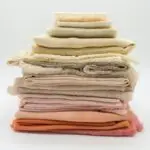
- Samples of various textile materials (e.g., cotton, wool, synthetic fabrics).
Rationale for the Lesson
This lesson helps pupils understand the basic concepts of clothing and textiles, which are essential parts of their daily lives. It enables them to recognize the significance of what they wear and the materials used to make them, laying a foundation for further studies in clothing and textiles.
Prerequisite/Previous Knowledge
Pupils are familiar with different types of clothes and have a basic understanding of what they wear daily.
Lesson Content/Board Summary
INTRODUCTION TO CLOTHING AND TEXTILES
Definition of Clothing
Clothing refers to items worn on the body. These items are typically made from textiles or other materials and are worn for various reasons such as protection, modesty, fashion, or cultural expression.
Meaning of Textiles
Textiles are materials made by weaving, knitting, crocheting, knotting, felting, or bonding natural or synthetic fibres. They are primarily used in the production of clothing, upholstery, and various industrial products.
Importance and Functions of Clothing
Clothing serves several important functions for humans:
- Protection: It protects the body from harsh weather conditions (cold, heat, rain), physical injury, and environmental hazards.
- Modesty: Clothing covers the body, adhering to social and cultural norms of decency and modesty.
- Adornment/Fashion: It enhances appearance, expresses personal style, and can be used for decoration or to follow fashion trends.
- Identification: Clothing can distinguish individuals by profession (uniforms), social status, group affiliation, or cultural identity.
- Comfort: Well-chosen clothing can provide physical comfort, allowing for ease of movement and regulating body temperature.
- Psychological Impact: Clothing can influence mood, confidence, and how individuals perceive themselves and are perceived by others.
Teaching Methods/Instructional Techniques
Discussion, Lecture, Demonstration, Question and Answer, Visual Aids
Instructional Procedures
Step 1: Introduction
Time: 5 minutes
Teaching Skill: Set Induction
Teacher’s Activity: The teacher greets the pupils and asks them to mention some items they are wearing. The teacher then leads a brief discussion on why people wear clothes.
Pupils’ Activity: Pupils mention items of clothing and contribute to the discussion on reasons for wearing clothes.
Learning Point: Pupils are engaged and relate to the topic of clothing.
Step 2: Definition of Clothing
Time: 10 minutes
Teaching Skill: Explanation/Definition
Teacher’s Activity: The teacher defines clothing, explaining its general meaning and purpose. The teacher writes the definition on the board.
Pupils’ Activity: Pupils listen attentively, take notes, and ask questions for clarification.
Learning Point: Pupils understand the definition of clothing.
Step 3: Meaning of Textiles
Time: 10 minutes
Teaching Skill: Explanation/Demonstration
Teacher’s Activity: The teacher explains the meaning of textiles, differentiating it from clothing. The teacher shows samples of different textile materials (e.g., cotton, silk, nylon) and explains how they are made. The definition is written on the board.
Pupils’ Activity: Pupils observe the samples, listen to the explanation, and take notes.
Learning Point: Pupils understand the meaning of textiles and can identify some textile materials.
Step 4: Importance and Functions of Clothing
Time: 10 minutes
Teaching Skill: Discussion/Elaboration
Teacher’s Activity: The teacher leads a discussion on the importance and functions of clothing. The teacher encourages pupils to give examples for each function, such as protection from cold, modesty, or fashion. The points are listed on the board.
Pupils’ Activity: Pupils actively participate, provide examples, and copy the points from the board.
Learning Point: Pupils learn about the various reasons why clothing is important and its functions.
Step 5: Evaluation/Review
Time: 5 minutes
Teaching Skill: Questioning/Assessment
Teacher’s Activity: The teacher evaluates the learning by asking the following questions:
- Define clothing.
- What are textiles?
- State three importance of clothing to humans.
- Mention two functions of clothing.
Pupils’ Activity: Pupils answer orally and in writing.
Learning Point: Pupils demonstrate understanding of the lesson.
Step 6: Conclusion
Time: 5 minutes
Teaching Skill: Summarization/Assignment
Teacher’s Activity: The teacher summarizes the main points of the lesson, reiterating the definitions of clothing and textiles, and their importance. The teacher assigns homework: “List five different items of clothing and state the textile material they are made from.”
Pupils’ Activity: Pupils listen to the summary and copy the homework assignment.
Learning Point: Pupils consolidate their learning and prepare for further study.
Lesson Keywords
- Clothing – Items worn on the body for protection, modesty, or adornment.
- Textiles – Materials made from fibres by weaving, knitting, or other methods.
- Functions – The purposes or roles that clothing serves.
- Protection – Shielding the body from harm or the environment.
- Modesty – Covering the body according to social or cultural norms.
Differentiation
For pupils who grasp concepts quickly, they will be encouraged to research different types of fibres (natural vs. synthetic) and their properties. For pupils needing more support, the teacher will provide simplified definitions and more direct examples, ensuring they understand the core concepts before moving on.
Note for teachers using this lesson plan
Teachers should ensure to bring actual samples of different textile materials to make the lesson more practical and engaging. Encourage pupils to share their own experiences with different types of clothing and fabrics to foster active participation.



Community Join the conversation Open discussion +