

Class: Senior Secondary School 1 (SS1, SS 1, SSS1, SSS 1)
Term: First Term
Week: 7
Age: 15 years
Duration: 45 minutes
Subject: Clothing and Textiles
Curriculum Theme: Clothing and Textiles
Previous Lesson: Origin of Fibre: Man-Made Fibres and Fabric Album.
Topic: MANUFACTURING AND PROPERTIES OF FIBRES
Subject Matter: manufacturing process of cotton, properties and characteristics of cotton fibre, uses of cotton textiles
Specific Objectives
By the end of the lesson, pupils should be able to:
Cognitive Domain:
- Define cotton fibre.
- Describe the manufacturing process of cotton fibre.
- List the properties and characteristics of cotton fibre.
- State the uses of cotton textiles.
Affective Domain:
- Appreciate the versatility and importance of cotton fibre in daily life.
Psychomotor Domain:
- Identify different articles made from cotton textiles.
Social Domain:
- Collaborate with peers to identify common cotton products.
Reference Materials
The following resources were used in planning this lesson:
- 9 Years Basic Education Curriculum for Senior Secondary Schools.
- State Unified Scheme of Work for Clothing and Textiles SSS 1.
- Clothing and Textile for Senior Secondary Schools 1 by A. O. Ojo.
Instructional Materials
The teacher will teach this lesson with the aid of:
- Video clips showing the cotton manufacturing process.
- Samples of raw cotton and various cotton fabrics.
- Charts illustrating the cotton plant and its processing stages.
Rationale for the Lesson
Understanding cotton fibre is important because it is one of the most widely used natural fibres globally. This lesson helps pupils to know how cotton is produced and why it is suitable for many textile products they use daily, enabling them to make informed choices about clothing.
Prerequisite/Previous Knowledge
Pupils should have a basic understanding of different types of fibres and their general classification.
Lesson Content/Board Summary
MANUFACTURING AND PROPERTIES OF COTTON FIBRE
What is Cotton Fibre?
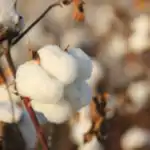
Cotton is a natural cellulosic fibre obtained from the seed pod of the cotton plant. It is widely used in textile production due to its desirable properties.
Manufacturing Process of Cotton Fibre
The manufacturing process of cotton fibre involves several stages:
- Harvesting: Cotton bolls are picked from the plant, either by hand or machine.
- Ginning: The harvested cotton is taken to a ginning factory where seeds, leaves, and other debris are separated from the lint (fibres).
- Baling: The cleaned lint is compressed into large bales for storage and transportation.
- Opening and Cleaning: At the textile mill, bales are opened, and the cotton is further cleaned to remove any remaining impurities.
- Carding: Fibres are separated, straightened, and aligned into a web, then formed into a loose rope called a sliver.
- Combing (optional): For finer yarns, the sliver is combed to remove short fibres and further align the long ones.
- Drawing: Several slivers are combined and stretched to create a more uniform, thinner sliver.
- Roving: The sliver is slightly twisted and drawn out into a finer strand called roving.
- Spinning: Roving is stretched and twisted into yarn, which is then wound onto bobbins.
- Weaving/Knitting: The spun yarn is then woven or knitted into fabric.
Properties and Characteristics of Cotton Fibre
Cotton possesses several important properties:
- Strength: Cotton is a strong fibre, especially when wet, making it durable.
- Absorbency: It is highly absorbent, meaning it can soak up moisture easily.
- Comfort: Cotton fabrics are soft, breathable, and comfortable to wear.
- Dye Affinity: It readily accepts dyes, allowing for a wide range of colours.
- Elasticity: Cotton has low elasticity, so it wrinkles easily and does not stretch much.
- Heat Conductivity: It is a good conductor of heat, making it cool to wear in warm weather.
- Flammability: Cotton is flammable and burns readily.
- Shrinkage: It can shrink if not properly pre-shrunk or cared for.
- Resistance to Alkalis: It shows good resistance to alkalis (e.g., strong soaps).
- Susceptibility to Acids: It is damaged by strong acids.
Uses of Cotton Textiles
Cotton textiles are used for a wide variety of products:
- Apparel: Shirts, trousers, dresses, underwear, jeans, casual wear.
- Household Items: Towels, bed sheets, curtains, tablecloths, upholstery.
- Industrial Uses: Tarpaulins, tents, medical dressings, fishing nets.
- Crafts: Quilting fabrics, embroidery threads.
Teaching Methods/Instructional Techniques
Discussion, Lecture, Demonstration, Question and Answer, Visual Aids
Instructional Procedures
Step 1: Introduction
Time: 5 minutes
Teaching Skill: Set Induction
Teacher’s Activity: The teacher greets the pupils and reviews the previous lesson briefly. The teacher then introduces the topic by asking pupils to name some common clothing materials and prompts them to identify any made from cotton.
Pupils’ Activity: Pupils respond to greetings, recall previous knowledge, and identify cotton as a common material.
Learning Point: Pupils are prepared for the new lesson and connect it to prior knowledge.
Step 2: Explanation of Cotton Fibre
Time: 7 minutes
Teaching Skill: Explanation/Demonstration
Teacher’s Activity: The teacher defines cotton fibre and shows video clips or charts of the cotton plant and its raw form. The teacher explains that cotton is a natural fibre from the cotton plant.
Pupils’ Activity: Pupils listen attentively, observe the visual aids, and take notes.
Learning Point: Pupils understand what cotton fibre is and its origin.
Step 3: Manufacturing Process of Cotton Fibre
Time: 10 minutes
Teaching Skill: Explanation/Visualisation
Teacher’s Activity: The teacher explains the step-by-step manufacturing process of cotton fibre, from harvesting to spinning, using charts and the video clips as illustrative aids. The teacher emphasizes key stages like ginning, carding, and spinning.
Pupils’ Activity: Pupils listen, ask questions for clarification, and note down the key stages of the process.
Learning Point: Pupils grasp the sequence and activities involved in processing raw cotton into yarn.
Step 4: Properties and Characteristics of Cotton Fibre
Time: 8 minutes
Teaching Skill: Discussion/Analysis
Teacher’s Activity: The teacher leads a discussion on the physical and chemical properties of cotton fibre. The teacher uses samples of cotton fabric to demonstrate properties like absorbency and feel, and guides pupils to list these characteristics.
Pupils’ Activity: Pupils actively participate in the discussion, feel the fabric samples, and list the properties in their notebooks.
Learning Point: Pupils learn about the unique attributes that make cotton suitable for various uses.
Step 5: Uses of Cotton Textiles
Time: 7 minutes
Teaching Skill: Brainstorming/Application
Teacher’s Activity: The teacher asks pupils to brainstorm and list various items made from cotton textiles. The teacher guides them to think about apparel, household items, and other applications, adding to the list as needed.
Pupils’ Activity: Pupils suggest different uses for cotton textiles, contributing to a comprehensive list.
Learning Point: Pupils identify the wide range of products made from cotton and appreciate its versatility.
Step 6: Class Activity/Group Work
Time: 5 minutes
Teaching Skill: Collaboration/Practical Application
Teacher’s Activity: The teacher divides pupils into small groups and provides each group with a few common fabric items (e.g., a handkerchief, a towel, a piece of denim) and asks them to identify which ones are likely made of cotton based on their feel and properties discussed.
Pupils’ Activity: Pupils collaborate in groups to examine the fabric samples and identify cotton items, explaining their reasoning.
Learning Point: Pupils apply their knowledge to practically identify cotton products.
Step 7: Evaluation/Review
Time: 5 minutes
Teaching Skill: Questioning/Assessment
Teacher’s Activity: The teacher evaluates the learning by asking the following questions:
- Define cotton fibre.
- List three stages in the manufacturing process of cotton.
- State four properties of cotton fibre.
- Mention two uses of cotton textiles.
Pupils’ Activity: Pupils answer orally and in writing.
Learning Point: Pupils demonstrate understanding of the lesson.
Step 8: Conclusion
Time: 3 minutes
Teaching Skill: Summarization
Teacher’s Activity: The teacher summarizes the key points of the lesson, reiterating the importance of cotton fibre. The teacher assigns homework: “Draw a simple diagram of a cotton plant and label its parts.”
Pupils’ Activity: Pupils listen to the summary and copy the homework.
Learning Point: Pupils consolidate their learning and are given an activity to reinforce understanding.
Lesson Keywords
- Cotton – A natural cellulosic fibre obtained from the seed pod of the cotton plant.
- Ginning – The process of separating cotton fibres from their seeds.
- Spinning – The process of twisting fibres together to form yarn.
- Absorbency – The ability of a fibre to soak up moisture.
- Durability – The ability of a fibre or fabric to withstand wear and tear.
Differentiation
For pupils who grasp concepts quickly, the teacher can ask them to research different types of cotton (e.g., Egyptian, Pima) or the environmental impact of cotton farming. For pupils needing more support, the teacher can provide simplified notes or pair them with stronger peers for group activities.
Note for teachers using this lesson plan
Teachers should ensure that the video clips and charts used are clear and relevant to the Nigerian context where possible. Encourage pupils to bring in small samples of cotton products from home to enhance practical identification. Emphasize safety aspects, such as the flammability of cotton, during the discussion of properties.



Community Join the conversation Open discussion +