Class: primary One
Term: Third Term
Subject: Basic Science and Technology
Curriculum Theme: Computer Studies
Previous Lesson: Uses of Fax Machine
Topic: Radio
Content/Learning Area: Identifying and listing two uses of a radio
Time Allocation: 40 minutes
Performance Objectives
By the end of the lesson, pupils should be able to:
- Cognitive Domain:
1. Define what a radio is.2. Identify at least two uses of a radio.
- Affective Domain:
1. Show interest in learning about radios.
2. Appreciate the importance of radios in interaction.
- Psychomotor Domain:
1. Operate a radio (if available).
- Social Domain:
1. Participate actively in class discussions.
reference Materials
- 9 – Years Basic Education Curriculum
- Abuja Educational resource Center Scheme of Work
- NAPPS National Unified Scheme of Work
- Relevant Textbooks
Instructional Materials
To deliver this lesson,the teacher will employ the help of the following materials:
- A radio (if available)
- Whiteboard or chart paper
- Markers or chalk
Rationale for the Lesson
Understanding how a radio works and its uses is crucial for developing basic technological literacy. This lesson provides a foundation for future learning about dialogue technologies and their impact on society.
Prerequisite/Previous Knowledge
The teacher will start by asking pupils if they know what a radio is and what it is indeed used for. A brief discussion will follow, encouraging pupils to share their prior knowledge and experiences with radios. this will create a sense of familiarity and excitement for the lesson.
Lesson Content
What is a Radio?
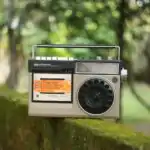
A radio is an electronic device that receives sound signals and plays them through a speaker. It’s used for listening to sounds.
Uses of a Radio
A radio has several uses that benefit individuals and communities.
Listening to news
Radios broadcast news updates, weather reports, and othre crucial information. This helps people stay informed about current events.
Listening to music
Radios play music from different genres, stations, and artists. This provides entertainment and enjoyment.
Educational Programs
Radios broadcast educational programs that provide learning opportunities for students and the general public.
emergency Broadcasts
Radios are used to broadcast emergency alerts and information during natural disasters or other crises.
Community Announcements
Radios broadcast local announcements, events, and community news, fostering a sense of community.
Teaching Methods
To deliver this lesson, the teacher will adopt the following methods: Discussion, Question and answer, Presentation (if a radio is available)
Instructional Procedures
To deliver this lesson, the teacher will adopt the following steps:
Step 1: Introduction
time: 5 minutes
teaching Skill: Set Induction
Teacher’s Activity: Asks pupils if they know what a radio is and what it is indeed indeed used for. Starts a brief discussion.
Pupils’ Activity: Share their prior knowledge and experiences with radios.
Step 2: Explanation of Key Concepts
Time: 10 minutes
Teaching Skill: Explaining
Teacher’s Activity: Explains what a radio is and how it effectively works in simple terms.Uses visual aids if available.
Pupils’ Activity: Listen attentively and ask clarifying questions.
Step 3: Presentation/Guided Practice
Time: 10 minutes
Teaching Skill: Demonstrating
Teacher’s Activity: If a radio is available, demonstrates how to turn it on and off, change stations, and adjust the volume. Asks pupils to identify sounds.
Pupils’ Activity: Observe the demonstration and participate in identifying sounds.
Step 4: Self-Reliant Practice
Time: 5 minutes
Teaching Skill: Monitoring
Teacher’s Activity: Guides pupils in identifying two uses of a radio.
Pupils’ Activity: Identify and list two uses of a radio.
Step 5: Note-Taking
Time: 5 minutes
Teaching Skill: Note-taking
Teacher’s Activity: Guides pupils in writing down key points about radios and their uses.Pupils’ Activity: Write down key points in their notebooks.
Step 6: Evaluation/Review
Time: 5 minutes
Teaching Skill: Questioning
Teacher’s Activity: Asks evaluation questions to assess understanding.
Pupils’ Activity: Answer evaluation questions.
Objective-aligned checks:
- Define what a radio is.
- Identify at least two uses of a radio.
- Show interest in learning about radios.
Step 7: Conclusion
Time: 5 minutes
Teaching Skill: Summarizing
Teacher’s Activity: Summarizes the key points about radios and their uses, and praises pupils for their participation and learning.
Pupils’ Activity: Listen to the summary and reflect on what they have learned.
Lesson keywords
- Radio – An electronic device that receives and plays sound signals.
- Broadcast – To transmit programs or information via radio waves.
- Entertainment – Providing enjoyment or amusement through music and programs.
- Information – News, weather, and other updates shared through radio.
- Communication – The process of conveying information or ideas through radio broadcasts.
Lesson Evaluation
To evaluate the learning, the teacher asks pupils to:
- What is a radio?
- What are two uses of a radio?
- Can you think of any other uses for a radio?
- Why is it importent to have a radio?
Assignment/Homework
- ask your parents or guardians about their favorite radio programs and why they like them.
- Draw a picture of a radio and label its parts.
- write a short paragraph about what you learned about radios in class today.
Differentiation
- For slower learners: Provide one-on-one assistance and use simpler language.
- For advanced learners: Encourage them to research and present additional uses of a radio.
- For visual/auditory/kinesthetic learners: Use visual aids,audio examples,and hands-on activities to cater to different learning styles.
Note for Teachers
Ensure to bring a real radio to class if available. Encourage pupils to share their experiences with radios to make the lesson more engaging. Provide clear and simple explanations to ensure all pupils understand the concepts.