

Class: Primary One
Term: First Term
Subject: Basic science and Technology
Curriculum Theme: Computer Studies
Previous Lesson: Parts of a Computer
Topic: Functions of a Monitor
Content/Learning Area: What is a Monitor?,the main functions of a monitor are:
Time Allocation: 40 minutes
Performance Objectives
By the end of the lesson,pupils should be able to:
- Cognitive Domain:
1. State different functions of a monitor.
- Affective Domain:
1. Show interest in learning about computer monitors.
- Psychomotor Domain:
1. None
- Social Domain:
1. Participate actively in class discussions.
Reference Materials
- 9 – Years Basic Education Curriculum
- Abuja Educational Resource Center Scheme of Work
- NAPPS National Unified Scheme of Work
- Relevant Textbooks
Instructional Materials
To deliver this lesson, the teacher will employ the help of the following materials:
- Whiteboard or chart
- Markers or pens
- Pictures of monitors
Rationale for the Lesson
Understanding the functions of a monitor is crucial for basic computer literacy. This knowledge forms a foundation for future learning about computer hardware and software.
Prerequisite/Previous Knowledge
Pupils have likely seen computers and monitors in their homes or schools.
Lesson Content
What is a Monitor?
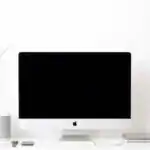
A monitor is a visual display device that shows details from a computer. It’s like a television screen for your computer. Think of it as a window that shows us what the computer is doing.
the main functions of a monitor are:
Monitors perform several key functions that allow us to interact with computers.
The following are the main functions of a monitor:
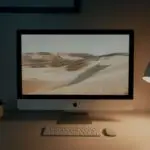
- Displaying pictures: Monitors show us images, like photos and drawings.We can see pictures of our friends and family, or drawings we’ve made.
- Displaying videos: We can watch videos and movies on a monitor. This lets us watch cartoons, educational videos, or even movies!
- Displaying text: Monitors show us words and letters, like the ones you’re reading now. This is how we read stories, learn new things, and even play games.
- Playing games: We can play games on a monitor, making it fun and interactive. Many fun and educational games can be played on a computer monitor.
- Showing Applications: Monitors display the applications and software we use, such as word processors, drawing programs, and web browsers. This allows us to interact with and use these tools effectively.
- Presenting Information: monitors present information in a clear and organized manner, making it easier for us to understand and learn.This includes displaying data, charts, and graphs.
Teaching Methods
To deliver this lesson, the teacher will adopt the following methods: Discussion, Question and answer, Visual aids
Instructional Procedures
To deliver this lesson, the teacher will adopt the following steps:
Step 1: Introduction
Time: 5 minutes
Teaching Skill: Set Induction
Teacher’s Activity: Ask pupils what they know about computers and show pictures of monitors.
Pupils’ Activity: Respond to teacher’s questions and observe the pictures.
Step 2: Clarification of Key Concepts
Time: 10 minutes
Teaching Skill: Explaining
teacher’s Activity: Explain what a monitor is and its main functions using simple language and visual aids.
Pupils’ Activity: Listen attentively and ask questions.
Step 3: Demonstration/Guided Practice
Time: 10 minutes
Teaching Skill: Demonstrating
Teacher’s Activity: Show examples of pictures, videos, and text displayed on a monitor.Pupils’ Activity: Observe the demonstration and participate in discussions.
Step 4: Autonomous Practice
Time: 5 minutes
Teaching Skill: Monitoring
Teacher’s Activity: Ask pupils to answer simple questions about the functions of a monitor.
Pupils’ Activity: Answer questions individually.
Step 5: Note-Taking
Time: 5 minutes
teaching Skill: Guiding
Teacher’s Activity: Guide pupils in writing down key points about the functions of a monitor.
Pupils’ Activity: Write down notes.
Step 6: Evaluation/Review
time: 5 minutes
Teaching skill: Assessing
Teacher’s Activity: Review the lesson and answer any remaining questions.
Pupils’ Activity: Participate in the review and ask questions.
Objective-aligned checks:
- State different functions of a monitor.
- Show interest in learning about computer monitors.
Step 7: Conclusion
Time: 5 minutes
teaching Skill: Summarizing
Teacher’s Activity: Summarize the main points about the functions of a monitor and encourage pupils to explore computers further.
Pupils’ Activity: Listen to the summary and ask any remaining questions.
Lesson Keywords
- Monitor – A screen that displays information from a computer.
- Display – To show something on a screen.
- Pictures – Images or drawings.
- Videos – Moving pictures.
- Text – Words and letters.
Lesson Evaluation
To evaluate the learning, the teacher asks pupils to:
- What is a monitor used for?
- What are three things a monitor can display?
- How does a monitor help us play games?
Assignment/Homework
- Draw a picture of a monitor and label its parts.
- List two functions of a monitor that you use at home or in school.
Differentiation
- For slower learners: Provide one-on-one assistance and use simpler language.
- For advanced learners: Introduce additional information about different types of monitors.
- For visual/auditory/kinesthetic learners: Use visual aids, verbal explanations, and hands-on activities to cater to different learning styles.
Note for Teachers
Ensure to use real-life examples and visual aids to make the lesson engaging and understandable for young pupils. Encourage active participation and provide positive reinforcement.

Community Join the conversation Open discussion +