

Class: Primary Two
term: First Term
Subject: Basic Science and Technology
Curriculum Theme: Computer studies
Previous Lesson:
Topic: Parts of a Computer
Content/Learning Area: What is a Computer?, The Main Parts of a Computer
Time Allocation: 40 minutes
Performance Objectives
by the end of the lesson, pupils should be able to:
- Cognitive Domain:
1. Identify the different parts of a computer.
2. Describe the function of each part.
- Psychomotor Domain:
1. Point to and name the different parts of a computer in a picture.
- Affective Domain:
1. Show interest in learning about computers.
- Social Domain:
1. Work cooperatively with classmates during activities.
Reference Materials
- 9 – Years Basic Education Curriculum
- Abuja Educational Resource Center scheme of Work
- NAPPS National Unified Scheme of Work
- Online Details
- Relevant Textbooks
Instructional Materials
To deliver this lesson, the teacher will use the following materials:
- Pictures of computers and their parts
- Whiteboard or chart paper
- Markers
- A real computer (if possible)
Rationale for the Lesson
Understanding the parts of a computer is basic to using technology effectively. This lesson lays the groundwork for future lessons on computer operations and applications.
Prerequisite/previous Knowledge
The teacher will start by asking pupils what they already know about computers.A brief discussion will follow, leading into the lesson’s topic. The teacher will then show pictures of computers.
Lesson Content
What is a Computer?
A computer is an electronic device that can store,process,and retrieve information. It’s used for many things, like playing games, watching videos, writing documents, and browsing the internet. Learn more about different types of computers!
The Main Parts of a Computer
The main parts of a computer are essential for its operation, each serving a unique function:
The following are the main parts of a computer:
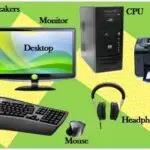
- Monitor: The monitor is the screen that shows information—images, text, and videos. Think of it as a computer’s television.learn more about computer monitors here.
- keyboard: The keyboard lets you type letters, numbers, and symbols. It’s like a typewriter for your computer. You use it to write, email, and search online.learn more about keyboards here.
- System Unit: This is the main part of the computer.It contains the CPU (the computer’s brain) and other meaningful parts. it’s like the engine of a car, processing all the information. Learn more about computer monitors! Learn more about the system unit here.
- Mouse: The mouse controls the cursor on the screen.It’s like a remote control, letting you click on things, open programs, and move files.Learn more about computer mice here.
- Printer: A printer is used to print documents, images, or any other content from the computer onto paper.
- Speakers: Speakers allow you to hear sound from the computer, such as music, videos, or system alerts.
- Microphone: A microphone is used to input audio into the computer, such as recording voice or participating in online calls.
Teaching Methods
To deliver this lesson, the teacher will adopt the following methods: Discussion,Question and Answer,Visual Aids
Instructional Procedures
To deliver this lesson,the teacher will adopt the following steps:
Step 1: Introduction
Time: 5 minutes
Teaching Skill: Set Induction
Teacher’s Activity: Asks pupils what they know about computers and shows pictures of computers.
Pupils’ Activity: Respond to teacher’s questions and observe the pictures.
Step 2: Description of Key Concepts
Time: 15 minutes
Teaching Skill: Explanation
Teacher’s Activity: Explains the main parts of a computer (monitor, keyboard, system unit, mouse) and their functions.
pupils’ Activity: Listen attentively and ask questions.
Step 3: Exhibition/Guided Practice
Time: 10 minutes
Teaching Skill: Presentation
Teacher’s Activity: Demonstrates the use of each part using a real computer (if available) or pictures.
Pupils’ Activity: Observe the demonstration and participate in discussions.
Step 4: Autonomous Practice
Time: 5 minutes
Teaching Skill: Guided Practice
Teacher’s Activity: asks pupils to identify the parts of a computer in a picture.
Pupils’ Activity: Identify and name the parts of a computer.
Step 5: Note-Taking
Time: 2 minutes
Teaching Skill: Note-Taking
Teacher’s activity: Guides pupils in taking notes on the main points of the lesson.Pupils’ Activity: Take notes on the main parts of a computer and their functions.
Step 6: Evaluation/Review
Time: 3 minutes
Teaching Skill: Questioning
Teacher’s Activity: Asks review questions to assess understanding.
Pupils’ Activity: Answer review questions.
Objective-aligned checks:
- Identify the different parts of a computer.
- Describe the function of each part.
- Show interest in learning about computers.
Step 7: Conclusion
Time: 2 minutes
Teaching Skill: Summarizing
Teacher’s Activity: Reviews the main points and assigns homework.
pupils’ Activity: Listen to the summary and note the homework.
lesson Keywords
- Computer – An electronic device that processes data.
- Monitor – The screen that displays information.
- Keyboard – A device used to input text and commands.
- System Unit – The main part of the computer that contains the CPU.
- mouse – A device used to control the cursor on the screen.
Lesson Evaluation
To evaluate the learning, the teacher asks pupils to:
- What does the monitor do?
- What is the keyboard used for?
- What is the system unit, and what is its job?
- What does the mouse do?
- Name two other computer parts we didn’t talk about today.
Assignment/Homework
- Draw a computer and label its parts.
- Write a short paragraph about what you learned about computers today.
Differentiation
- For slower learners: Provide one-on-one assistance and use simpler language.
- For advanced learners: Encourage them to research additional computer parts and their functions.
- For visual/auditory/kinesthetic learners: Use visual aids,verbal explanations,and hands-on activities to cater to different learning styles.
Note for Teachers
Ensure to use real-life examples and demonstrations to make the lesson engaging and understandable for primary two pupils. Encourage active participation and provide positive reinforcement.


Community Join the conversation Open discussion +