

Class: Primary 3
Term: 1st Term
Week: 8
Age: 8 years
Duration: 40 minutes
Subject: History
Curriculum Theme: History
Previous Lesson: Location Of Some Nigeria People, Igbo, Yoruba, Hausa People
Topic: Location Of Some People Of Nigeria By Dressing, Language And Food
Content/Learning Area: Location Of Some People Of Nigeria By Dressing, Language And Food
Performance Objectives
By the end of the lesson, pupils should be able to:
- Cognitive Domain: Identify some Nigerian people by their dressing, language, and food.
- Affective Domain: Appreciate the uniqueness of Nigerian culture through respect for dressing, language, and food.
- Psychomotor Domain: Point out or demonstrate examples of Nigerian dressing styles and food.
- Social Domain: Share ideas about their own cultural identity with classmates.
Reference Materials
The following resources were used in planning this lesson:
- 9 Years Basic Education Curriculum
- Abuja Educational Resource Centre Scheme of work
- NAPPS National Unified Scheme of Work
- Online information from: Wikipedia – Culture of Nigeria
- Relevant Textbooks
Instructional Materials
The teacher will teach this lesson with the aid of:
- Pictures of Nigerian traditional dresses
- Charts showing different ethnic groups in Nigeria
- Samples or pictures of Nigerian foods
- Flashcards with names of languages spoken in Nigeria
- Map of Nigeria
Rationale for the Lesson
This lesson helps pupils understand cultural identity in Nigeria through dressing, food, and language, thereby building respect and unity among different people.
Prerequisite/Previous Knowledge
Pupils have seen and eaten Nigerian foods, heard different local languages around them, and observed people wearing different cultural clothes during festivals and ceremonies.
Lesson Content
Location Of Some People Of Nigeria By Dressing, Language And Food
Nigeria is made up of many different groups of people. We can know some people by the way they dress, the language they speak, and the kind of food they eat.
Dressing
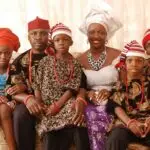
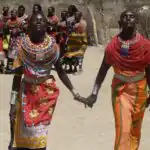
Different groups in Nigeria have special traditional clothes. Dressing shows who people are and where they come from.
The following are examples of dressing:
- Yoruba people wear agbada and iro with gele
- Hausa people wear babariga and kaftan with cap
- Igbo people wear isiagu and wrapper with red cap
- Tiv people wear black and white striped cloth
Language
Each group of people in Nigeria speaks their own language. Language helps us talk and share ideas with one another.
The following are examples of languages:
- Yoruba people speak Yoruba
- Hausa people speak Hausa
- Igbo people speak Igbo
- Fulani people speak Fulfulde
Food
Food is another way we know people. Every group has food they like and eat often.
The following are examples of food:
- Yoruba people eat amala and ewedu soup
- Hausa people eat tuwo shinkafa and miyan kuka
- Igbo people eat fufu and oha soup
- Efik people eat afang soup and edikang ikong
Teaching Methods
Discussion, Lecture, Storytelling, Explanation, Question and Answer, Group Work, Use of Visual Aids
Instructional Procedures
To deliver this lesson, the teacher will adopt the following steps:
Step 1: Introduction
Time: 5 mins
Teaching Skill: Set Induction
Teacher’s Activity: Teacher greets pupils, asks questions about clothes they wore during cultural day or foods they eat at home, and shows pictures of traditional attires.
Pupils’ Activity: Pupils respond and share experiences.
Learning Point: Pupils become interested and ready to learn.
Step 2: Dressing of Nigerian People
Time: 7 mins
Teaching Skill: Explanation and Demonstration
Teacher’s Activity: Teacher explains different traditional clothes, shows charts and pictures, and describes how each group dresses.
Pupils’ Activity: Pupils observe and identify clothes.
Learning Point: Pupils learn how dressing shows culture.
Step 3: Languages of Nigerian People
Time: 7 mins
Teaching Skill: Storytelling and Discussion
Teacher’s Activity: Teacher explains that each ethnic group has its own language and says simple greetings in Yoruba, Hausa, and Igbo.
Pupils’ Activity: Pupils listen, repeat greetings, and identify languages.
Learning Point: Pupils know some groups by the language they speak.
Step 4: Foods of Nigerian People
Time: 7 mins
Teaching Skill: Lecture and Visual Aids
Teacher’s Activity: Teacher shows pictures or samples of Nigerian foods, explains what group eats them, and asks pupils to name foods they know.
Pupils’ Activity: Pupils respond, identify foods, and relate them to groups.
Learning Point: Pupils learn to know people by the food they eat.
Step 5: Note Taking
Time: 5 mins
Teaching Skill: Writing
Teacher’s Activity: Teacher dictates short notes on dressing, language, and food for pupils to copy.
Pupils’ Activity: Pupils copy notes into their books.
Learning Point: Pupils have records of the lesson.
Step 6: Evaluation
Time: 5 mins
Teaching Skill: Questioning
Teacher’s Activity: Teacher asks questions to check understanding of dressing, language, and food.
Pupils’ Activity: Pupils answer questions orally.
Learning Point: Pupils show what they have learnt.
Objective-aligned checks:
- Identify some Nigerian people by their dressing, language, and food.
- Point out or demonstrate examples of Nigerian dressing styles and food.
Step 7: Conclusion
Time: 4 mins
Teaching Skill: Closure (Cognitive, Social)
Teacher’s Activity: Teacher summarizes the lesson, links culture to unity, and encourages respect for all groups.
Pupils’ Activity: Pupils listen and clap.
Learning Point: Pupils value unity in diversity.
Home Task: Write a short, evidence-based paragraph about one safe and relevant example of Location Of Some People Of Nigeria By Dressing, Language And Food.
Lesson Keywords
- Culture: The way of life of people
- Dressing: Clothes people wear
- Language: Words people use to talk
- Food: Meals people eat
- Identity: What makes people different or special
Lesson Evaluation
To evaluate the learning, the teacher asks pupils to:
- Mention two groups of people in Nigeria and the clothes they wear.
- Say the language spoken by the Yoruba, Hausa, and Igbo.
- List two foods eaten by any group in Nigeria.
- Explain how we can know people by what they eat.
- Say one reason why we should respect other people’s culture.
Differentiation
Teacher supports slower learners with pictures and repetition, while advanced pupils are asked to give more examples and share personal cultural experiences.
Note for teachers using this lesson plan
Teachers should make the lesson practical by showing real-life materials like clothes or food samples when possible. Encourage pupils to share their family culture for better participation.
Community Join the conversation Open discussion +