

Class: Primary 4
Term: 2nd Term
Subject: History
Curriculum Theme: History
Previous Lesson: Some Nigerian People, Gbaygi And Jukun
Topic: some Nigerian People: Nupe and Oworo
Content/Learning Area: Origin, Location, and Culture of Nupe and Oworo People
Time Allocation: 40 minutes
Performance Objectives
By the end of the lesson, pupils should be able to:
- Cognitive Domain: Explain the origin and identify the locations of the Nupe and Oworo people.
- Affective Domain: Appreciate the cultural heritage of the Nupe and Oworo people.
- Psychomotor Domain: Locate Nupe and Oworo regions on a Nigerian map.
- Social Domain: show respect for the traditions of the Nupe and Oworo people.
Reference Materials
The following resources were used in planning this lesson:
- Nigerian 9 – Years Basic Education Curriculum
- Abuja Educational Resource Center Scheme of Work
- NAPPS National Unified Scheme of Work
- Relevant Textbooks
Instructional Materials
to deliver this lesson, the teacher will use the following materials:
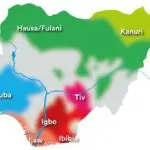
- A large Nigerian map
- Pictures of Nupe and Oworo cultural attire and items
- Flashcards with facts about Nupe and Oworo people
- Whiteboard and markers
Rationale for the Lesson
learning about the Nupe and Oworo people helps pupils appreciate Nigeria’s cultural diversity and heritage.
Prerequisite/Previous Knowledge
Pupils already know about the Gbaygi and Jukun people and can recognize different Nigerian ethnic groups.
Lesson Content
Some Nigerian People: Nupe and Oworo
The Nupe and Oworo are two ethnic groups in Nigeria with rich histories and cultures. They are known for their contributions to Nigeria’s development and cultural wealth.
Origin of the Nupe People
The Nupe people are believed to have originated from the ancient kingdoms along the River Niger in central Nigeria. They are predominantly found in Niger State and parts of Kwara State.
Location of the Nupe People
The Nupe people mainly inhabit Niger State, especially areas like Bida, Lapai, and Agaie. Some Nupe communities are also found in kwara and Kogi States.
Culture of the Nupe People
Culture encompasses the shared beliefs, values, customs, behaviors, and artifacts that characterize a society or group.
Examples of cultural practices of the Nupe people are:
- Their stunning beadwork
- Brass crafting
- Colorful festivals such as the Nupe Day Festivity, held annually in bida
- Conventional music and dance
- Elaborate marriage ceremonies
Origin of the oworo People
The Oworo people trace their origin to the Yoruba ethnic group. They settled around the confluence of Rivers Niger and Benue, mainly in Kogi State.
Location of the Oworo People
The Oworo people live in Lokoja and its surrounding areas in Kogi State, close to the Niger and Benue Rivers.
Culture of the Oworo People
Culture encompasses the shared beliefs, values, customs, behaviors, and artifacts that characterize a society or group.Examples of cultural practices of the Oworo people are:
- Traditional festivals like the Ovia Osese Festival
- Farming practices
- Fishing techniques
- Rich cultural dances
- Unique burial rites
Teaching Methods
To deliver this lesson,the teacher will adopt the following methods: Discussion,Storytelling,Lecture,Description,Visual Aids
Instructional Procedures
To deliver this lesson,the teacher will adopt the following steps:
Step 1: Introduction
Time: 5 mins
Teaching Skill: Set Induction
Teacher’s Activity: The teacher asks pupils to name various Nigerian ethnic groups.
Pupils’ Activity: Pupils respond by naming ethnic groups they know.
Step 2: Origin of Nupe People
Time: 8 mins
Teaching Skill: Storytelling
Teacher’s Activity: The teacher narrates the origin of the Nupe people with the aid of a map.
Pupils’ Activity: Pupils listen and observe the map.
Step 3: origin of Oworo People
Time: 8 mins
Teaching Skill: Storytelling
Teacher’s Activity: The teacher narrates the history of the Oworo people and points out their location.
Pupils’ Activity: Pupils locate Oworo areas on the map and ask questions.
Step 4: Cultural Practices
Time: 7 mins
Teaching Skill: Discussion
Teacher’s Activity: The teacher discusses major cultural practices of the Nupe and Oworo people.
Pupils’ Activity: Pupils share observations and experiences if any.
Step 5: Note-taking
Time: 5 mins
Teaching Skill: Guided Writing
Teacher’s Activity: The teacher guides pupils to copy short notes about Nupe and Oworo people.
Pupils’ activity: Pupils copy notes neatly into their notebooks.
Step 6: Evaluation/Review
Time: 4 mins
Teaching Skill: Questioning
Teacher’s Activity: The teacher asks questions based on the lesson to assess understanding.
Pupils’ Activity: Pupils answer questions confidently.
Objective-aligned checks:
- Explain the origin and identify the locations of the Nupe and Oworo people.
- show respect for the traditions of the Nupe and Oworo people.
Step 7: Conclusion
Time: 3 mins
Teaching Skill: Instructional Closure
Teacher’s Activity: The teacher summarizes the lesson and emphasizes cultural thankfulness.
Pupils’ Activity: Pupils listen and reflect on the lesson.
Lesson keywords
- Nupe – An ethnic group from Niger State, Nigeria
- Oworo – A subgroup of the Yoruba ethnic group in Kogi State
- Culture – The way of life, traditions, and customs of a people
- Confluence – The point where two rivers meet
- festival – A celebration or special event by a community
Lesson evaluation
To evaluate the learning, the teacher asks pupils to:
- Who are the Nupe people?
- Where can we find the Oworo people?
- What cultural activities are Nupe people known for?
- Name one festival celebrated by the Oworo people.
- Locate the Nupe and Oworo areas on the Nigerian map.
assignment/Homework
- Draw and label the locations of Nupe and Oworo people on a simple map of Nigeria.
Differentiation
- For slower learners: Provide labeled maps and simple explanations to help them understand better.
- For advanced learners: Assign them to research more festivals celebrated by the Nupe and Oworo people.
- For visual/auditory/kinesthetic learners: Use pictures, songs, and hands-on activities to explain cultural practices.
Note for Teachers
Emphasize the value of every ethnic group and encourage pupils to be proud of Nigeria’s rich cultural diversity.Use visual aids extensively for better engagement.

Community Join the conversation Open discussion +