

Class: Primary 4
Term: 2nd Term
Subject: National Values Education
Curriculum Theme: Security Education
Previous Lesson: Maintenance Of Security Agents
Topic: Emergency Phone Numbers of Police And Fire Service
Content/learning Area: Phone numbers of Police and Fire Service
Time Allocation: 40 minutes
Performance Objectives
By the end of the lesson, pupils should be able to:
- Cognitive Domain: Identify the emergency phone numbers of the police and fire service.
- Affective Domain: Appreciate the importance of knowing emergency phone numbers.
- Psychomotor Domain: Demonstrate how to dial an emergency number correctly.
- Social Domain: Collaborate with peers to role-play an emergency scenario.
Reference materials
The following resources where used in planning this lesson:
- 9 – Years Basic Education Curriculum
- Abuja Educational Resource Center Scheme of Work
- NAPPS National Unified Scheme of Work
- Online Information from: Emergency Response Africa – Emergency Numbers in Nigeria
- Relevant Textbooks
Instructional Materials
To deliver this lesson, the teacher will use the following materials:
- A mobile phone (mock-up or real)
- Charts showing emergency phone numbers
- A short video on emergency response
- A whiteboard and markers
Rationale for the Lesson
Knowing emergency phone numbers is crucial for ensuring safety and providing timely help during emergencies. This lesson equips pupils with the knowledge to seek help effectively.
Prerequisite/Previous Knowledge
Pupils are familiar with the role of security agents and understand the concept of emergencies.
Lesson Content
Emergency Phone Numbers Of Police And Fire Service
Emergency phone numbers are special numbers you can call when you need immediate help. these numbers are free to call anytime. Below are some crucial emergency numbers:
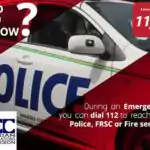
- Police Emergency Number: 112
- fire Service Emergency Number: 112
Uses of emergency Numbers:
Emergency numbers are essential for reporting incidents and seeking immediate assistance. The following are uses of emergency numbers:
- To report accidents or crimes.
- To call for help during a fire outbreak.
- To seek medical assistance in emergencies.
- to report unsafe situations or threats.
- To request assistance during natural disasters.
- To report a gas leak or explosion.
- To report a case of electrocution.
- To report a building collapse.
Using 112 Responsibly
Nigeria’s national emergency number is 112 and can route serious reports such as fire, crime, medical emergency or road crash to an appropriate responder where service is available. The caller should state the location first, describe the emergency calmly and answer questions.
Emergency calls are not for jokes or practice on a live phone. A child should use a responsible adult when possible, but should call in immediate danger if no adult can help. Do not endanger yourself to collect more details.
Teaching Methods
To deliver this lesson, the teacher will adopt the following methods: Set Induction,Direct teaching,Guided practice,Role-play,Group work,oral questioning,Class discussion,Summarization.
Instructional Procedures
To deliver this lesson, the teacher will adopt the following steps:
Step 1: Introduction
Time: 5 mins
Teaching Skill: set Induction
Teacher’s activity: Ask pupils what they woudl do in an emergency.
Pupils’ Activity: Respond with ideas like “call for help.”
Step 2: Description
Time: 10 mins
Teaching Skill: Direct teaching
Teacher’s Activity: Show the emergency phone numbers chart.
Pupils’ Activity: Observe the chart and listen actively.
Step 3: Exhibition
Time: 10 mins
Teaching Skill: Guided practice
teacher’s Activity: Demonstrate how to call emergency numbers.
Pupils’ Activity: Practice dialing numbers in groups.
Step 4: Submission
Time: 5 mins
Teaching Skill: group work
Teacher’s Activity: assign groups to simulate emergency scenarios.
Pupils’ Activity: Act out emergency scenarios in groups.
Step 5: Note-Taking
time: 5 mins
Teaching skill: Notetaking
Teacher’s Activity: guide pupils to copy key points from the board.
Pupils’ Activity: Copy key points into their notebooks.
Step 6: Evaluation/Review
Time: 3 mins
Teaching skill: Oral questioning
Teacher’s Activity: Ask questions to test understanding.Pupils’ Activity: Answer questions orally.
Objective-aligned checks:
- Identify the emergency phone numbers of the police and fire service.
- Demonstrate how to dial an emergency number correctly.
Step 7: Conclusion
Time: 2 mins
Teaching Skill: Summarization
Teacher’s Activity: Summarize the uses of emergency numbers.
Pupils’ Activity: Share final thoughts on the topic.
Lesson Keywords
- Emergency Number – A special phone number to call for immediate help.
- Police – Law enforcement officers who maintain order and safety.
- Fire Service – Emergency responders who extinguish fires and rescue people.
- Accident – An unexpected event that causes injury or damage.
- Crime – An illegal activity that is punishable by law.
Lesson Evaluation
To evaluate the learning, the teacher asks pupils to:
- What is the emergency number for the police?
- What is the emergency number for the fire service?
- Mention two uses of emergency phone numbers.
- Demonstrate how to dial an emergency number.
- Why is it important to know emergency phone numbers?
Assignment/Homework
- Write down three emergency scenarios and the appropriate emergency number to call.
- Ask your parents or guardians about other emergency numbers in your community.
- create a poster about the importance of knowing emergency phone numbers.
differentiation
- For slower learners: Provide simplified charts with larger font sizes and repeat instructions.
- For advanced learners: Challenge them to research and present on different types of emergencies and the specific actions to take.
- For visual/auditory/kinesthetic learners: Use visual aids like videos, auditory cues like sirens, and kinesthetic activities like role-playing to reinforce learning.
Note for Teachers
Ensure to use real-life examples to keep the lesson engaging. Practice role-playing scenarios to help pupils internalize the use of emergency numbers. Encourage participation and clarify any doubts. Happy teaching!


Community Join the conversation Open discussion +