

Examination on Security Education
Class: Primary 4
Term: Second Term
Time: 1 Hour
Total Marks: 70
SECTION A: OBJECTIVES (40 Marks)
Instruction: Answer all questions.
1. ________ is the awareness of potential dangers and threats around us. (a) Ignorance (b) Security consciousness (c) Carelessness (d) Fear
2. Which of these is not a reason for security education? (a) To encourage crime (b) To protect ourselves (c) To know how to get help (d) To prevent dangers
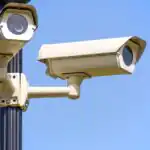
3. The main reason for installing CCTV cameras in homes is ________. (a) To play games (b) To monitor activities (c) To listen to music (d) To make calls
4. Keeping our doors and windows locked is a way of securing our ________. (a) School (b) Community (c) Home (d) Playground
5. Which of these does NOT help in securing our school environment? (a) Having security guards (b) Locking classroom doors (c) Leaving gates open (d) Reporting suspicious persons
6. All of these are modern security equipment except ________. (a) Drones (b) Scanners (c) Gong (d) Shock baton
7. The correct step in alerting the police during an emergency is ________. (a) Shouting loudly (b) Dialing 112 (c) Running away (d) Ignoring the danger
8. An example of a traditional security tool used to raise alarm is ________. (a) CCTV (b) Satellite tool (c) Gong (d) Drone
9. Which of the following is an emergency number for the fire service? (a) 112 (b) 767 (c) 122 (d) 911
10. ________ is used to identify and trace criminals using technology. (a) ICT (b) Farming (c) Cooking (d) Reading
11. Which of these is a modern security agent responsible for maintaining law and order? (a) Hunter (b) Town crier (c) Police (d) Vigilante
12. The purpose of NEMA is to ________. (a) Sell food (b) Manage emergencies and disasters (c) Arrest criminals (d) Control traffic
13. Hunters play a role in traditional community security by ________. (a) Promoting crime (b) Protecting against wild animals and intruders (c) Building houses (d) Selling goods
14. All of these are ways communities can support local security agents except ________. (a) Providing information (b) Offering financial aid (c) Refusing to share information (d) Cooperating with them
15. Which of these is NOT a function of the Federal Road Safety Corps (FRSC)? (a) Fighting crime (b) Ensuring road safety (c) Clearing road obstructions (d) Educating road users
16. A shock baton is a modern security equipment used for ________. (a) Cooking food (b) Self-defense (c) Playing music (d) Communicating
17. A town crier’s role in traditional security is to ________. (a) Announce important news (b) Fight criminals (c) Drive cars (d) Build roads
18. What is the main use of a scanner in security? (a) To make calls (b) To detect hidden objects (c) To fly in the air (d) To record videos
19. Which of the following is a traditional security method? (a) Using CCTV (b) Setting up vigilance groups (c) Using drones (d) Satellite tracking
20. Why is it important to know emergency phone numbers? (a) To waste time (b) To get help quickly (c) To play pranks (d) To show off
SECTION B: THEORY (30 Marks)
Instruction: Answer any THREE questions.
1. (a) State two reasons why security education is important. (2 marks)
(b) Describe three ways you can secure your home. (3 marks)
(c) Explain the importance of CCTV cameras in modern security. (3 marks)
(d) Identify one modern security equipment other than CCTV. (2 marks)
2. (a) State the emergency phone number for the Police and its use. (2 marks)
(b) List three modern security agents in Nigeria. (3 marks)
(c) Explain the role of the Fire Service as a security agent. (3 marks)
(d) What does FRSC stand for? (2 marks)
3. (a) Name two traditional security tools used to raise alarms. (2 marks)
(b) Explain the role of a hunter in traditional community security. (3 marks)
(c) Describe two ways communities can support their local security agents. (3 marks)
(d) Who is a town crier? (2 marks)
4. (a) How can ICT be used for security alerts? (2 marks)
(b) Identify the full meaning of NAFDAC and its use as an emergency number. (3 marks)
(c) State three ways to secure your school environment. (3 marks)
(d) Give one importance of knowing emergency phone numbers. (2 marks)
Objective Marking Scheme
Question 1 – ✅ (b) Security consciousness
Question 2 – ✅ (a) To encourage crime
Question 3 – ✅ (b) To monitor activities
Question 4 – ✅ (c) Home
Question 5 – ✅ (c) Leaving gates open
Question 6 – ✅ (c) Gong
Question 7 – ✅ (b) Dialing 112
Question 8 – ✅ (c) Gong
Question 9 – ✅ (b) 767
Question 10 – ✅ (a) ICT
Question 11 – ✅ (c) Police
Question 12 – ✅ (b) Manage emergencies and disasters
Question 13 – ✅ (b) Protecting against wild animals and intruders
Question 14 – ✅ (c) Refusing to share information
Question 15 – ✅ (a) Fighting crime
Question 16 – ✅ (b) Self-defense
Question 17 – ✅ (a) Announce important news
Question 18 – ✅ (b) To detect hidden objects
Question 19 – ✅ (b) Setting up vigilance groups
Question 20 – ✅ (b) To get help quickly



Community Join the conversation Open discussion +