

Class: Primary 4
Term: 2nd Term
Subject: National Values Education
curriculum Theme: Social Studies
Previous Lesson: Meaning And Types Of Natural Resources
Topic: conservation and Distribution of natural Resources
Content/Learning Area: Meaning of conservation, Meaning of distribution, Location of natural resources in Nigeria
Time Allocation: 40 minutes
Performance Objectives
By the end of the lesson, pupils should be able to:
- Cognitive Domain: Define conservation and distribution.
- Affective Domain: Appreciate the importance of conserving natural resources.
- psychomotor Domain: Identify natural resources on a map of Nigeria.
- Social Domain: Discuss the benefits of equitable distribution of resources in Nigeria.
Reference Materials
The following resources were used in planning this lesson:
- 9–Years Basic Education Curriculum
- Abuja Educational Resource Center Scheme of Work
- NAPPS National Unified Scheme of Work
- Online information from Nairaland – Nigerian States And Their Natural Resources – Politics – Nigeria
- Relevant textbooks
Instructional Materials
To deliver this lesson, the teacher will use the following materials:
- A map of Nigeria
- Flashcards showing definitions of key terms
- Pictures of natural resources (e.g., oil, coal, cocoa, limestone)
- A chart showing resource distribution across Nigeria
Rationale for the Lesson
Understanding the conservation and distribution of natural resources helps pupils appreciate the need to use resources wisely and promotes fairness in their allocation, which is vital for national advancement.
Prerequisite/Previous Knowledge
Pupils have learned about the meaning and types of natural resources and can identify some examples of thes resources.
Lesson Content
Conservation and Distribution of Natural Resources
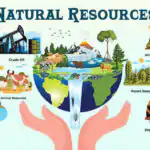
Natural Resources are valuable substances found in nature, like oil, gas, coal, and forests.
- Conservation:
This means protecting and managing natural resources to ensure they are not wasted. Such as,planting trees to replace those cut down.
- Distribution:
This refers to the sharing or allocation of resources across different parts of the country to ensure fairness and development.
Locations of Natural Resources in Nigeria:
- Oil and Gas: Found in the Niger Delta (e.g., Rivers, Bayelsa).
- Coal: Found in Enugu State.
- Cocoa: Found in Ondo State.
- Limestone: Found in Ogun State.
- tin: Found in jos, Plateau State.
Conservation and Distribution
Conservation is careful use and protection so resources remain useful. Distribution describes where resources occur and how products or benefits move to users. Petroleum is concentrated in parts of the Niger Delta, coal is associated with Enugu and limestone occurs in several states, but classroom maps should be checked against reliable current sources.
Conservation includes preventing spills, controlling erosion, replanting forests, recycling minerals and enforcing safe extraction. Fair distribution also needs lawful revenue management and public services.
Teaching Methods
To deliver this lesson, the teacher will adopt the following methods: Clarification, Discussion, Exhibition, Visual Aids, Interactive Questioning, Group Work.
Instructional Procedures
To deliver this lesson, the teacher will adopt the following steps:
Step 1: Introduction
time: 5 mins
Teaching Skill: Set Induction
Teacher’s Activity: Ask pupils what they remember about natural resources.
Pupils’ Activity: Respond to questions.
Step 2: Understanding Conservation
Time: 8 mins
Teaching Skill: Explanation
Teacher’s Activity: show flashcards and explain conservation.
Pupils’ Activity: Listen attentively and take notes.
Step 3: Understanding Distribution
Time: 7 mins
Teaching Skill: Explanation
Teacher’s Activity: Explain distribution and its importance.
Pupils’ Activity: Participate in discussion.
step 4: Locating Resources
Time: 8 mins
Teaching Skill: Demonstration
Teacher’s Activity: Show locations of resources on a map.
Pupils’ Activity: Observe and identify locations.
Step 5: Note-Taking
Time: 5 mins
Teaching Skill: Guided note-taking
Teacher’s Activity: Write the lesson content on the board.
Pupils’ Activity: Copy the note into notebooks.
Step 6: Evaluation/Review
Time: 5 mins
Teaching Skill: Oral questioning
Teacher’s Activity: Ask pupils questions on the lesson.
Pupils’ Activity: Answer questions.
Objective-aligned checks:
- Define conservation and distribution.
- Identify natural resources on a map of Nigeria.
Step 7: Conclusion
Time: 2 mins
Teaching Skill: Recap
teacher’s Activity: Summarize the key points.
Pupils’ Activity: Listen attentively.
Lesson Keywords
- Conservation – Protecting and managing natural resources.
- Distribution – Sharing resources fairly across the country.
- Natural Resources – Valuable substances found in nature.
Lesson Evaluation
To evaluate the learning, the teacher asks pupils to:
- Define conservation and distribution.
- Explain why conserving natural resources is crucial.
- List three examples of natural resources found in Nigeria.
- Identify two locations of natural resources on the map of nigeria.
- Discuss one benefit of fair resource distribution.
Assignment/Homework
- List five ways to conserve natural resources at home.
- Research and write down three natural resources found in your state.
- explain why fair distribution of resources is critically important for Nigeria’s development.
Differentiation
- For slower learners: Provide simplified definitions and focus on identifying resources on the map.
- For advanced learners: Encourage them to research and present on lasting resource management practices.
- For visual/auditory/kinesthetic learners: Use visual aids, discussions, and hands-on activities like drawing resource maps.
note for Teachers
Ensure the lesson is engaging by encouraging pupils to participate actively.Use the map and flashcards effectively to make the lesson relatable and fun. Happy teaching!


Community Join the conversation Open discussion +