

Class: Primary 4
Term: 2nd Term
Subject: Social Studies
Previous Lesson: Functions Of State Government
topic: Meaning of Agricultural Industry and Division of Labor
Content/Learning area: Meaning of agriculture, forms of agriculture, Meaning of labour, Meaning of division of labour
Time Allocation: 40 minutes
Performance Objectives
By the end of the lesson, pupils should be able to:
- Cognitive Domain: Define agriculture, explain the forms of agriculture, and describe the concepts of labour and division of labour.
- Affective domain: Appreciate the importance of agriculture and the role of teamwork in farming activities.
- Psychomotor Domain: Demonstrate an understanding of division of labour by role-playing different farming tasks.
- Social Domain: Collaborate effectively with peers to simulate the application of division of labour in agriculture.
Reference Materials
The following resources were used in planning this lesson:
- 9 – years Basic Education Curriculum
- Abuja Educational Resource Centre Scheme of Work
- NAPPS National Unified Scheme of work
- Online Information from: Merriam-Webster – Agriculture Definition & Meaning
- Relevant Textbooks
Instructional Materials
To deliver this lesson, the teacher will employ the help of the following materials:
- Pictures or drawings of farming activities
- Flashcards with terms and definitions
- A small model farm setup (optional)
- Charts showing examples of division of labour in agriculture
Rationale for the Lesson
Understanding agriculture and division of labour helps pupils appreciate the importance of farming to society and how teamwork enhances productivity.
Prerequisite/Previous Knowledge
Pupils already know about plants and animals used as food, and they have basic ideas of teamwork from group activities.
Lesson Content
Meaning of Agricultural Industry and Division of Labour
Agriculture is the practice of growing crops and rearing animals to provide food, clothing, and other products. This means that farming is critically important for human survival.
Forms of Agriculture:
Agriculture includes various methods and practices. The following are the different forms of agriculture:
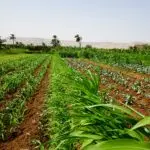
- Crop Farming: Growing plants like maize, rice, and vegetables. Examples include cultivating yam, cassava, and beans.
- Animal Husbandry: Rearing animals like chickens, goats, and cows. Examples include poultry farming,cattle rearing,and pig farming.
- Fishing: Harvesting fish from water bodies. Examples include catching tilapia, catfish, and prawns.
- Forestry: Cultivating and managing forests for timber and other products. Examples include planting trees for firewood, paper production, and furniture making.
Labour:
Labour refers to the physical and mental effort used to complete a task. For example, farmers use labour to plant, weed, and harvest crops.
Division of Labour:
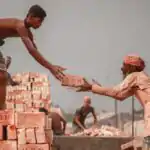
Division of labour means splitting tasks among people to increase efficiency. Such as, one person plants, another waters, and another weeds. This helps complete work faster.
Teaching Methods
To deliver this lesson, the teacher will adopt the following methods: Explanation, Discussion, Storytelling, Role-Playing, Visual Aids, Group Work, Interactive Talk.
Instructional Procedures
To deliver this lesson, the teacher will adopt the following steps:
Step 1: Introduction
Time: 5 mins
Teaching Skill: Set induction
Teacher’s Activity: Asks pupils what they know about farming.
Pupils’ Activity: Respond enthusiastically.
Step 2: Meaning of Agriculture
Time: 5 mins
Teaching Skill: Explanation
Teacher’s Activity: Explains agriculture using pictures.
Pupils’ Activity: Observe pictures and listen.
Step 3: Forms of Agriculture
Time: 10 mins
Teaching Skill: Discussion
Teacher’s Activity: Guides pupils in identifying forms of agriculture.
Pupils’ Activity: Participate in group work to list examples of farming activities.
Step 4: Meaning of Labour
Time: 5 mins
Teaching Skill: storytelling
Teacher’s Activity: Uses a story about teamwork in farming.
Pupils’ Activity: Listen and ask questions.
Step 5: Division of Labour
Time: 10 mins
Teaching Skill: Role-Playing
Teacher’s Activity: Assigns farming roles for pupils to act out.
Pupils’ Activity: Role-play assigned tasks.
Step 6: Note-taking
Time: 3 mins
Teaching Skill: Dictation
Teacher’s Activity: Guides pupils in writing key points.
Pupils’ Activity: Copy notes attentively.
Step 7: Conclusion & Evaluation
Time: 2 mins
Teaching Skill: Recap & Q&A
Teacher’s Activity: Recaps and evaluates with questions.
Pupils’ Activity: Answer questions.
Lesson Keywords
- Agriculture – The practice of growing crops and rearing animals.
- Crop Farming – growing plants for food and other products.
- Animal Husbandry – Rearing animals for various purposes.
- Labour – Physical and mental effort to complete a task.
- Division of Labour – Splitting tasks to increase efficiency.
Lesson Evaluation
To evaluate the learning, the teacher asks pupils to:
- Define agriculture.
- List two forms of agriculture.
- Explain the meaning of labour in farming.
- Describe what division of labour means and give an example.
Assignment/Homework
- List three examples of crops grown in your community.
- Name two animals commonly reared in your area and what they provide.
- Explain how division of labour can make farming more efficient.
differentiation
- For slower learners: Provide simplified definitions and more visual aids.
- For advanced learners: Encourage them to research different farming techniques and their benefits.
- For visual/auditory/kinesthetic learners: Use pictures, storytelling, and role-playing to cater to different learning styles.
Note for Teachers
Encourage active participation during the group activity, as it fosters teamwork. Use relatable examples to make the lesson engaging. Happy teaching!

Community Join the conversation Open discussion +